
Don’t expect USC’s buildings to be renamed this year. Here’s why
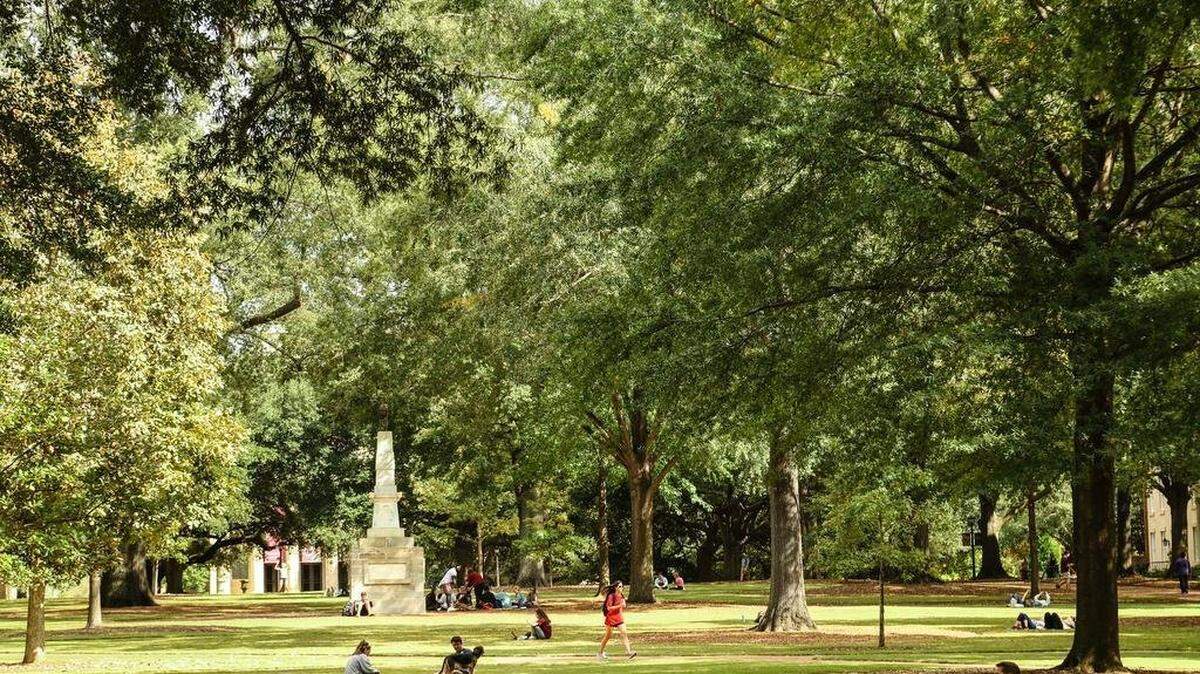
It’s unlikely University of South Carolina buildings named for racists or people with ties to slavery will be renamed this year, barring a legal or policy change.
That’s because the USC Presidential Commission on University History — the group tasked with examining building names — expects to continue producing reports on its work through at least June, according to USC spokesman Jeff Stensland.
Even if USC’s board of trustees unanimously recommends the removal of all controversial names from campus buildings the day it receives the June report, it will be too late to get it to the legislature, whose annual sessions end the second Thursday of May.
The Heritage Act requires a two-thirds vote of both the S.C. House and Senate to change the name of buildings named for a historic person.
Next year, the renaming could also face legislative hurdles, as 2022 is an election year for S.C. House members and S.C. Gov. Henry McMaster, who has publicly opposed renaming the USC Strom Thurmond Wellness and Fitness Center.
“Any future activities beyond June would depend on President Caslen’s direction,” former USC President and commission co-chair Harris Pastides said in an email. “Certainly, there are research aspects of the university’s history that will require more time. However, that doesn’t mean that they must be continued within the scope of the commission.”
The renaming commission, which includes board of trustee members, faculty, students and community members, has not yet provided information to USC’s board of trustees, said board member Egerton Burroughs.
“When it comes out, I’m sure we’ll react to it,” Burroughs said.
However, most of the board’s attention has been going toward grappling with COVID-19 and the financial constraints that follow the pandemic.
“There’s a lot going on at the university,” Burroughs said.
This comes after two top student leaders sent a letter to USC officials this week accusing them of dragging their feet in renaming the buildings.
Students, alumni, athletes and more have been pushing to change names of campus buildings named for people such as late U.S. Sen. Strom Thurmond, J. Marion Sims, Wade Hampton and more. Thurmond was among the most vocal supporters of segregation in the 40s, 50s and 60s; Sims founded modern gynecology by conducting medical experiments on enslaved women and Hampton owned slaves, served as an officer in the Confederacy and was a top member of the Ku Klux Klan.
“These names are derogatory and against the Carolinian creed,” said Student Body Vice President Hannah White. “It should have been done (already).”
White, an alumnus of Wade Hampton High in Greenville, said that for years, she has felt the alienation and confusion that accompanies having positive experiences and friends at a school while learning in buildings named for people who would have considered her a lesser person because of her skin color, she said.
“Its hard. You have moments of confusion. You have crises of identity. You’re conflicted all the time,” White said. As a campus tour guide, White sometimes jokingly refers to the Strom Thurmond Wellness and Fitness Center as the “Staley Center,” after USC women’s basketball coach Dawn Staley.
Student Body President Issy Rushton said it’s not uncommon for students to talk around the controversial names of buildings, referring to the Thurmond center as just “the rec center” and referring to “Sims at Womens Quad” as just “the quad.”
Caley Bright, a USC freshman who recently revived the NAACP on campus, said the issue is about more than just the names of campus buildings.
“This is an issue of understanding how African American students feel (about) buildings and empathizing on how uncomfortable that makes minority students feel,” Bright said.
How it could happen
Though USC is not on track to rename many of its controversial campus buildings this year, there are a few ways that could change.
For one, it is possible the Heritage Act will be either repealed by the General Assembly or weakened by the S.C. Supreme Court. Lawmakers are considering several bills to either repeal (S. 163) or modify the Heritage Act to allow cities, school districts and colleges to rename buildings (H. 3350).
Both bills are still in committees.
Outside the legislature, a lawsuit seeks to deem the Heritage Act unconstitutional. Republican S.C. Attorney General Alan Wilson said in an official opinion the two-thirds majority the Heritage Act requires is likely unconstitutional.
If the Legislature doesn’t make changes or the Supreme Court upholds the law, there are two ways USC could accelerate the process of renaming buildings. At the USC Presidential Commission on University History’s meeting later this month, the commission will consider accelerating recommendations on changing building names, Pastides said.
It’s also possible USC will send piecemeal recommendations on changing building names to the Legislature before the session ends in May. That’s what USC’s board of trustees did last year following the death of George Floyd when the board asked the legislature to rename the Sims dorm.
Renaming buildings is complicated and requires nuance, but some building name changes are more clear-cut than others, Rushton said.
“Wade Hampton was an affiliate of the KKK,” Rushton said. “I don’t think you can get any more obvious than that.”