
SC, home of the nation’s collards, aims to grow a better green to beat pests, warming climate
A dozen specimens might qualify as an impressive collection of Antarctic minerals or Amazonian minnows, but it’s a measly mess of collard greens. So, in the early 1990s, when Agricultural Research Service plant geneticist Mark Farnham was put in charge of the brassica program at the U.S. Vegetable Laboratory in Charleston, he went looking for more cultivars of what he calls “the most important leafy green in the Southeast.”
He found one in the pages of the local newspaper.
“There was a picture of an elderly lady, Grace Summersett, standing next to her large collard,” Farnham told a group of growers, breeders and backyard gardeners gathered recently at the Coastal Research & Education Center (CREC), the Vegetable Lab’s companion facility. “I saw germplasm.”
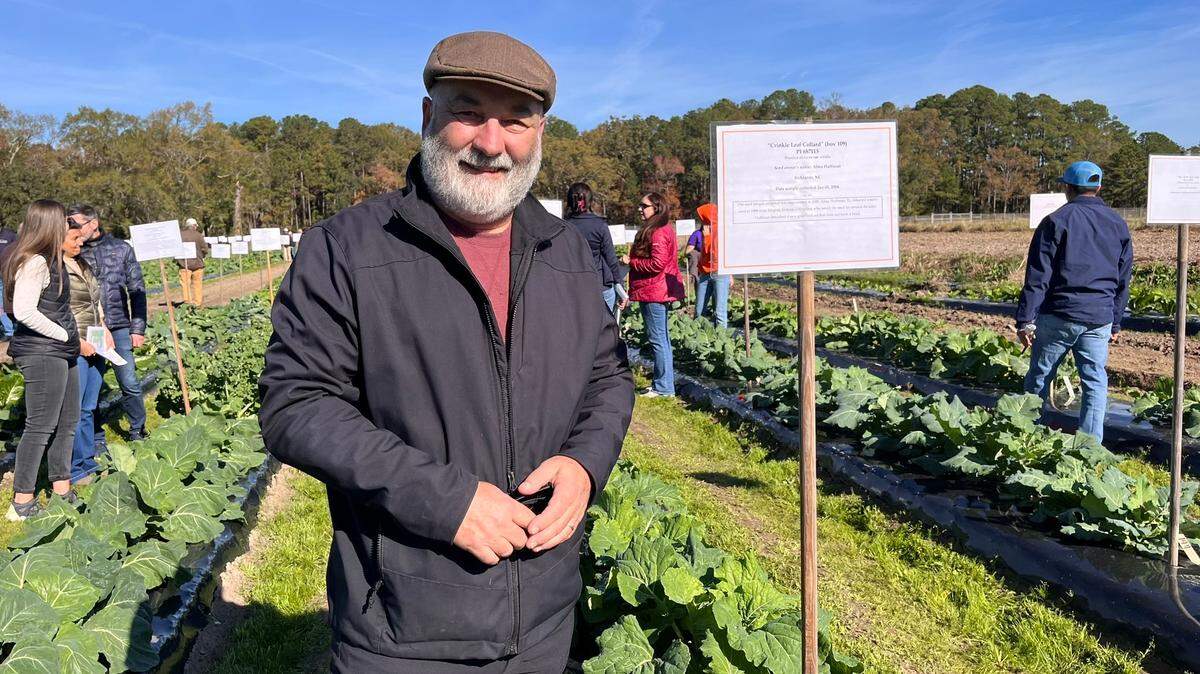
Luckily for Farnham, Summersett was listed in the phone book. He persuaded her to give him a seed, one of the first contributions to a set of heirloom collard varieties that now numbers in the hundreds. At the Brassica Field Day event on Dec. 5, attendees were invited to stroll the rows of CREC’s grown-out collards gallery, featuring bushy plants which had binged on the early morning cold, flaunting massive leaves that ranged in appearance from glossy emerald spades to purple-edged clamshells.
While the beauty of the plants would have stirred a wedding florist’s heart, the collards at CREC serve a serious purpose. As Clemson University postharvest biologist Karin Albornoz said in her field presentation, “Collards are so, so, so nutritious, but they’re also perishable, because they’re leaves.” Scientists at CREC are investigating whether genes in the landrace collection can protect modern-day collards from pests and disease, deter them from shedding nutrients once picked, or help them withstand ever-warmer winters — all of which could serve to speed collards’ journey toward the mainstream beyond the region.
If Farnham had his druthers, collards would have long ago eclipsed kale as the nation’s go-to leafy green. From a nutritional standpoint, “there’s almost no difference. And heck, collards taste better.”
Albornoz — who’s professionally invested in the fate of collards, which South Carolina produces in greater quantity than any other state — recommends using collard leaves to bundle burritos (but not the ones growing in CREC’s test patch, since researchers haven’t measured them yet. Attendees had to trust Farnham when he said each cultivar has a slightly different flavor.)
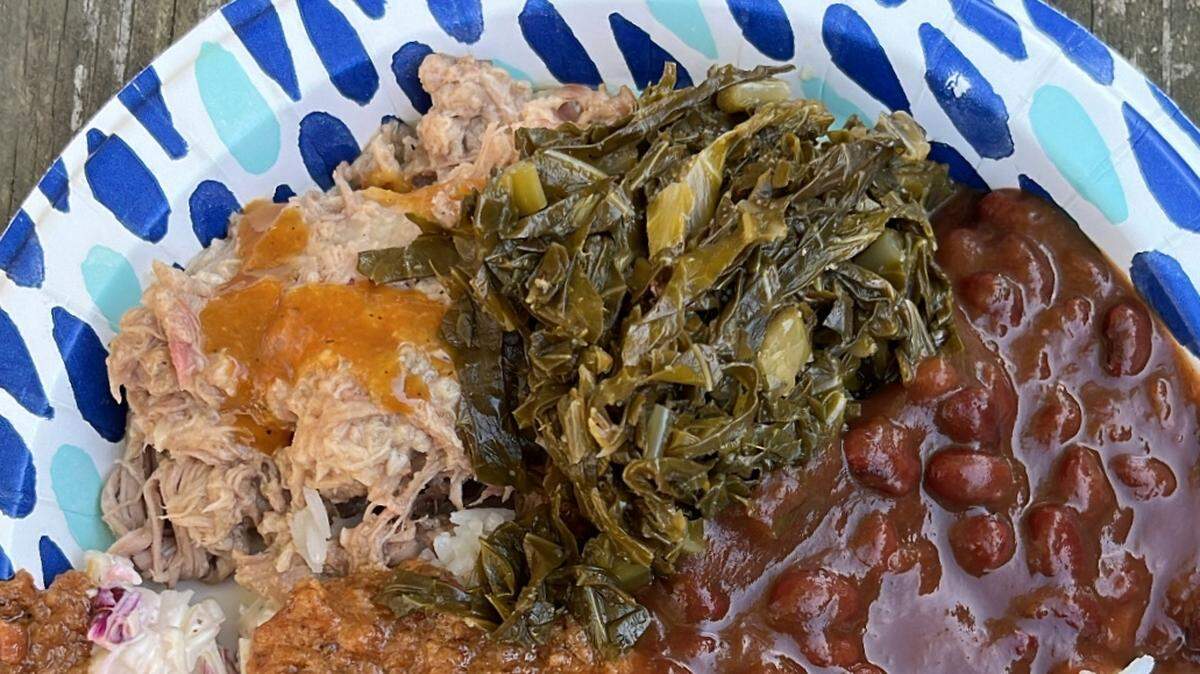
That’s a departure from the traditional Southern preparation, described in an 1880 book attributed to “Carpet-Bagger.” The pseudonymous author wrote, “The collard is a very great blessing; because when boiled in a pot with a piece of fat meat and balls of corn meal dough, having the size and appearance of ordinary white turnips, called dumplings, it makes palatable a diet which would otherwise be all but intolerable.”
Farnham set out to acquire seeds, not recipes, but confirmed that the preparations favored by most collard seed savers are “not vegan.”
To build up the collard collection, Farnham in 2003 took a road trip through the Carolinas with social geographer Edward Davis of Emory and Henry College, funded by a federal grant that typically covers exploration of foreign countries. Farnham and Davis instead drove down dirt roads, stopping each time they spotted collard greens to knock on the grower’s door. Typically, after an hour spent sipping iced tea and chatting about a neighbor’s run-in with a cotton machine, they left with the seeds they sought.
Last January, the pair repeated the expedition, using Google Earth to locate pint-sized collard patches in eastern North Carolina.
“We wondered if (our methods) were somewhat biased the first time,” Farnham said. “We’d put ads in local newspapers and worked through county extension offices, and most of the growers we found were elderly white people.”
By contrast, about half of the patches that they visited on the 2023 trip belonged to Black growers. While they initially hadn’t planned to bring home any seeds, Farnham said they couldn’t resist collecting: Collards grown from seeds secured on that follow-up odyssey now grow alongside collards developed from Grace Summersett’s original donation.
Those slouchy collards wouldn’t win any size prizes at CREC. “I didn’t find it exceptional in that regard,” Farnham admitted, noting that Summersett grew her collards for a full year, or about five times longer than usual.
Still, he’s not ruling out that Summersett’s greens could harbor a gene that would do wonders for the species.
This story first appeared in The Food Section, a Charleston-based newsletter covering food and drink across the American South. To learn more about the James Beard Award-winning publication, visit thefoodsection.substack.com.
This story was originally published January 18, 2024 at 5:30 AM with the headline "SC, home of the nation’s collards, aims to grow a better green to beat pests, warming climate."