Safety grades released for Columbia area hospitals. See how they were rated
Three Columbia area hospitals received the highest mark possible in the spring safety grades released Wednesday by a medical watchdog group. Most Midlands medical facilities had solid ratings, similar to what they received in the previous scores, which were released in the fall of 2025.
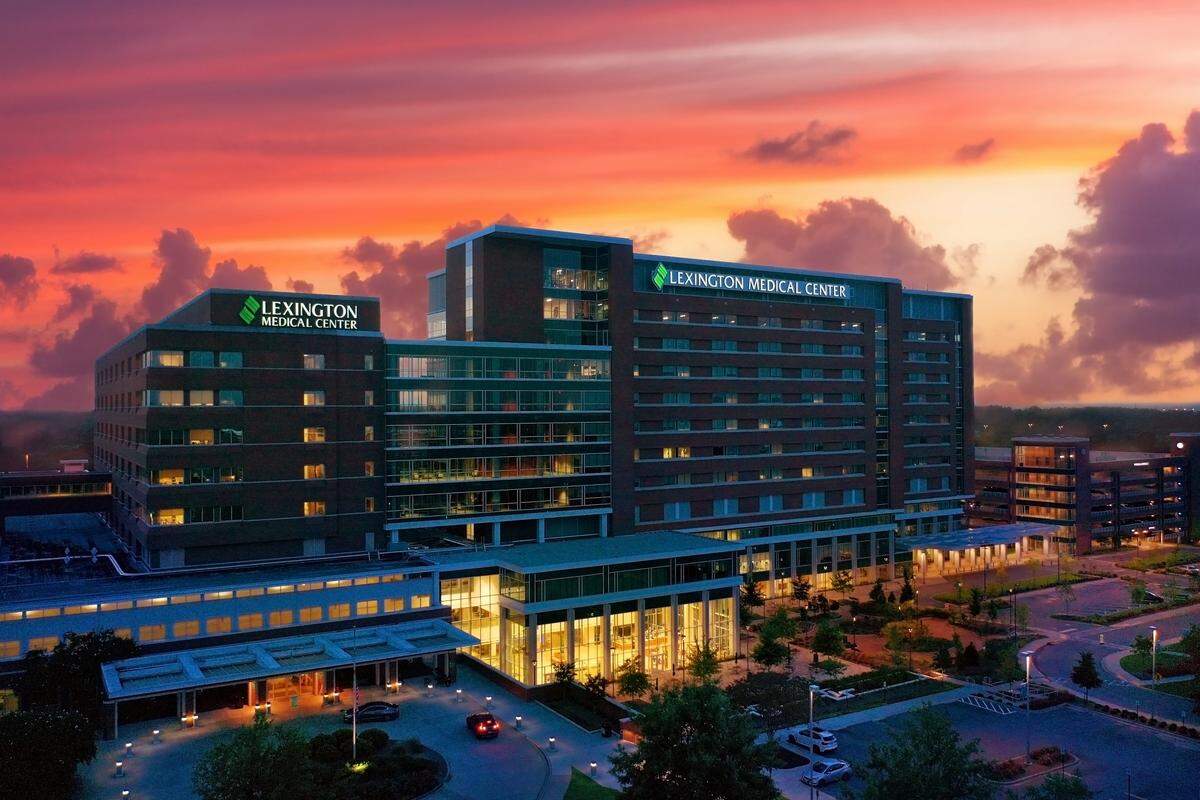
The newest biannual ranking shows that Columbia’s Prisma Health Baptist and Prisma Health Baptist Parkridge as well as Lexington Medical Center can be considered among the safest hospitals in South Carolina. Those hospitals received A grades in the latest ranking.
Another Midlands hospital in the Prisma chain — Prisma Health Tuomey in Sumter — also got the top mark in the safety grades that were made public Wednesday.
Since 2012, the Leapfrog Group has published Hospital Safety Scores twice a year — once in the spring and once during the fall — to create transparency in the U.S. health system. The rating is focused on “errors, accidents, injuries and infections,” the group said on its website.
Based on this criteria, Columbia and Lexington hospitals received three A grades, one B and two Cs for the spring. Those include:
▪ Prisma Health Baptist repeated its score from the fall ranking of A.
▪ Lexington Medical Center repeated its score from the fall ranking of A.
▪ Prisma Health Baptist Parkridge saw its grade improve one letter from B in the fall ranking to A.
▪ Prisma Health Richland saw its grade improve one letter from C in the fall ranking to B.
▪ MUSC Health Columbia Medical Center Northeast repeated its score from the fall ranking of C. The facility was formerly Providence Health Northeast.
▪ MUSC Health Columbia Medical Center Downtown repeated its score from the fall ranking of C. The facility was formerly Providence Health.
“Patient safety and exceptional quality of care are at the foundation of everything we do, and this grade is a direct reflection of our staff’s commitment to that standard,” Lexington Health President and CEO Kirk Jenkins said Wednesday in a news release. “Their hard work means our patients can trust when they walk through the doors of Lexington Medical Center they are receiving world-class care.”
Two other hospitals in the Midlands received an A, and there were mixed results for three others as one improved its past score, another had its grade drop and one hospital was not given a grade at all. Those include:
▪ Prisma Health Tuomey in Sumter repeated its score from the fall ranking of A.
▪ McCleod Health Clarendon in Manning repeated its score from the fall ranking of A.
▪ MUSC Health Kershaw Medical Center saw its grade improve one letter from C in the fall ranking to B.
▪ MUSC Health Orangeburg saw its grade drop one letter from C in the fall ranking to D. The hospital was formerly Regional Medical Center of Orangeburg and Calhoun Counties.
▪ Newberry County Memorial Hospital was not assigned a grade as part of an update to Leapfrog’s methodology, which means it will not list grades for hospitals that did not participate in the 2024 or 2025 survey.
Piedmont Medical Center in Rock Hill was the only other hospital in South Carolina to be affected by this change.
The change was the result of a federal judge ruling in March that said Leapfrog’s methodology was “unfair and deceptive,” for non-participating hospitals. This change will affect the grading of 450 hospitals previously included in the ratings. Additionally, Leapfrog isn’t grading any hospitals that don’t participate in the spring ranking.
Leapfrog issue a statement where it did not agree with ruling, saying “this decision is a threat to patient safety.”
Grading South Carolina
Overall in South Carolina, of the 49 hospitals that were graded, 26 received an A. That’s an improvement from the 21 hospitals to get an A grade in the fall rankings. There were 14 hospitals to receive a B, while eight others recorded C grades in the spring rankings.
No hospitals in the Palmetto State received an F in the spring grades. MUSC Health Orangeburg was the only hospital in South Carolina that was issued a D grade.
Nationally, South Carolina enjoyed an improvement, as it was ranked third among all states, after garnering the No. 10 ranking in the fall. Of the hospitals in the Palmetto State, 53% scored an A rating. That was a greater percentage than was scored in the fall (41.2%).
The bigger picture
For the first time in the past six grading periods Utah (50%) was not the top-rated state in the U.S. Utah slipped to fourth, behind South Carolina, as Connecticut (64.3%) zoomed to the top-ranked state for hospital safety. There was a four-way tie for lowest grade — among North Dakota, South Dakota, Vermont and Wyoming — as none had a hospital with an A grade.
“Upwards of 250,000 people die every year from hospital errors, injuries, accidents, and infections,” the Leapfrog Group said.
Leapfrog said it graded 2,363 hospitals nationwide this spring.
“The good news is that hospitals across the country are making meaningful strides in patient safety and helping save countless lives,” Leapfrog President and CEO Leah Binder said in a news release. “But not all hospitals are the same. That’s why it’s so important for people to consult safety grades and do their research when choosing a hospital.”
Leapfrog said more than 500 people will die today because of a preventable hospital error, and every year 1 of 31 patients will develop a preventable infection while in the hospital.
“You should speak up immediately if you see something that is not right or safe,” Leapfrog said.
Receiving care
“You should never refuse care in an emergency because of a hospital’s safety grade,” Leapfrog said. But talk with a doctor about the best hospital for planned, elective procedures.
However, Leapfrog’s study shows that patients at “D” and “F” hospitals face a greater risk of dying than those at hospitals graded A.
“We know ‘A’ hospitals do a better job at preventing errors,” Leapfrog previously said. “If your local hospital rates below an ‘A,’ talk with your doctor at that hospital and urge them to improve their safety.”
Hospitals vary on things like “infection rates, surgical errors, and patient injuries — not to mention ER wait times,” so using the safety grades and researching options is important, according to the group.
“Your choice of hospital could be a life or death decision,” Leapfrog said.
What to do about an error made in the hospital?
Leapfrog said that ”if you are concerned, feel like something might go wrong, or if you actually see an error made in a hospital,” there are steps to take which include:
▪ Talk to someone immediately.
▪ Do not wait to report the incident if no one you know is around. All health care staff members — from physicians to the custodial crew – are there to make your care as safe as possible.
▪ Discuss the issue in a respectful, yet assertive manner.
▪ If the error happens to you, talk to a hospital employee who can investigate and resolve the problem. Be clear that you expect to hear back about the issue, and that you would like to see something done to address the error. You or a family member should follow up after reporting.
▪ If you do not receive an answer during your stay or shortly after being discharged from the hospital, contact the hospital’s customer service, patient advocacy or patient and family relations department.
▪ Many hospitals have an established system for reporting errors, such as a suggestion box or a hot line. Use these systems. The problem will not be addressed if it is not reported.
SOURCE: Leapfrog Medical Group
Making the grade
The Leapfrog Group said 22 measures are used to generate hospital safety grades, which is divided into two domains: Process/Structural Measures and Outcome Measures.
Process Measures represent how often a hospital gives patients recommended treatment for a given medical condition or procedure. For example, “Responsiveness of hospital staff” looks at patients’ feedback on how long it takes for a staff member to respond when they request help.
Structural Measures represent the environment in which patients receive care. For example, “Doctors order medications through a computer” represents whether a hospital uses a special computerized system to prevent errors when prescribing medications.
Outcome Measures represent what happens to a patient while receiving care. For example, “Dangerous object left in patient’s body” measures how many times a patient undergoing surgery had a dangerous foreign object, such as a sponge or tool, left in their body.
The Process Measures include:
▪ Computerized Physician Order Entry
▪ Bar Code Medication Administration
▪ ICU Physician Staffing
▪ Leadership Structures and Systems
▪ Culture Measurement, Feedback & Intervention
▪ Nursing care hours per patient
▪ Hand Hygiene
▪ Nurse Communication
▪ Doctor Communication
▪ Staff Responsiveness
▪ Communication about Medicines
▪ Discharge Information
The Outcome Measures include:
▪ Foreign Object Retained
▪ Air Embolism
▪ Falls and Trauma
▪ CLABSI
▪ CAUTI
▪ SSI: Colon
▪ MRSA
▪ C. Diff.
▪ Death Rate among Surgical Inpatients with Serious Treatable Conditions
▪ Patient safety and adverse events composite
SOURCE: Leapfrog Medical Group
BEHIND THE STORY
MOREThis is a breaking news story
In a breaking news situation, facts can be unclear and the situation may still be developing. The State is trying to get important information to the public as quickly and accurately as possible. This story will be updated as more information becomes available, and some information in this story may change as the facts become clearer. Refresh this page later for more updated information.