
SC Methodist churches thought they had time to decide to stay or go. The door slammed shut
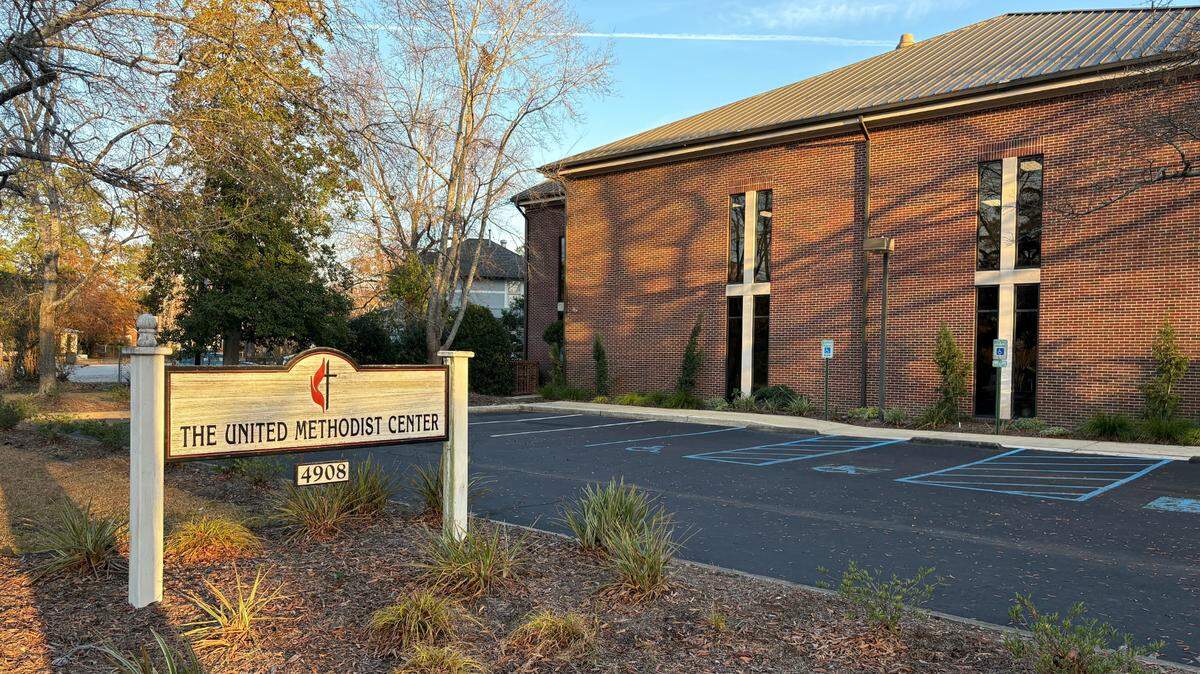
David Dangerfield is as close to a lifelong United Methodist as you’re likely to find. His parents met at Ebenezer Church in Moncks Corner, where his father was the music minister and his mother was the pianist.
“My mother would bring me in in a carrier and put me at the foot of the piano,” Dangerfield said.
But in the past year, worshipers at Ebenezer began discussing if it might be in the church’s best interests to leave the United Methodist conference. Over the years, the congregation has shrunk to less than a dozen active members. Some began to fear that the small church could be closed by the state conference and the old sanctuary sold off.
So church members began considering the process of leaving the United Methodist Church. Ebenezer’s trustees even decided at the end of October to enter a “period of discernment,” starting the formal process of disassociating themselves from the national church of some 4 million members.
The Lowcountry church would join several others that have left the United Methodist Church in recent years. Some 7,600 congregations nationwide, or a quarter of all UMC churches, have disaffiliated through a lengthy break-up process that closed last year, the Associated Press reports. Last year, 113 churches in South Carolina completed the process of leaving the mainline Protestant denomination, completing a period in which the United Methodists allowed churches the option of departing on good terms.
The denomination is one of several that have experienced splits in recent years because of disagreements over how the church should address LGBTQ issues, whether the church should be more welcoming and inclusive or uphold traditional teachings about morality and sexuality.
Even after the 2023 statewide United Methodist conference voted to complete the discernment period, the church continued to offer churches that considered leaving a way to depart amicably before its 2025 conference. But shortly after Ebenezer decided to start the process of splitting from the United Methodist Church, the national church shut the door on further exits.
“We met Sunday afternoon, Oct. 27. We formed a church council and voted to ask to go into discernment, which would start the process of looking into what we need to do to separate,” Dangerfield said. “We notified the conference, the denominational leadership in Charleston, and they told us they would get back to us, and then on the 29th, we received word about the judicial council ruling that it was over.”
The decision by the United Methodists’ judicial council turned on a rule in the church’s Book of Discipline, the foundational rulebook that lays out the official doctrine and organization of the United Methodist Church, which all member churches are expected to follow.
The rule allows for the closure of churches “that are no longer able to function as United Methodist congregations.” South Carolina and other conferences have used as a pretext to turn around and sell the “closed” church back to its existing congregation for its continued use as a church outside of the United Methodist connection.
In its decision, the judicial council decided this is a misuse of the rule and would no longer be allowed. The passage “cannot be construed or used as legislation permitting the gracious exit of local churches because it applies to church closure and the sale of property, not disaffiliation,” the decision says, and using it to close churches “would be a misapplication of Church law.”
“As a connectional church, the South Carolina Conference is bound by the decisions of the Judicial Council,” the state conference said in a statement on its website. “The impact of this decision is that, effective immediately, the Local Church Closure and Separation Process approved by the Trustees of the Annual Conference is no longer available as a means of separation from the denomination.”
The decision left the process of saving Ebenezer Church in the lurch, and Dangerfield worries that without other options, the church could eventually be closed down and the property dating back to the Civil War sold off.
After growing up in the church, Dangerfield moved away as an adult, but came back a few years ago to help his parents try to find a way to revive the church that has meant so much to his family.
“We’ve had a number of church meetings this fall, trying to come up with ways to get folks back into the pews, back into church,” he said, “and I raised in October the possibility of just talking about separation and discernment.”
Other churches across South Carolina were left feeling stuck after the decision. One Midlands church was also in the midst of the “discernment” process, and even had a majority committed to leaving, when the decision came down and “pulled the rug out from underneath us,” according to one church member who asked to remain anonymous because she didn’t want to be identified as speaking out against the conference.
She said the church had almost slept through the 2023 exodus, which didn’t affect their church community, but became more aware once the 2024 general conference approved the ordination of openly gay clergy and allowed the celebration of same-sex marriage.
“There are basically a lot of people in churches who don’t understand what goes on in their denomination, and we got caught with our head in the sand,” she said. “We didn’t realize what was going on, and trusted leadership to make us aware of the friction had been growing for years. ... We were kind of sheltered.”
While the conference marriage vote was the catalyst, she said her fellow worshipers had become become weary of and disillusioned with the United Methodist hierarchy.
“The overall structure of the church is top-heavy. It’s not serving the local congregations,” she said. “A lot of the money we send in apportionments are spent on things we believe are not directly involved in making disciples of Jesus Christ, or the Wesleyan theology on sharing the gospel. It’s about social principles and political agendas, not focused on God.”
If churches had been able to leave under the terms previously being offered by the church, the congregation would have been able to maintain their church property by paying a 10% tithe and settling any other accounts. But because the church is considered the property of the South Carolina conference, it could be sold at the full market value. Dangerfield said any closure or sale of Ebenezer Church would be “heartbreaking” to those like himself who have so much history with the church.
“I have begged for the conference to keep faith with us,” he said. “When the time comes if we need their help they would keep faith and keep it open and work with us.”
He feels that with the growth of suburban communities outside of Charleston, he feels there is the potential for Ebenezer to grow into a vibrant church.
“Nobody wanted to leave, wanted to control our destiny,” Dangerfield said. “It was very disappointing that we were given a set of rules and then the rules were changed. ... I don’t want to see the house of worship our ancestors built and the graveyard where they sleep become a piece of real estate.”
The anonymous Midlands Methodist said the decision left several church members dissatisfied, and stewing in the pews.
“The building is the building, and money is money, but if you’re sitting in church and don’t believe the same thing as the minister or the institution, that’s not church,” she said.
This story was originally published December 18, 2024 at 10:34 AM.
.jpg)