
SC church breakup will be handled by a single court, just not the Supreme Court
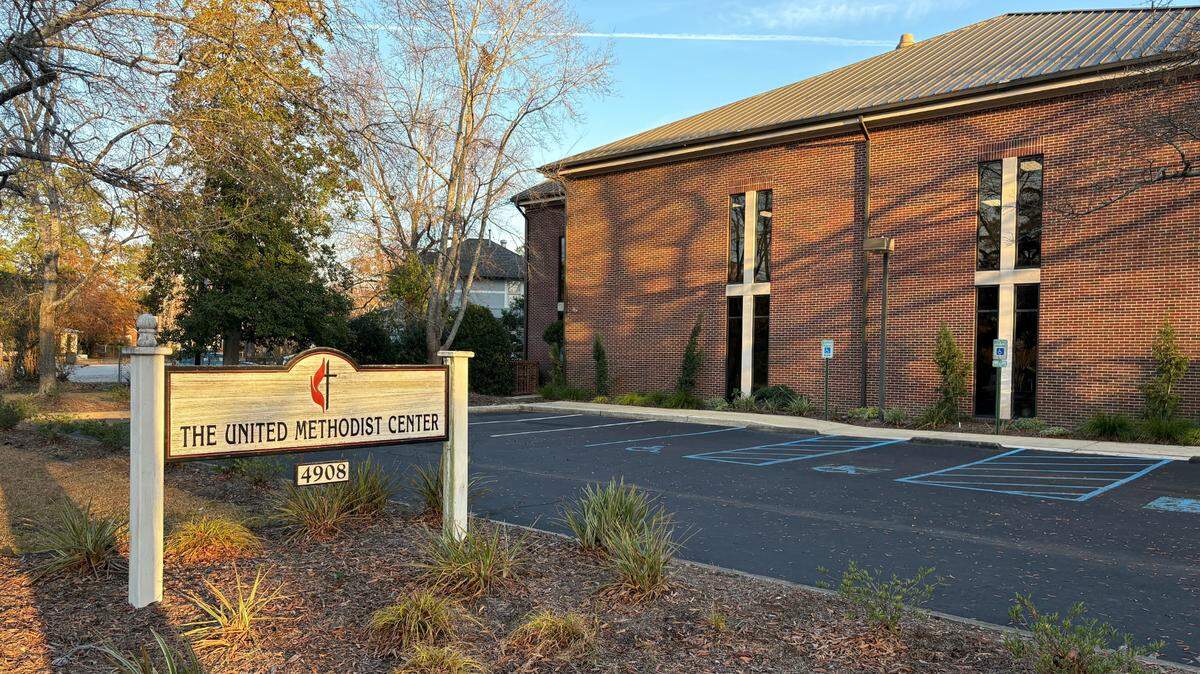
A long-running battle between one of the state’s largest churches and several of its local congregations is heading for one South Carolina judge’s desk.
S.C. Chief Justice John Kittredge has consolidated multiple legal disputes between the S.C. United Methodist Conference and several churches looking to break away from the denomination, after the state Supreme Court rejected a plea to hear the affected churches’ appeal directly.
Instead, that responsibility will fall on Judge Brian Gibbons, who sits in the Sixth Circuit based out of Chester. Gibbons will now handle all outstanding claims between the conference and member churches collectively, the chief justice ordered last week.
“IT IS ORDERED that the Honorable Brian M. Gibbons be vested with exclusive jurisdiction to hear and dispose of all pre-trial motions, as well as trials, in any case statewide that may arise statewide pertaining to the aforementioned disputes,” Kittredge wrote in his order.
A lawsuit was filed with the state Supreme Court in April by the Methodist Church of Simpsonville and nine other local churches that sought to break away from the S.C. United Methodist Conference and keep their church property in the process.
That suit was in response to a case brought in circuit court in Greenville County against the Simpsonville church, which the United Methodists claimed had attempted to break away in violation of the denomination’s rules. The other churches involved are also engaged in legal disputes to break away from the larger conference over theological disputes, each originally filed in their home counties.
But the state Supreme Court justices rejected the churches’ petition, finding there was not yet a reason to raise the cases up from the circuit court level.
In recent years, the United Methodist Church has gone through a long, drawn-out process of releasing several churches from their connections to the larger denomination, leaving thousands of local congregations to walk away from the church, including more than a hundred in South Carolina.
That process came to a head in 2023, when the statewide United Methodist conference allowed 113 churches to disassociate from the church while keeping their church property, taking a 10% tithe from the exiting churches in the process.
The breakup process was supposed to end years of acrimony between more liberal and conservative Methodists, primarily over the issue of how accepting the church should be toward LGBTQ+ people. The short-term policy was meant to give more conservative churches a way to go their own way, while making clear there was a deadline and any congregations looking to depart in the future would have to do so without their property.
Following further changes to the church’s policies on LGBTQ+ members at the 2024 United Methodist conference, South Carolina’s conference opened another way for member churches to leave, using a procedure meant to close existing churches. But the national church later ruled that those procedures couldn’t be used as a cover for back-door departures, leaving some churches still trying to break away in the lurch.
“The Conference appreciates the Supreme Court’s orders and looks forward to the expeditious resolution of these matters,” United Methodist spokesman Dan O’Mara said in a statement. “We believe the actions of these local church leaders violated The Book of Discipline of The United Methodist Church – the collection of rules by which United Methodists have agreed to govern themselves dating back to the 18th century.” “Connectionalism is an integral part of The United Methodist Church, and that commitment is protected by a denominational trust clause providing that all property and assets of any local United Methodist church are held ‘in trust’ for the benefit of the entire denomination.”
The State reached out to Jim Bannister, attorney for the Simpsonville Methodists, for comment prior to publication. The church argued in its filing that it predates the creation of the United Methodist Church in 1968, and that its 110-year-old church building could not be considered the property of the national church.
.jpg)