
Hospitals, Red Cross warn of ‘unprecedented,’ ‘historically low’ blood shortage
Vesha Jamison already knew how important blood donations were from her work with the Red Cross. Then she saw first-hand how badly needed they are when her own son was admitted to the hospital.
Jamison’s 11-year-old son, Dreylan, was admitted just before Thanksgiving with symptoms from his sickle cell anemia. But the family had to wait for two agonizing days as his condition worsened before his case was deemed serious enough to warrant a transfusion of the hospital’s limited blood supply.
“It’s crazy to work on this on one end and see it on the other side,” Jamison said. “It was very serious. If you look at X-rays of people with COVID and (her son’s) acute chest syndrome, they’re scarily similar. It was scary to sit and wait knowing his condition at that point.”
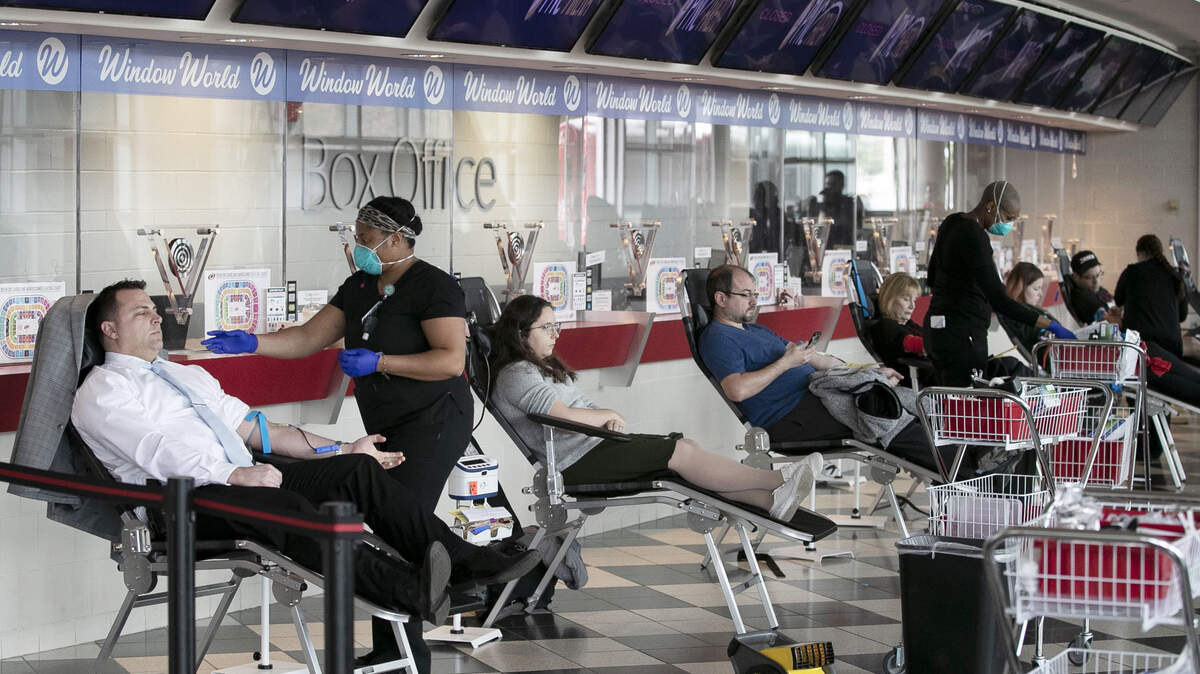
The Jamison family’s struggle is being mirrored across the country as hospitals and blood banks face a “historically low” blood supply heading into the holidays, forcing health care providers to decide how readily they can part with the blood they do have.
Several factors are driving down donations. The COVID-19 pandemic has impacted donations just as it has everything else, creating new challenges for the Red Cross to successfully hold blood drives. The holiday period also routinely brings a drop in the number of blood donors.
Recent events such as the string of tornadoes that struck the upper South and Midwest have exacerbated those challenges because they both canceled planned blood drives and created new demand on blood stores.
“We have a historically low blood supply,” said Mandy McWherter with the regional office of the American Red Cross. “The challenges are numerous. We’ve experienced a challenge throughout COVID to keep supplies at a sufficient level.”
The problem with such shortages are the delays it creates in treatments for those who need blood transfusions.
As the Red Cross’ sickle cell account manager in South Carolina, Vesha Jamison was already familiar with the effects of the disease before her son’s latest hospital stay. But she saw them during those days as Dreylan’s hemoglobin and platelets steadily dropped and he entered into a “pain crisis.”
“He was having to take pain meds around the clock, and we’re just waiting,” she said. “Then they came in and said ‘I think we’re going to get some blood today.’”
A big part of her job is reaching out to African Americans, who are more susceptible to sickle cell.
Only 3% of blood donors are Black, she said. “We need more diverse donors to have the most closely matched blood.”
So far, Lexington Medical Center has not had to cancel any patient procedures due to a blood shortage, said spokeswoman Jennifer Wilson. But hospital leadership ”has communicated to staff about criteria for blood use.”
“We’re always mindful of that because this is a precious commodity and a limited resource.” Wilson said.
Patients having elective surgeries are being advised to have their own blood drawn ahead of time to be used during the procedure, Wilson said.
Larry Grant, the blood bank director at Prisma Health Baptist Parkridge Hospital, said hospitals regularly see a dip in blood donations, usually in mid-summer and again around Christmas, “when the donors are on vacation.”
But “this year they’ve put out a lot of announcements,” Grant said of the Red Cross. “It feels like the drought this time is deeper and longer, and there’s no end in sight.”
Blood donations are needed for disasters, but also regular treatment for cancer patients and those with chronic conditions like sickle cell. Donors need to give regularly and repeatedly, Grant said, to ensure health care providers don’t run into more acute shortages.
“The nightmare in blood-banking is that you won’t have anything to provide,” he said. “The basic expectation is that if you go to a hospital, they will be able to help you. What we’re seeing is truly unprecedented. There’s only a small segment of society that actually donates.”
The Red Cross has taken precautions to be sure its donation process is safe during the pandemic, and there’s no need to delay a donation with most COVID-19 vaccines.
Incentives are also being offered for donations to be made over the holiday period, like a long-sleeve t-shirt available for anyone who makes an appointment before Jan. 2. McWherter suggests giving blood is a more effective way of helping people like this month’s tornado victims than giving money.
“When there’s a tornado outbreak, it’s the blood on the shelves that can help people right away,” she said. “That’s when blood supply is really problematic, because the time from donation to when it can be available is three days.”
Hospitals have a particular demand for type O-negative, which is the universal donor, as well as platelets that are donated to cancer patients.
Potential donors can find a local blood drive at www.redcrossblood.org. The Red Cross app can even show where your donation ends up.
.jpg)