
‘Did he know we were there?’ SC father dies of coronavirus without family by his side

Before the pandemic, maybe this moment would be different for Alexis Sprogis.
Maybe she would not be here at all — saying goodbye to her father, Terry Allen Jorgensen, while wearing a mask and face shield and protective gown. Maybe her sister, Teresa Gross, would have had time to book a flight from her home state of Wyoming to Greenville, South Carolina. Or at least she would have been able to find a flight.
But that would be a different world, one where the country isn’t struggling to control the spread of a highly contagious, aggressive virus.
So on Sunday, Sprogis, 35, sits next to her father in his room at Greenville Memorial Hospital. He is intubated, on one of those prized ventilators hospitals are looking for as COVID-19 wreaks havoc on people’s respiratory systems. Jorgensen’s kidneys stopped working on Saturday, a day after his test for the coronavirus came back positive — four days after it was administered.
She was lucky to even get this time, she said. At first she was told she would not be allowed in because of visitor restrictions enacted in recent weeks to protect patients and health care workers. Then she got 15 minutes — this was an end-of-life situation, she quickly learned as her father’s condition worsened over the weekend. In the end, she spent 45 minutes at his bedside, just the two of them. But she couldn’t be there when he took his last breath.
Gross, 50, appeared via a FaceTime call on Sprogis’ cell phone, which was placed inside of a biohazard bag.
“It was really hard to see” her father in that condition, Gross said.
The half-sisters, 15 years and 2,000 miles apart, talked about memories of their father, a longtime drug and alcohol addiction counselor. He would have turned 74 in April. The sisters wept, shared the silence and soaked in these final, strange, surreal moments.
One of the unifying tragedies of the pandemic is that the sisters aren’t alone in their grief. Around the country and the world, people are dying by themselves as fears about widespread infection and overwhelmed health systems keep loved ones apart. At hospitals, nursing homes, funeral parlors, churches and cemeteries, families have had to select who they will send to comfort the dying, organize memorials and witness their burials.
As bodies piled up in Italy, people such as Franca Stefanelli, who lost her husband of 50 years to the coronavirus, grappled with the idea, the New York Times reported.
“How can you choose among family members? The children shouldn’t be there? The wife shouldn’t be there?” she said. “This is the bitterest part.”
For Jorgensen and his daughters, it all happened very quickly. In the weeks before his death, Jorgensen, a diabetic, had fallen and injured his shoulder, Gross said. He underwent surgery on March 2 and spent the next few weeks recovering at Sprogis’ home, with his son-in-law and granddaughters.
The coronavirus pandemic grew more alarming in those weeks. The St. Francis hospital intensive care unit where Sprogis’ husband, Brandon, worked was transformed into an area for COVID-19 patients. When he got home each day, Brandon Sprogis removed his clothes and showered in the basement in order to protect his young daughters and Jorgensen from potential infection. The family wonders now if that’s how Jorgensen became ill.
But after weeks at her house — only leaving for medical appointments — Jorgensen wanted to spend Saturday night at his home, 9 minutes away, his daughter said. He probably spent that evening of March 21 watching Westerns on television, she said.
The next morning, when she went to check on him, Jorgensen was confused. He couldn’t answer questions. He didn’t recognize his son-in-law, who thought maybe Jorgensen had suffered a stroke. Jorgensen also had a low-grade fever, but no other symptoms associated with the coronavirus, Sprogis said. They called EMS.
At the hospital, a chest X-ray showed Jorgensen had some fluid in his lungs, and he was put on a ventilator and tested for COVID-19. He had not suffered a stroke, but he did have the virus.

It wasn’t until Saturday, March 28, that Sprogis said doctors and nurses conveyed to her how serious her father’s condition was: The family declined dialysis on Sunday morning and Alexis was given 45 minutes with her father to say goodbye before doctors removed his ventilator around 6:30 p.m. The last song they listened to together was Willie Nelson’s “You’re Always On My Mind” — Jorgensen loved country music.
This was not how she had imagined her father’s final moments. He had been sick before, needing a liver transplant after recovering from alcoholism in his 30s, and he developed diabetes, hearing problems and some memory loss as he aged. But even as Sprogis talked to her husband and a friend about the coronavirus in early March, they speculated based on statistics how many people they knew would become gravely ill. They did not think it would be someone in their own family.
For Gross, it was hard to see her sister physically in the room, able to hold their father with gloved hands, while Gross couldn’t. She felt “helpless,” unable to comfort either of them with her touch. Jorgensen didn’t have his hearing aids in his ears, so she feared he felt isolated in his final moments.
“The sadness for both of us was that he was alone and he was confused because of his condition. Did he know we were there?” she said.
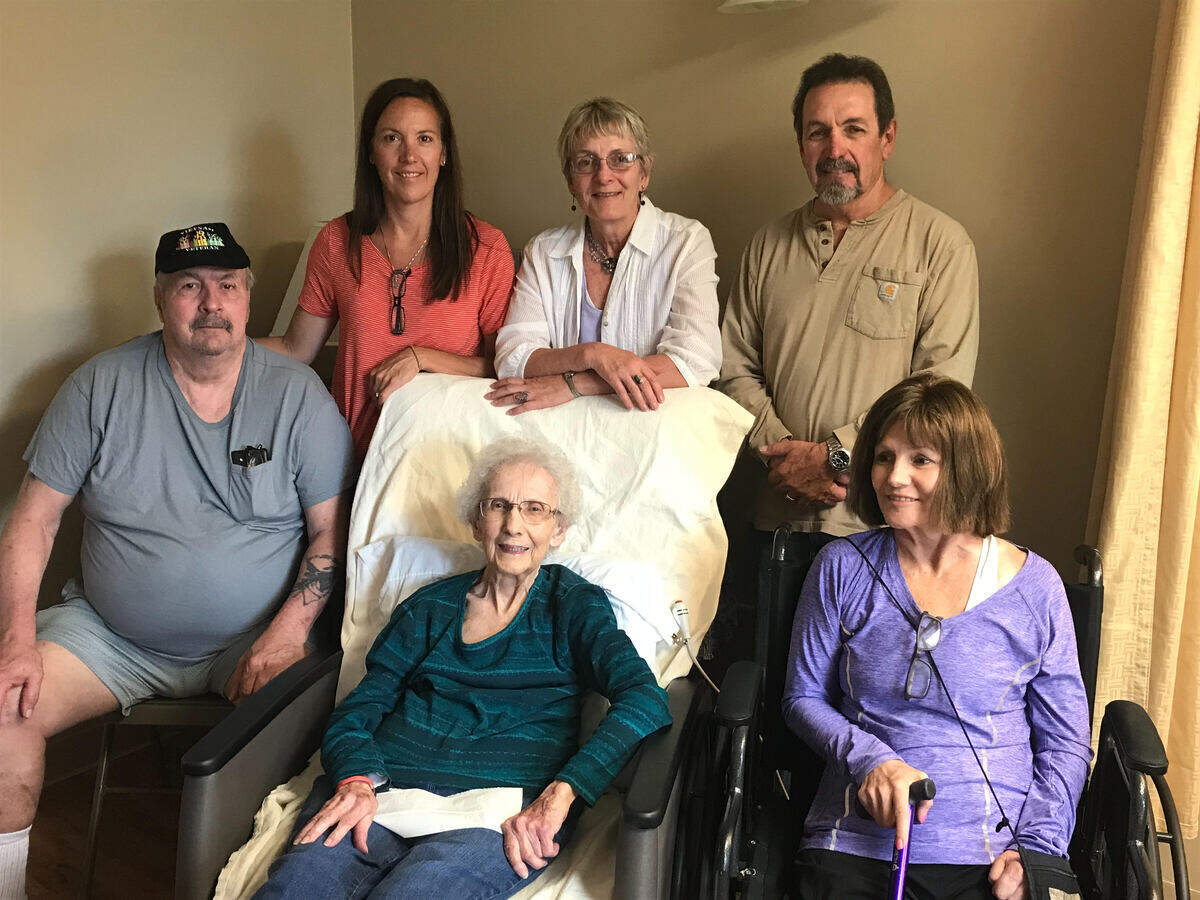
Jorgensen, a 6-foot-3 Navy veteran, was always a very physically affectionate man, a caring and kind father who wanted to help others when he overcame his own addiction 40 years ago, the sisters said. He loved John Wayne movies and he loved his family.
It was surreal for Sprogis, once she was led out of the room, to watch through the glass as her father died alone, without even a nurse next to him. After she finished filling out the hospital paperwork, she returned to the car where her husband was because he wasn’t allowed in with her.
The family can’t have a proper funeral or wake for Jorgensen because of social distancing guidelines and all of the other logistical problems caused by the pandemic.
“On top of everything that happened in the hospital and how he passed away and how isolating all of that was, there’s no closure,” she said. “We’re not gonna get any closure of the memorial and the peace that would bring.”
Instead, Sprogis said she wants her father’s death to resonate with others and spur leaders to take action that could save other lives.
She has shared her story with friends, in online groups, on her personal social media and through local media near her home of Taylors. People are not taking advice from health officials to heart, she says, pointing to “closed” parks that are packed with people, and department stores buzzing with customers. She knew people who were still making appointments at hair and nail salons — before Gov. Henry McMaster closed down “nonessential” businesses on April 1.
“It’s not enough,” Sprogis said. “Before this affected me personally, I knew that it was not enough. People aren’t listening.”
Although South Carolina leaders have taken steps to ban large gatherings and encouraged residents to stay home, they have refused up until this point to take the strongest action: issuing a statewide shelter-in-place order.
“There are so many people that it hasn’t affected them personally but it’s going to, before all of it’s over. There are going to be thousands of stories like mine,” Sprogis said.
South Carolina health officials predict the state will have more than 2,600 COVID-19 cases by April 2. At its peak in the state in May, 29 people with the coronavirus will die in a day, projections show.
Gross’s effort crosses state lines. She wants her small community of Newcastle, Wyoming, to understand the need for precautions, even if health officials had not identified any COVID-19 cases in her town as of March 30. Many residents are ambivalent, she said. It might change their minds hearing from her, someone they recognize from their local school district.
“They know me, they know who I am, they know I’m not a panicky person,” she said.
On Monday evening, Gross sent a letter to her 95-year-old grandmother, Marian Jorgensen, to tell her that her son died. It all happened so quickly that she hadn’t even known her son was ill, Gross said. Marian Jorgensen can’t hear well, and lives four hours from Gross, at an assisted living facility in Winner, South Dakota. The facility has restricted visitor access to protect high-risk residents from possible exposure to the coronavirus.
Asking a caretaker to read her the letter seemed like the most responsible and humane option.
“That was hard because I would have liked to be with her when she received the news that her son had passed away,” Gross said.
The sisters said they hope to organize an event in South Dakota this summer to honor their father’s life. They might combine it with the big party they had planned to celebrate their grandmother’s 95th birthday on March 26. It all depends on how long it takes to get the pandemic under control.
This story was originally published April 2, 2020 at 5:00 AM.