
SC Supreme Court tosses out Democratic lawsuit on absentee voting
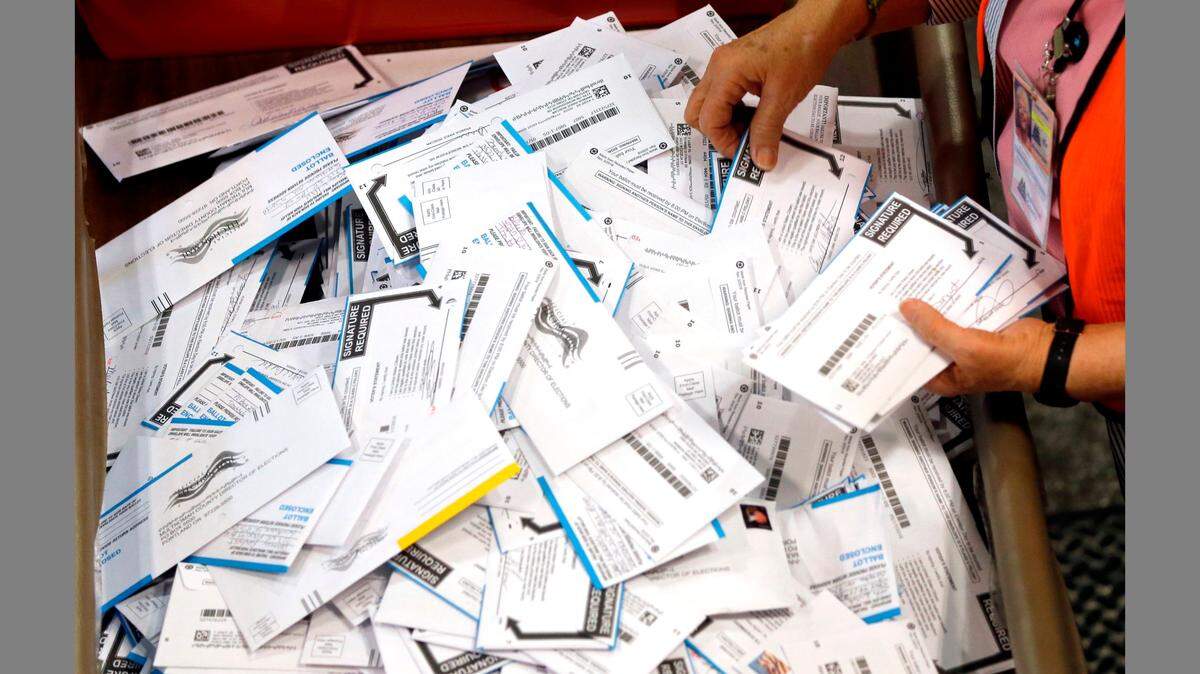
The S.C. Supreme Court on Wednesday tossed out a lawsuit by state and national Democratic party interests who sought a ruling that would have allowed all voters to cast absentee ballots in the upcoming June 9 primary without an excuse.
“We will dismiss any case that does not present a justiciable controversy,” the court’s ruling said, meaning the issue had been resolved by a new law passed earlier this month by the Legislature and there was no need for for the court to rule on the question before it.
On May 12, the same day the case was argued before the high court, the General Assembly enacted a measure allowing anyone who wished to vote absentee in the upcoming June 9 primary to do so. The next day, Gov. Henry McMaster signed the bill into law.
Five justices agreed that since the state had passed a law to let any registered voter to vote absentee, there was no longer a question for the court to rule upon for the June 9 primary.
Democrats had sought the change in law because, they said, many voters would likely stay away from the polls because they fear catching the highly contagious and sometimes deadly COVID-19 virus.
And three justices — John Kittredge, George James and John Few — ruled that broadening the state election law to include fear of a deadly pandemic as a reason to qualify for an absentee ballot was not a legal question for the court, but a political question for the Legislature.
Chief Justice Don Beatty and Associate Justice Kaye Hearn disagreed, saying that the question of whether to broaden existing state election law had not been fully argued before the high court and could surface again.
State GOP Chairman Drew McKissick released the following statement in response to the ruling, “We’re pleased to see that the State Supreme Court confirmed what we’ve been saying – that our election laws are a legislative issue, and our state legislature has spoken. The simple fact is that the Court wisely recognized that this is a separation of powers issue and rejected the Democrats’ invitation to violate that principle.”
State Democratic Party chair Trav Robertson said, “This case was never about politics. It was about ensuring a free and open election. An election where our citizens don’t have to choose between democracy and their health. Our hope is that in September the General Assembly will gather ... and allow the same provisions” for the November general election as have been made for the June 9 primary.
Rhodes Bailey, Democratic Party candidate for the Columbia-based S.C. House Seat 75 and one of losing plaintiffs in the lawsuit, said, “What is clear from the Court’s decision is that our lawsuit shamed the legislature into doing something.”
On Monday, U.S. District Court Judge Michelle Childs ruled that South Carolina could not prohibit voters with a fear of contracting the coronavirus from voting absentee. The virus is so contagious and so deadly that it would be unconstitutional to force voters who fear for their lives to go to the polls, Childs ruled.
Childs ruled on whether the S.C. law concerning absentee ballots was in violation of the U.S. Constitution. The State Supreme Court had been asked to interpret a section of state election law.
In normal times, South Carolina law only allows people who qualify for a dozen or so exemptions to vote absentee. Those exemptions include being 65 or older, attending a funeral or serving in the military.