
Longtime Horry County Councilman W. Paul Prince reflects on a lifetime of service
When W. Paul Prince first entered politics, Horry County was mostly dirt roads, had no county-wide fire department and almost everyone was a Democrat.
It was 1983 and the county was in bad need of a better landfill, new taxes to fund a county government and emergency medical services for those who lived outside of the coastal cities and Conway. Only about 100,000 people lived in the county that’s since exploded in population and development.
Horry County is drastically larger now — close to 364,000 people live here year-round — and much more organized. Most of the dirt roads have been paved in the intervening years, the county government operates county-wide police, fire and EMS services, manages storm water and runs a parks and recreation department. A Solid Waste Authority collects the garbage and operates a large landfill.
The county government is now a half-a-billion-a-year operation, and Horry County is a GOP stronghold.
And through (almost) all of that change, Prince has been on Horry County Council, usually playing a significant role.
Now 77, Prince has served two stints on Horry County Council, one from 1983 to 1992 and a second from 2002 to 2020. He’ll retire at the end of the year, leaving a seat he’s held for a total of 28 years. In a series of in-depth interviews in November, Prince spoke with The Sun News about his life, and the legacy he leaves behind. Most importantly, Prince said, he’s led a life dedicated to public service.
“I was always out serving people, whether I was getting paid for it or not,” Prince said in a recent interview. “I just felt comfortable serving people. I guess I’m a people person.”
From share cropping to public service
Born in Loris in 1943, Prince was the son of a share cropper father, who moved the family from farm to farm during the 1940s and 1950s, trying to earn more money from the yield. Though his father would later train and work as a home builder, Prince grew up poor.
“I call (share cropping) slave labor because you had to work or else you couldn’t eat,” Prince said.
He was an enterprising man from a young age. He would pick peanuts, have his mother help him boil them, and then walk door to door selling the boiled peanuts to neighbors. Later, he’d expand his businesses to lawn mowing and newspaper delivery.
He was also an athlete in high school, excelling in baseball, basketball and football. He later played in the Washington Football Team’s farm league, playing part-time for the minor league team. He didn’t go to college, but said he didn’t need to.
“I tell people I went to hard knocks college,” Prince jokes.
After graduating from Loris High School, Prince married his wife Carolyn in 1962 and got a job at the Ford Motor Company as a salesman making $125 per week. He also dove into a life of community involvement and public service, joining the local booster club in 1963 and starting as a volunteer firefighter in 1964. He coached local youth baseball and basketball teams, and continued mowing lawns and delivering newspapers for extra money. He joined the Jaycess, a Christianity-based public service organization, eventually becoming the president of the Loris chapter. The group would organize recreation programs and helped build Loris’ first public park.
It was through the Jaycees that Prince got his first experiences in public service. He would end up holding each leadership position in the local chapter, and was required to keep up with local news and government as part of the job. He’d volunteer as a poll worker and was constantly meeting his neighbors and other people in the community.
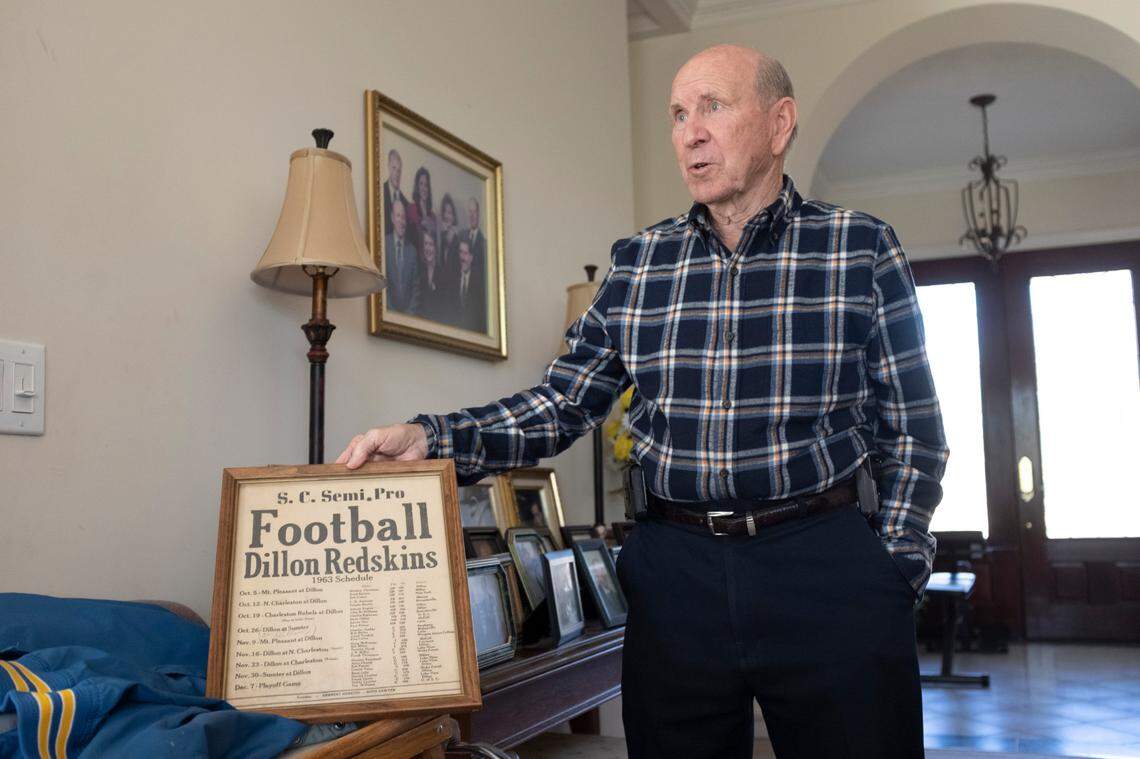
Unhappy with his work as a car salesman and the meager pay, Prince set out on his own and got a loan to open a gas station and convenience store along Highway 9, just outside of Loris. He set up large above-ground tanks and several pumps, and convinced a gasoline supplier to front him his first tanker truck of gas. Because he was running a station unaffiliated with a major petroleum company, he could sell a gallon of gas for 10 cents cheaper than his competitors, and began selling out every week. He’d sell sandwiches and other basics in the store and, in due time, he was pulling in $900 per week. His store burned down in 1971, but he was able to rebuild.
By the early 1980s, Prince was well established in Loris. He knew just about everyone and just about everyone knew him. The first Horry County Council had been elected in 1976 and, according to Prince, the man who held the seat was known to cater to certain special interests. With the eventual encouragement of then-South Carolina state Senator James P. Stephens who happened to be a neighbor, and whose son had married one of Paul’s sisters, Prince entered the 1982 primary, running against Arthur Marlow and Bill Shannon.
“(Stephens) said, ‘You probably can’t win, he’s got the money behind him,’” Prince recalled. “‘Well,’ I said, ‘I’m gonna run anyway.’”
He beat one opponent in the primary, and the other in a runoff election. His wife ran his campaign, as she did with all of his races.
“I had free range of coming and going (from the gas station), so I was able to do it and I knew a lot of people back then,” Prince said of running for office for the first time.
First tenure on Horry County Council
Once on council, Prince got to work on building out the recently-formed county government.
Throughout the 1980s he worked with his counterparts on council to secure funding for a county-wide fire department and emergency response service, as well as a 9-1-1 service. By the late 1980s he started pushing for the county to pave dirt roads. Eventually, the county would dedicate a pot of money to pave a certain number of dirt roads in each council district each year. Prince was also part of an effort to name streets in the county that hadn’t yet been named.
In the late 1980s, Prince and others set about to remake the Solid Waste Authority, which collects residential waste and manages a landfill. Before that system was in place, the county operated a system of between 400 and 500 green bins where residents could drop off garbage that would then be hauled away. The bins would often overflow and the state Department of Health and Environmental Control was “on us all the time,” Prince said. Among the reforms he helped implement were a system of recycling centers where residents could drop off recyclable materials, the establishment of a new landfill and doing away with the green bins.
“Ever since then we’ve had a whole lot better of a facility to take care of waste and garbage and stuff,” Prince said. “That was a big project for this county, it was much much needed.”
And stemming from his work in Loris, Prince was a part of the effort to establish a county-wide parks and recreation department to oversee county-owned parks and offer programs to the community.
Second tenure on Horry County Council
By the early 1990s, Horry County had changed. Thousands upon thousands of new residents had moved to the area and the political makeup of the county was changing. A re-drawing of county council districts forced Prince out of office. He ran in 1992 but lost the race, his first loss in a decade.
“They gerrymandered the district so bad …that I didn’t win that time,” Prince said.
“‘You won’t be able to win as a Democrat, they’ve gerrymandered the district so bad,’” he recalled his wife telling him at the time.
So Prince went back to running his businesses, which included home building in Loris and real estate investment. But he wasn’t done with politics. In the mid-1990s, he sued the county for gerrymandering his district and won the suit, causing the lines to be redrawn once again, he said. But by the time he was encouraged to run again in the early 2000s he had to run as a Republican, he said, because a Democrat could no longer win in his district anymore.
“It don’t really matter what I run as, Democrat or Republican, I’m still Paul Prince,” he said. “I just loved to serve the people. In county government you don’t need to battle with politics or with parties.”
While he was not on council, he remembered observing that the county was only going to continue to grow, and that the county government would have to keep up. He had visited Washington D.C. and saw how many people lived there. He remembers thinking that all those people would eventually want to leave such a crowded place. Then, he said, he started seeing a steady stream of license plates from Northern states stopping by his gas station.
“I just realized that these people are just going to keep on coming,” he said.
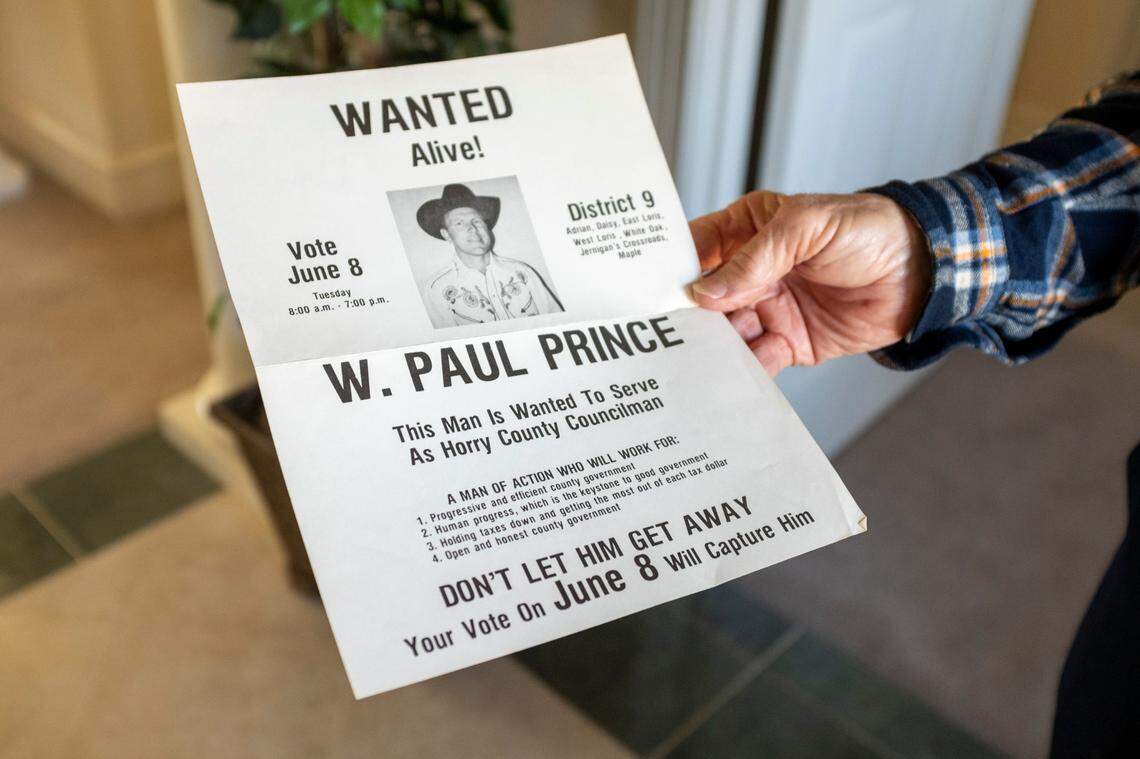
He won election again in 2001 and continued serving the Longs and Loris area from January 2002 to the present.
Back on council, Prince was again part of an effort to help the county adjust to a flood of new residents, modernizing it for the present day. He was part of the effort that created new zoning maps for the entire county in the early 2000s and helped establish a storm water fee to help pay for a drainage system that drains storm water from the mostly flat county. He said both were big changes that he was nervous to be a part of at the time.
“I was afraid to do the storm water fee and the re-zoning, but we would’ve been in worse shape without it,” he said. “It’s kinda like church, you have to pass the hat to keep the church going. You have to pass the taxes to keep the county going.”
As he prepares for retirement, Prince said he’s proud of the work he’s accomplished, especially the county fire department because it’s close to his heart. Even though he’s aging, Prince still volunteers as a fire fighter in Loris. As the county keeps growing, Prince said, he hopes the new residents appreciate how much the county government does for the people who live here.
“A lot of the people who are moving down here don’t appreciate what we have here,” he said. “A lot of people who come here are good people, but about 10% of them, I wish they would go back.”
In the new year, Mark Causey, a realtor in the Loris and Myrtle Beach areas, will replace Prince. He said he wishes Causey the best.
“I hope he does a good job and looks out for the people and doesn’t become a special interest councilman and just cater to certain people,” he said. “I hope he becomes a servant of all the people, whether they’re rich or poor, whatever color they are, I hope he can serve them to the best of his ability.”
In the end, Prince said, he’s proud of the work he’s done on council.
“I’d just like to know I’m appreciated because I paid the price,” he said. “It’s a thankless job, but If I can get self satisfaction out of what I do I view it as a win for me.”
This story was originally published December 31, 2020 at 10:00 AM with the headline "Longtime Horry County Councilman W. Paul Prince reflects on a lifetime of service."
