
You can’t park in your front yard, Irmo resident. But can your mother?
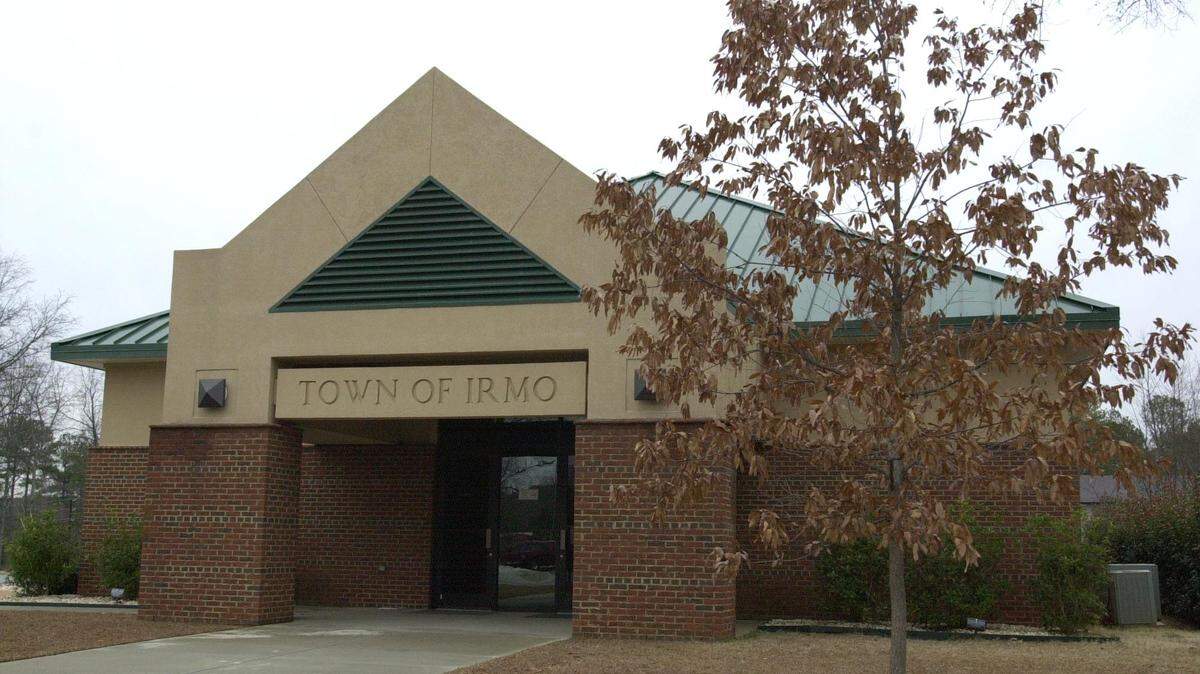
It has been just under a month since the town of Irmo began enforcing a revived parking ordinance that limits where residents can keep their vehicles. But some residents say they are still confused and concerned about it.
The concerns include provisions for visitors. While they are exempt from the law, there’s no formal process for identifying which cars belong to visitors and which to residents. Others complain that exceptions for people with disabilities are being granted unequally or, sometimes, not at all.
Irmo Mayor Hardy King says the new rule is intended to make Irmo more attractive to potential homeowners and businesses.
The new law prohibits parking anywhere in the front yard of a home except in the driveway or a parking area approved by the town. Although the ordinance was passed by the Town Council in January, enforcement was delayed so town officials could educate residents about the new law.
In the weeks since enforcement began on Aug. 1, 101 warning notices were issued. Those who received notices then had 15 days to correct the problem.
Records provided by Irmo Police Department indicate that only two tickets had been issued by Aug. 20. One property received a warning on Aug. 6 and was ticketed on Aug. 20.
All of the notices were issued in or near the Friarsgate neighborhood. Of the 101 issued, 24 were on Chadford Road and 16 were on Friarsgate Boulevard.
Part of the problem is that sections of Irmo were built years ago, with smaller lots and shorter driveways, on narrow, winding roads. Finding enough parking can be tough.
Under the ordinance, visitors are allowed to park in the front yard, including in grassy or dirt areas. Temporary parking also is fine in unapproved areas. However, Irmo does not have a visitor permit or badge system, leaving police officers to distinguish between guest, resident and temporary vehicles.
“Officers have to use their best judgment to determine whether a person is a visitor or not,” said Capt. Courtney Dennis of the Irmo Police Department.
Officers can check license plate records to see if a vehicle is linked to the property. If an officer is unsure whether someone is a visitor, he or she can issue a warning and check back when the visitor is expected to be gone, King said. If the guest vehicle is gone, the matter is resolved.
Dennis said parts of the ordinance are still being discussed by Town Council. Until then, matters are handled on a case-by-case basis.
One woman wrote on Facebook that she was visiting her mother’s home in Irmo and left her vehicle parked in front of the house for no more than 40 minutes. She came back just in time to stop an officer from ticketing her.
Another gray area in the ordinance is whether there are provisions for people with physical disabilities. On the Citizens of the Town of Irmo Facebook page, which contains about 3,000 members of the town’s 12,000-person population, one woman shared her experience.
She wrote about how a code enforcement officer said she could be exempted from the new parking ordinance if she had a physical disability or a handicap parking permit. Yet in the comments under her post, other residents said they were not afforded the same flexibility.
The ordinance was not being uniformly enforced, citizens argued.
Dennis could not say whether people with disabilities were exempted.
When questions such as handicap exemptions have come up, Dennis said, officers have been submitting requests from citizens to Town Administrator Robert Brown. It is then up to Brown to approve or deny the request. Brown could not be reached for comment.
King said in general, citizens who wish to be excused from complying with certain ordinances must formally request a variance. However, variances are issued for reasons having to do with the property, not with individuals — meaning personal restrictions, such as physical handicaps, are not taken into account.
At the last Irmo Town Council meeting on Aug. 21, residents voiced their concerns about the ordinance, telling the mayor how officers were “harassing” the elderly and the disabled. King disputed that in the meeting and in an interview. He said officers were simply trying to verify people’s identities.
The council voted to amend the law to exempt handicap permit holders, King said, but “that’ll probably get some work” because there needs to be a streamlined way to crosscheck a decal or handicap permit with the identity of the person in the residence.
He said it is possible Irmo will create its own sticker or decal for people who qualify for an exemption, and then the town will create a database of addresses for the officers.
King said the ordinance, along with several others related to residential property, are meant to improve the town and “protect the values” of neighborhoods. The other ordinances limit the number of cars that can be parked at a single-family residence and how tall grass can be.
“I know some people think we’re infringing on their rights and things like that, but other people have rights, too,” he said in a phone interview.
He said he and other council members received complaints from townspeople for many years about unsightly areas in Irmo.
People thinking of moving into Irmo would ride around with real estate agents and say, “No way we’re going to live here,” King said. Others had a difficult time selling their homes because of neighboring homes that were unkempt, he said.
So when he was elected, King vowed to take action. He said he hopes the more stringent regulations on what used to be the do-as-you-please town will help boost property values, attract more residents and businesses and stimulate economic growth.
The next Irmo Town Council meeting is on Sept. 18.
Irmo residential parking areas
Ordinance 17-26 says Irmo residents must park on a driveway or approved concrete slab, asphalt paved area or other parking pad made of materials such as stones, bricks, gravel, mulch, pine straw or pavers. The parking area must be clearly marked with a boundary made from landscaped or railroad timber, blocks or brick. Once the materials for a parking area are approved by the town zoning administrator, they must be in an approved location, too.
The law says the “first choice” for a parking area is next to, adjoining or on either side of the original driveway. If that is not available, the yard on the side of the home containing the driveway will do. The next option is on the side yard opposite the original driveway, and the last resort for residents is another area in the front of the home, so long as it is as close to the side yard area as possible.
Violators can appeal the ticket to a municipal judge or pay a fine of up to $1,087. The judge may give more time to fix the problem and charge another, smaller fine.
This story was originally published August 27, 2018 at 5:17 PM.