
Black History Month takes center stage in SC. Here are 29 sites to see and experience
February is Black History Month. And perhaps no other state in the country is more rich in African-American history than South Carolina — good and bad.
By 1720, the majority of the population of the state was African American, albeit the vast majority were enslaved. Today, blacks make up about 27 percent of the population.
So It goes without saying that the Palmetto States has African American cultural sites aplenty. The S.C. African American Heritage Commission has put together the Green Book of South Carolina app with more than 300 historic sites listed to serve as a guide for the public.
The book even breaks down the sites in eight separate day trips by region.
The name is a nod to the original Negro Motorist’s Green Book, a guide for African American travelers published from the 1930s through mid-1960s by New Yorker Victor Green. It was intended to outline “safe harbors and welcoming establishments” across the United States.
But with 29 days in February (it’s a leap year, ya’ll), we, with the help of the commission, winnowed down the list to 29 must-see sites. All of the information comes from the Green Book of South Carolina app.
COLUMBIA
1. The African American History Monument on the State House grounds outlines the broad scope of black history in South Carolina, from the Middle Passage to the elevation of Ernest Finney to chief justice of the S.C. Supreme Court in 1994.
2. Columbia’s Main Street. The Columbia SC 63 organization conducts tours of Civil Rights sites along Main Street including the Kress Building, one of eight places in Columbia that saw student protests and sit-ins during the Civil Rights Movement of the 1960s.
2. Modjeska Simkins House. Simkins was a founder of the S.C. Conference of the NAACP and is considered the matriarch of South Carolina’s Civil Rights movement. Schedule a group tour at historiccolumbia.org/tours.
3. Mann Simons Site. The house is the single remaining structure from a commercial and residential complex owned by the same free black family in Columbia for more than 130 years. Innovative “ghost structures” show where other buildings were once located. Private group tours are also available through Historic Columbia.
4. Woodrow Wilson Family Home: A Museum of Reconstruction. The home on Hampton Street is the nation’s only museum dedicated to the post-Civil War Reconstruction period. The home is also hosted by Historic Columbia.
5. The University of South Carolina. The Horseshoe — the historic old campus of the Palmetto State’s flagship university — features historical markers outlining the contributions of African-Americans to the school. Also, there is a statue of Richard T. Greener near Thomas Cooper Library. Greener was the first African American to graduate from Harvard College and the first African American faculty member at the University of South Carolina from 1873-1877. Also, an original slave kitchen and quarters are located behind the President’s House.
6. Rosenwald School in Pine Grove and Florence Benson Elementary School on Wheeler Hill are examples of 1920s and 1950s African-American schools, respectively. The Rosenwald School is operated as an historic site by the Richland County Recreation Commission. Florence Benson is now used as a maintenance building for USC.
7. Randolph Cemetery. Columbia’s primary African American cemetery is named after Benjamin Franklin Randolph, a Civil War chaplain and Reconstruction-era S.C. state senator who was assassinated by white men while campaigning in Abbeville County in 1868. The cemetery is the final resting place for eight other members of the Reconstruction General Assembly and numerous other notable African Americans from the late 19th and early 20th centuries.
8. Bethel AME Church. Bethel hosted one of the Capital City’s largest congregations and was the site of many civil rights meetings and planning sessions.
Charleston
9. Eliza’s House is a small framed house named for Eliza Leach, who worked at Middleton Place Plantation for more than 40 years. It is typical of worker housing immediately after the Civil War.
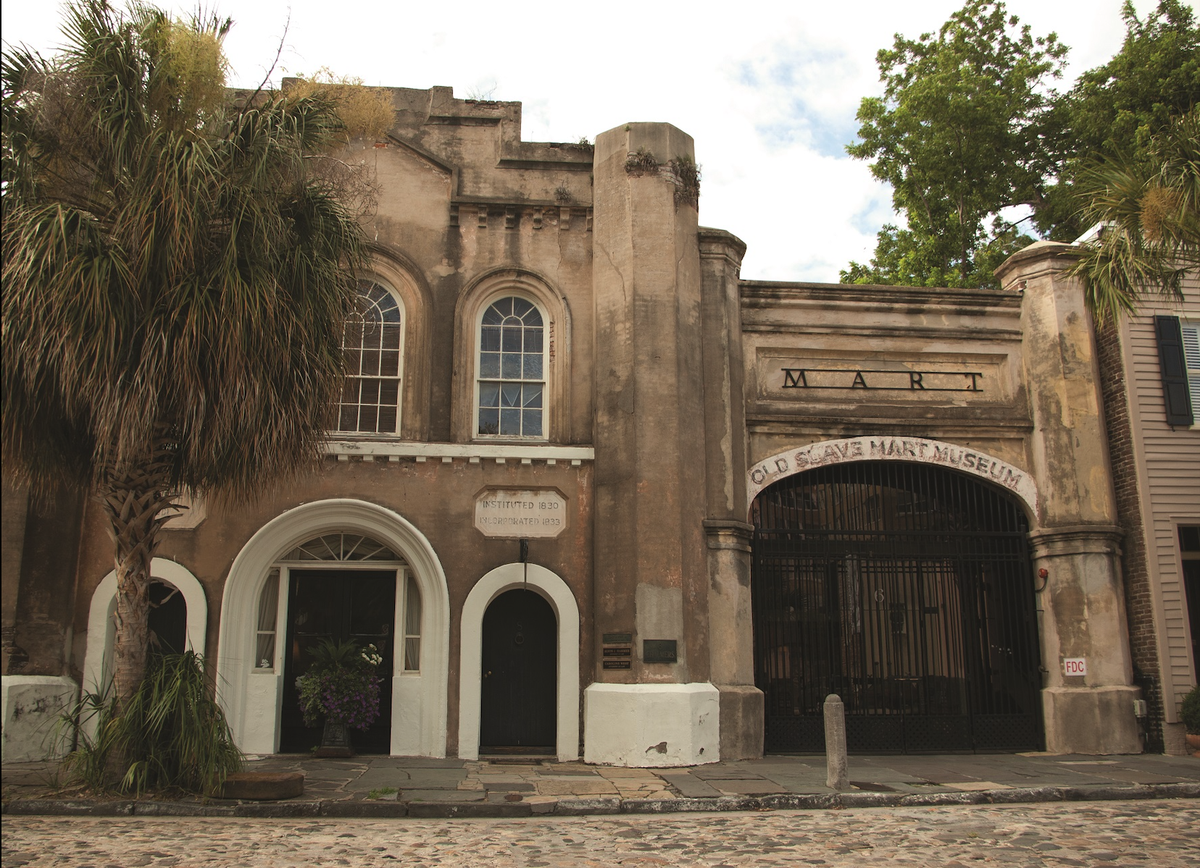
10. Old Slave Mart Museum. The building is the only known slave auction facility in the state. It was built in 1859.
11. McLeod Plantation Historic Site. The former plantation hosts a row of five slave cabins. It was a Confederate headquarters during the Civil War. After Charleston fell to Union troops, the plantation hosted the renowned 54th and 55th Massachusetts Volunteer Regiments of black troops.
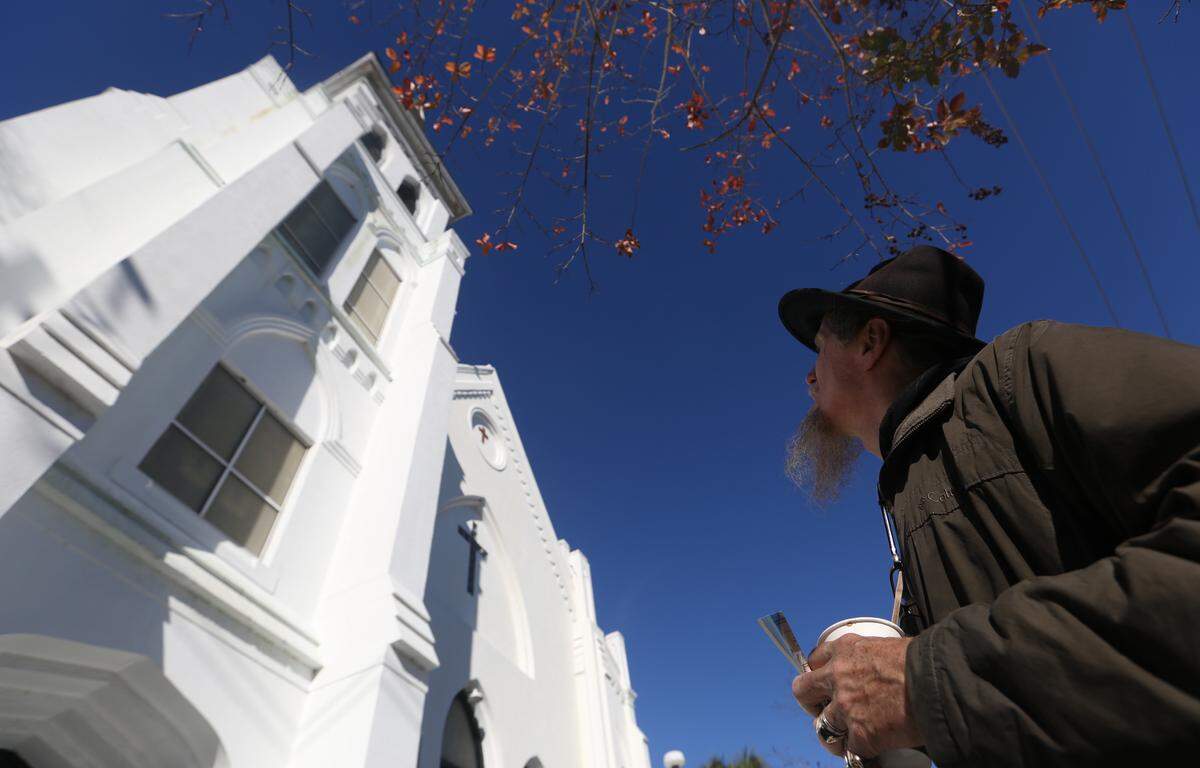
12. Emanuel AME Church. “Mother” Emanuel was a center of African American religious life in Charleston beginning at the end of the Civil War. Its pastor, the Rev. Richard Cain, served two terms in Congress during Reconstruction. In 2015, it was the scene of a horrific mass murder that claimed the lives of nine parishioners, including the Rev. Clementa Pinckney, a sitting S.C. state senator.
13. Philip Simmons House and Workshop. Simmons was born in 1912 and “created many of Charleston’s finest 20th century wrought iron gates, fences, balconies, window grilles, and other decorative pieces,” according to the Green Book.
Hilton Head/Beaufort
14. Gullah Museum of Hilton Head. Built in 1930 on land bought by a member of the 21st U.S. Colored Infantry after the Civil War, the house is typical of Gullah homes on the Sea Islands into the mid-20th century.
15. Reconstruction Era National Historical Park and Penn Center on St. Helena Island. After Union troops captured Beaufort County’s Sea Islands during the Civil War, northern missionaries established the Penn School to educate former slaves. It eventually grew into a compound of buildings. Dr. Martin Luther King Jr. held a strategy session there before his March on Washington in 1963.
16. Mather Museum in Beaufort. Founded in 1868, the museum was then a boarding school for female former slaves.
17. Sites of Fort Howell and Mitchelville. Mitchelville was a planned community for freed slaves after the fall of Hilton Head to Union troops in 1861. Fort Howell was built by U.S. Army Colored Troops to protect Mitchelville and Hilton Head.
Aiken
18. Aiken Colored Cemetery. The cemetery was established in 1852 and holds the remains of “slaves, freedmen, Reconstruction-era politicians, merchants, bankers, lawyers, physicians, ministers and educators,” according to the Green Book.
Atlantic Beach
19. Atlantic Beach. Nicknamed “The Black Pearl,” it was established in 1934 for African Americans who were denied access to Myrtle Beach and other areas during segregation.
Florence
20. Francis Marion University hosts two cabins built in 1863 to house slaves. They were built on the plantation of J. Eli Gregg, which is now the center of campus.
21. Downtown African American Business District. A wide range of black-owned businesses located on the 200 and 300 blocks of N. Dargan Street catered to Florence’’s African American population during segregation.
Greenville
22. Richland Cemetery. Greenville’s first municipal cemetery for African Americans (1884), Richland is the final resting place of many of Greenville-Spartanburg’s most notable black citizens.
23. Allen Temple AME Church. Originally founded during Reconstruction, the congregation relocated to a new Classic Revival church in 1929. It was designed by Cuban-born Juan Benito Molina, then Greenville’s only black architect.
Lake City
24. Ronald E. McNair Life History Center. The center is dedicated to the life and memory of McNair, a Lake City native, astronaut and physicist who died in the Challenger space shuttle explosion in 1986.
Mayesville
25. Mary McLeod Bethune Birthplace and Park. Mary McLeod Bethune was a teacher and political activist. She founded the Daytona Normal and Industrial Institute in 1904, which later became Bethune-Cookman College, and founded the National Council of Negro Women in 1935.
McConnells
26. Historic Brattonsville. The restored York County settlement has more than 30 historic structures. It interprets the historiy of both whites and blacks in South Carolina’s upcountry from the 1760s to the late 19th century.
Orangeburg
27. Orangeburg Massacre Monument. In 1968, South Carolina State College students protesting the segregation of a local bowling alley were fired on by local police and members of the state highway patrol. Three young men were killed and 28 people, mostly high school and college students, were wounded.
Seneca
28. Bertha Lee Strickland Cultural Museum. The museum chronicles “the rich, colorful, turbulent history of the local African American community” in Oconee County, according to the Green Book.
Summerton
29. Liberty Hill AME Church. The congregation here in the 1940s and 1950s hosted 19 plaintiffs in the landmark Briggs v. Elliott U.S. District Court case which led to the U.S. Supreme Court’s ruling desegregating public schools.
This story was originally published January 30, 2020 at 5:30 AM.