
New sewage plant will ruin creekside homes, Richland County residents fear
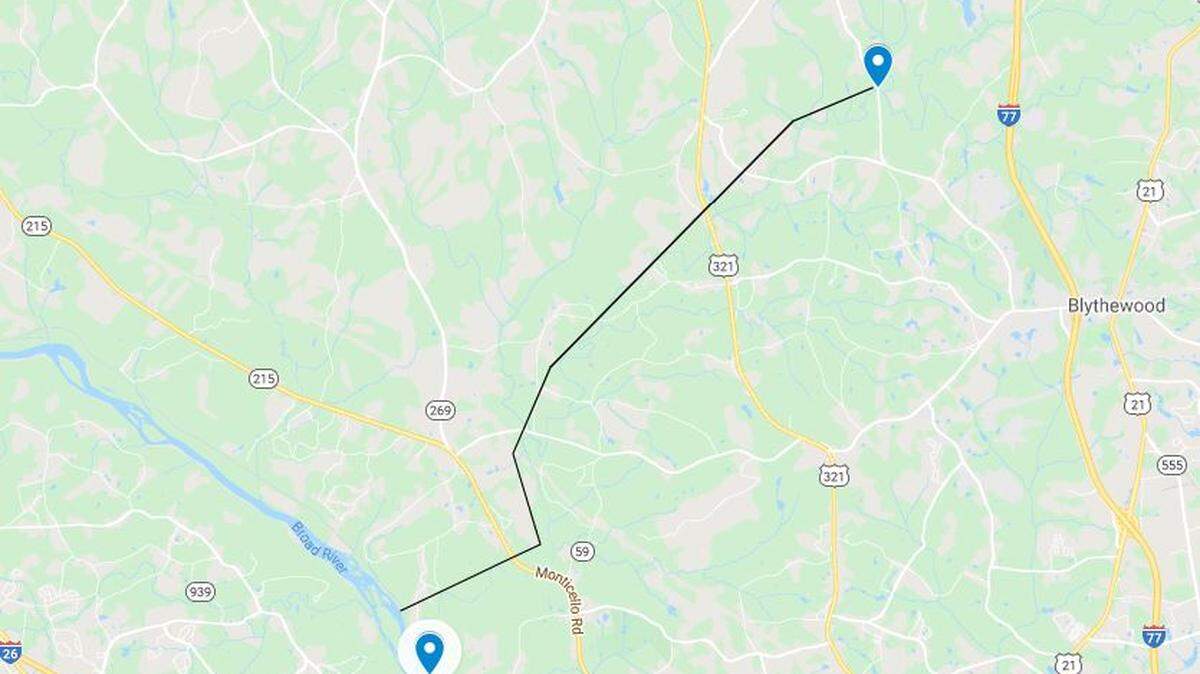
Some Richland County residents are worried about a new wastewater treatment plant planned for right across the county line in Fairfield.
Residents of northern Richland County attended a Richland County Council meeting last week to protest a decision taken by Fairfield County they fear could impact their drinking water and their quality of life.
“The long-term impact will be in Richland County,” resident Lynn Robertson told Richland County Council at its Feb. 11 meeting.
In January, Fairfield County Council voted to build a wastewater treatment plant in the Midlands county just north of Richland. Fairfield is considering a site on Syrup Mill Road near Big Cedar Creek, officials said at the time.
That creek feeds into the Broad River after winding its way through Richland County from Blythewood down past Winnsboro and Monticello roads.
On Tuesday, Richland County Administrator Leonardo Brown told Richland County Council members that Fairfield will still have to meet several more steps before a wastewater plant is operational.
Fairfield County Administrator Jason Taylor told The State the county is still lining up financing and permitting for the project, and has not yet settled on a location. The county has optioned but not closed on a 55-acre site on Syrup Mill Road.
The plant is needed because Fairfield is working to attract more industry to a county industrial park, and will need to expand its sewer capacity to accommodate new tenants.
DHEC has indicated that Cedar Creek is the only inland waterway in Fairfield County that could absorb the estimated 1 to 4 million gallons per day a plant could produce.
The county looked into placing the plant along the Broad, which would allow the plant to discharge a larger amount of wastewater with less treatment directly into the river. But that would have increased the costs of the project by $50 million, Taylor said. Constructing a plant along Cedar Creek would cost $30 million, compared to $80 million on the Broad River.
Any plant is likely to be years away from construction, Taylor said, although the goal is to build something within 16 months if the county lands a new business.
Robertson, who said she has lived in the Cedar Creek area for 70 years, estimated that of the 18 miles between Syrup Mill and the Broad River, only four miles of the creek are in Fairfield County.
“In essence, Richland County is providing a free waterway for the sewage from Fairfield County,” she said.
Dianne Moore lives on Cedar Creek Road about a mile from the creek itself. She worries if the creek will be able to absorb more than a million gallons of wastewater each day.
“I don’t believe it can handle it,” Moore told members of Richland County Council. “It’s flooded now just from the rain that we’ve had.”
Council members said they were working with Richland County staff and their counterparts in Fairfield County to address concerns about the proposal. Councilwoman Joyce Dickerson, who represents the northern portion of Richland County, said she’s heard from several residents about the issue and wants Richland County to follow developments closely.
“I’m going to go on record tonight that we do not want to see any discharge going into Cedar Creek,” said Councilman Calvin “Chip” Jackson.
Edward Blessing, who works at the South Caroliniana Library at the University of South Carolina, gets his water from a well located 200 feet from Cedar Creek.
“We’re in danger of having an outside force make decisions for us,” Blessing said. “We need you, our elected officials, to stand up for us, our wells and our families.”
Blessing said besides overflowing its banks during heavy rain, Cedar Creek will occasionally dry up during the summer.
“Treated water would be the majority of the water on those days,” Blessing told The State. “Our children and our wildlife would be playing in majority treated water.”
Kathy Young, whose property also abuts Cedar Creek, said residents have discussed with Fairfield County officials alternatives to the proposal. The county even arranged for a group, including Young, to tour a similar plant in Union County to understand the treatment process.
Ty Davenport, Fairfield’s economic development director, argues the discharge from the plant will only raise the water level in the creek by about 1%. Because fertilizer and animal waste from the surrounding countryside currently feed into the creek, Davenport argues treated wastewater could improve the overall water quality in Cedar Creek.
“It’s an emotional argument” against a wastewater plant, Davenport said, “but the science is on our side.”
The point of a treatment plant, Taylor said, “is not to create pollution. It’s cleaning up pollution.”
Blessing said Fairfield County’ officials attended a community meeting about Cedar Creek to hear residents’ concerns. He said residents support development across the line in Fairfield County, but he said a facility that could dump up to 4 million gallons a day as is proposed raises too many concerns.
“They’re proposing a high-quality treatment plant, that they say will take out a lot of the industrial issues,” Blessing said, “But... nothing made by humans is 100% foolproof.”
On Tuesday, Brown noted a public hearing would be held 6 p.m. next Tuesday in the Fairfield County Council chambers at 350 Columbia Rd., Winnsboro. Plans will also need to be reviewed by the Central Midlands Council of Governments.
.jpg)