
Marines may leave Parris Island to fulfill gender mandate. What does the Army do?
During Army basic training at Fort Jackson, recruits repel down Victory Tower, learn how to fire weapons, march for miles in formation and train in combat situations side by side.
For most of the Army’s 245 year history, those recruits trained only with people of the same gender. But that changed in 1994, when the Army started training men and women recruits together.
The practice works, Army officers and others say. In war, men and women serve side by side, so why shouldn’t they train that way? Plus, one study showed the physical fitness of all recruits improved after basic training was integrated by gender.
The Marines, who until now have separated men and women during basic training, are set to follow the Army under a Congressional mandate.
But Marine Corps Commandant Gen. David Berger said Sept. 24 that the Corps’ two basic combat training bases, including the one at Parris Island, South Carolina, may be closed and replaced with a third facility to accommodate integrated training. If this happened, it would cost 6,130 jobs at the Parris Island installation.
Every aspect of Marine basic training is segregated by gender, while higher levels of training are not. All female Marines must go through basic training at Parris Island in Beaufort, while male Marines are split between Parris Island and San Diego.
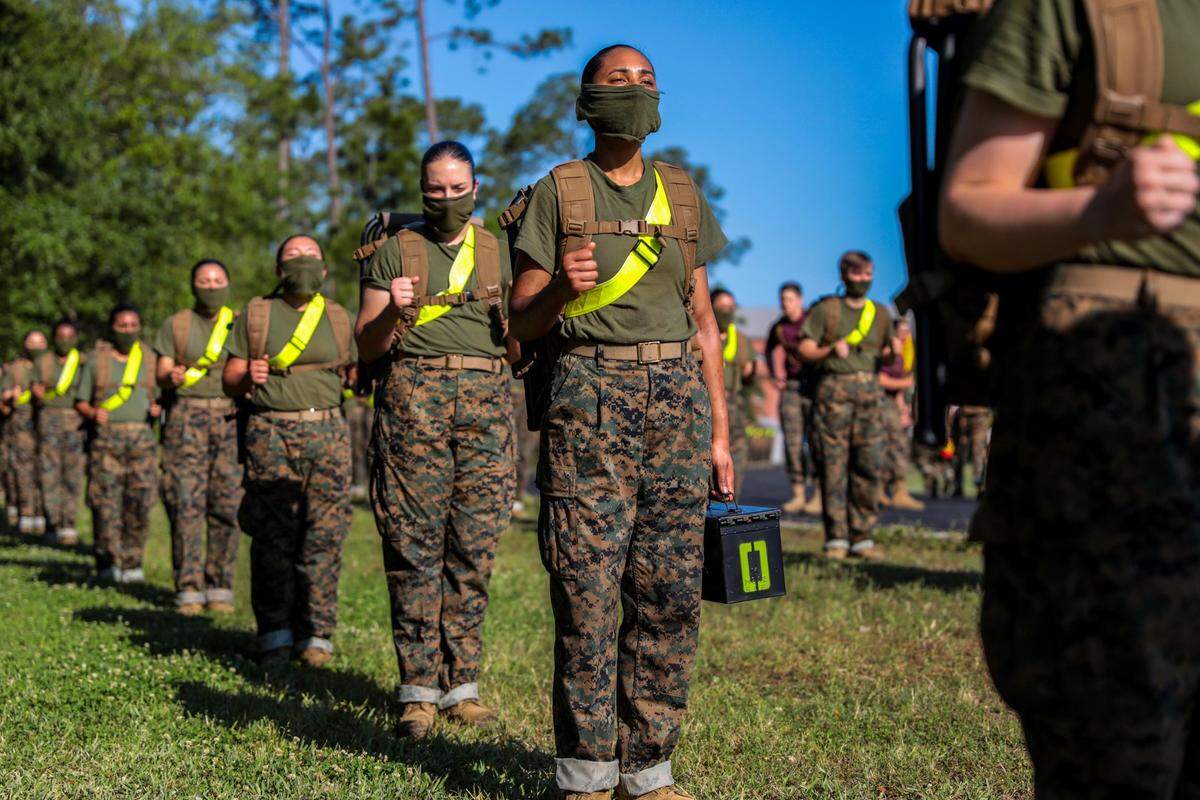
Gender-integrated training at Fort Jackson
Fort Jackson, the nation’s largest Army basic training installation, began training men and women together on an experimental basis in 1977. In 1982 the Army reverted to training men and women separately until the final decision to integrate basic combat training units was mandated in 1994.
Studies on the efficacy of gender-integrating training were first done in the 1970’s after the disestablishment of the Women’s Army Corp, according to Fort Jackson’s Basic Combat Training Museum director and curator, Henry Howe.
“It actually shows an increase on the physical fitness testing on integrated units and an increase on basic marksmanship qualification on integrated units as opposed to male-only units,” said Howe.
At Fort Jackson, men and women train in the same platoons. The only separate facilities are the sleeping bays where men and women sleep and shower in separate buildings with security measures in place to prohibit intermingling.
Col. Eric Flesch, 165th Infantry Brigade Commander, went through Army basic training at Fort Jackson when platoons were still gender-segregated.
“The big difference was we really had no exposure to training side by side or being able to do our jobs side by side, but I showed up to my first unit and kind of was in awe of the female leadership that I had that I just wasn’t exposed to yet,” said Flesch.
Flesch went from seeing zero females in basic training to working under a female boss at his first unit in the army. He said all of that has changed to a gender neutral position where integrated training and integrated cadre, or leadership, are the norm.
The 165th is a basic training brigade based at Fort Jackson.
Fort Jackson’s 51st commanding general, Brig. Gen. Milford H. Beagle Jr., has never had a female superior in his career in the army.
Because Beagle joined the infantry, women were not allowed to fight in armor or infantry units until 2015.
“When you have an integrated training at any level, when you go further back and we started integrated races, and now integrating by gender-the value out of that is it’s going to make our entire force better,” Beagle said.
Basic training is a 10-week long boot camp for every soldier who enlists in the Army. The training focuses on getting every soldier to the same level to begin training for more specialized jobs.
On Oct. 1, the Army implemented on a provisional basis gender-neutral physical training qualifications called the Army Combat Fitness Test. Eventually, active duty members must pass the test each year. While the Army’s previous fitness test set different standards based on gender and age, all soldiers must meet the new standards.
“Because if you’re in combat, we all have to do similar things; lift things. If I have a battle buddy, whether it be male or female, regardless of size, to move that person out of harm’s way,” said Beagle.
A cultural shift
The Marine Corps is the last remaining branch to gender integrate its training.
“Nothing, the way we’re organized right now, lends itself to integrated recruit training,” Berger said, according to Military.com.
Marine officials have not released what it will specifically take to modify Parris Island facilities to be able to train men and women together, but Flesch believes the change may be more cultural than facility-related.
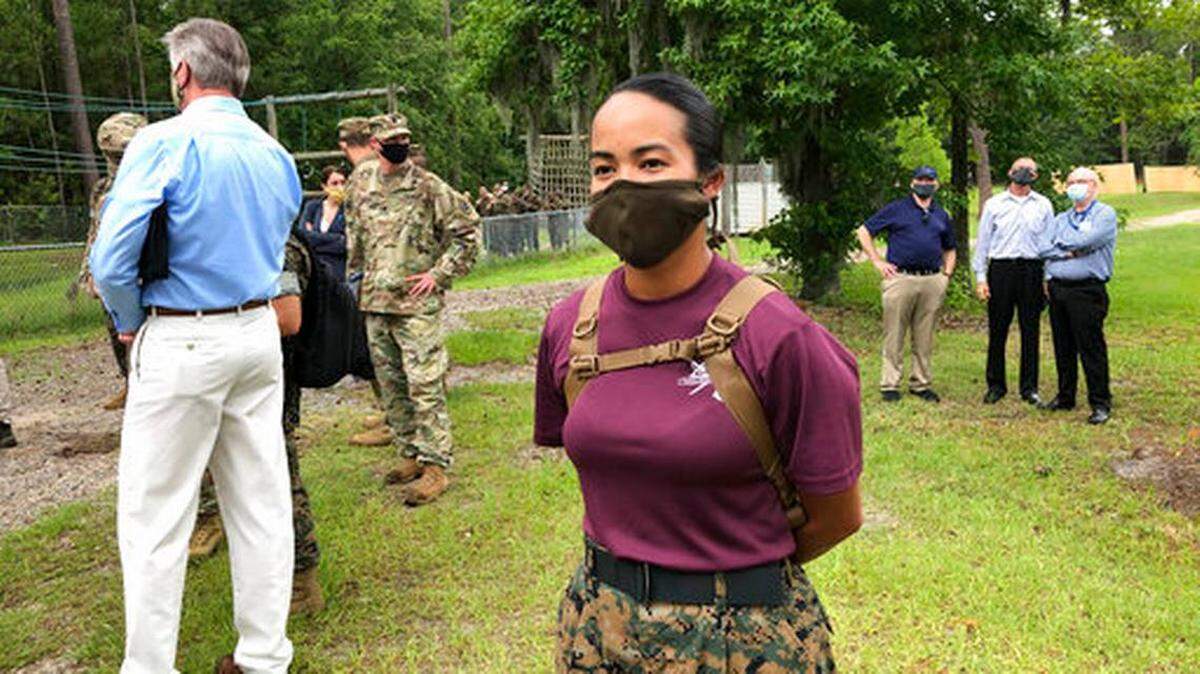
“Adjusting to having males and females train together, to me, is more about culture and that understanding than it is about buildings,” said Flesch.
A battalion of 1,200 people is normally split between 75% men and 25% women at Fort Jackson, according to Beagle. The only facility-related challenge is making sure all of the women can sleep in the same area.
That is the extent of the facility change that took place at Fort Jackson to accommodate both genders in basic training because all other tasks are completed together said Beagle.
There is always a need to shift with the culture and never “fall asleep at the wheel,” Beagle said, when it comes to taking into account diversity in the military.
“That’s what makes us so powerful as an Army. We’re integrated based on gender, based on race- all those things we’ve worked over many, many years to get right,” said Beagle.
More improvements to be made
While Fort Jackson does have a 24-year history of gender-integration, there is still more progress to be made for some.
It is required that one female drill sergeant be assigned to each platoon, according to the U.S. Army and Training Doctrine Command. However, there is no mandate for male to female ratios in the officer level.
Women make up 15% of the Army and 9% of the Marine Corps.
“We don’t have, in my opinion, enough female officers, and there’s no mandate like with drill sergeants,” said Flesch.
Master Sgt. Marritsa Collins was a drill sergeant, then a first sergeant before moving into a roll as an equal opportunity adviser at Fort Jackson.
Collins took the role as first sergeant at Fort Jackson to fill a request for female leadership at basic training. Working on equal opportunity efforts has shown Collins a lot of the issues that still occur between men and women working together.
“We had several issues with the infantrymen culture,” said Collins.
In the all-male infantry units that recently integrated, Collins has heard concerns about the language, what they talk about, catering more to male soldiers than female soldiers and profanity.
“Some men still think that if we are a little bit more empathetic or a little bit more passionate about a situation, we’re weak. Or when men in leadership are more empathetic or very passionate, they’re weak. So it goes back to that gender situation,” said Collins.
She said this results in women having to “project their maleness” or adjust to a different culture to be assertive. Regardless, Collins said the staff at Fort Jackson is very committed to “accepting everybody for who they are.”
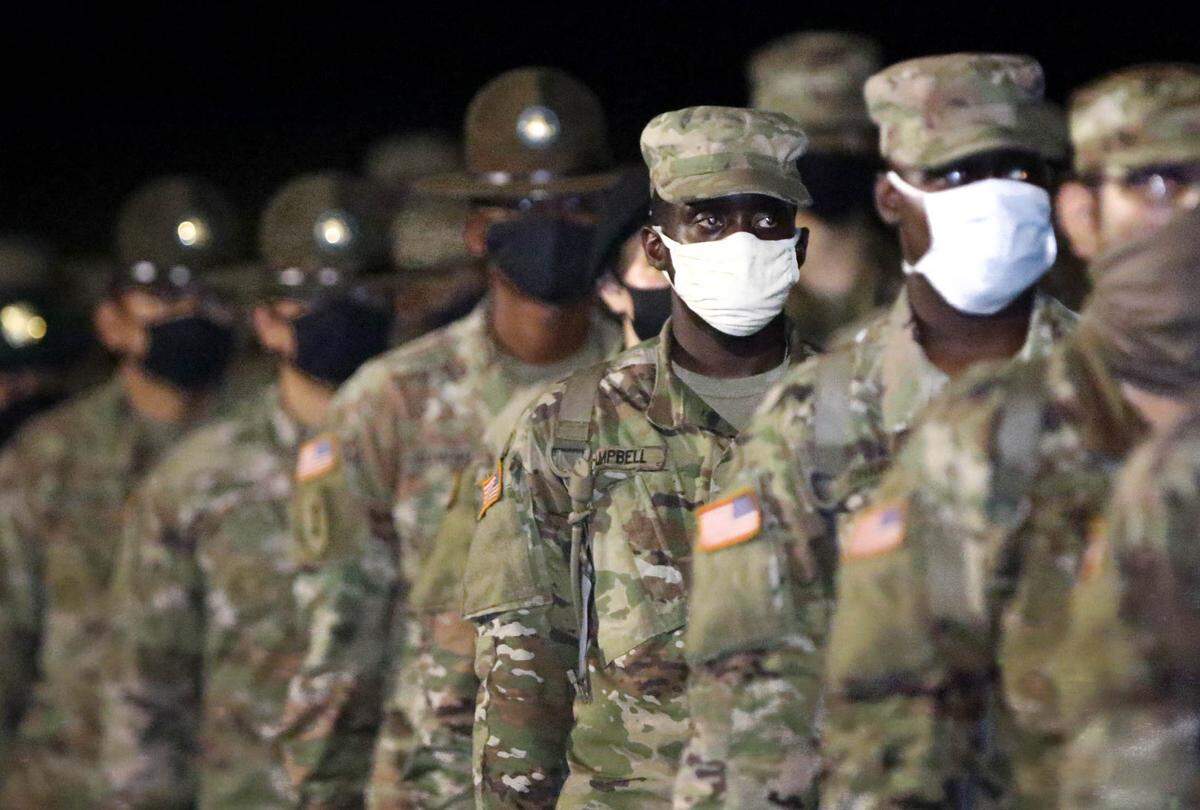
Fully integrating from the moment a soldier joins the military will have positive implications down the road, according to Col. Mark Huhtanen, 193rd Infantry Brigade Commander. The 193rd is also a basic training brigade based at Fort Jackson.
Huhtanen saw issues with sensitivity and discrimination years ago at Fort Benning, Georgia, for soldiers who completed gender-segregated basic training and later had to join integrated units.
“It comes naturally with being integrated because they have to get over whatever baggage they brought from their home as a civilian and they have to get over it very quickly because they’re going into a diverse group,” said Huhtanen.
In the end, the Army’s focus is whatever makes for combat readiness.
“Nobody cares on the battlefield if you’re male or female,” said Flesch. “When the rounds are coming in, they don’t stop and check what your gender is.”
This story was originally published October 12, 2020 at 2:58 PM.