
His dad’s on death row for 3 murders. It set a then-SC boy on a new path: to find God
Michael Sims never thought he would be a pastor. As a young man, he saw himself working in law enforcement, politics, education — but not the church. Even after years as a minister at local Baptist churches, he never thought he would lead a congregation himself.
“Don’t tell God what you don’t want,” jokes the pastor of the Church at White Knoll, a new church Sims founded in a Lexington school in 2019, shortly before COVID-19 turned his ministry and everything else upside down.
But much about Sims’ story is unlikely. Growing up in poverty with a father on death row, some might not have expected he would amount to much at all.
Sims’ father, Mitchell Sims, has been imprisoned for much of his son’s life. Most of his childhood memories of his father are set in prison visiting rooms. Since the elder Sims was transferred to San Quentin in California in 2008 to await execution, father and son still speak on the phone once or twice a month.
Violent robberies and murders
In 1985, Mitchell Sims killed three people in a string of violent robberies that stretched across the country. He bound and shot two young men, Gary Melke and Christopher Zerr, in a Domino’s Pizza shop in Hanahan near Charleston, then fled across the country and murdered another pizza delivery man, John Harrigan, in California by drowning him in a motel bathtub. He then attacked two other employees at a nearby Domino’s before he and an accomplice were arrested in Las Vegas.
Mitchell Sims has spent three decades under a death sentence in two states, first awaiting execution in South Carolina and, for the last 12 years, in California, where a moratorium on the death penalty has been imposed by Gov. Gavin Newsom.
While acknowledging his father’s responsibility for three deaths, Michael Sims said the killing spree was the culmination of a “binge” of drug and alcohol abuse his father had nursed since childhood, the result of a pattern of physical and sexual abuse that had left Mitchell a deeply damaged person.
“He used to put cigarettes out on his arm and call himself a ‘human ashtray,’” Michael remembers.
After the killings, Mitchell Sims called Michael’s mother, Theresa, and told her, “You’re probably not going to see me any more,” Michael said. “But she said she made a promise that it would be ‘til death do us part.”
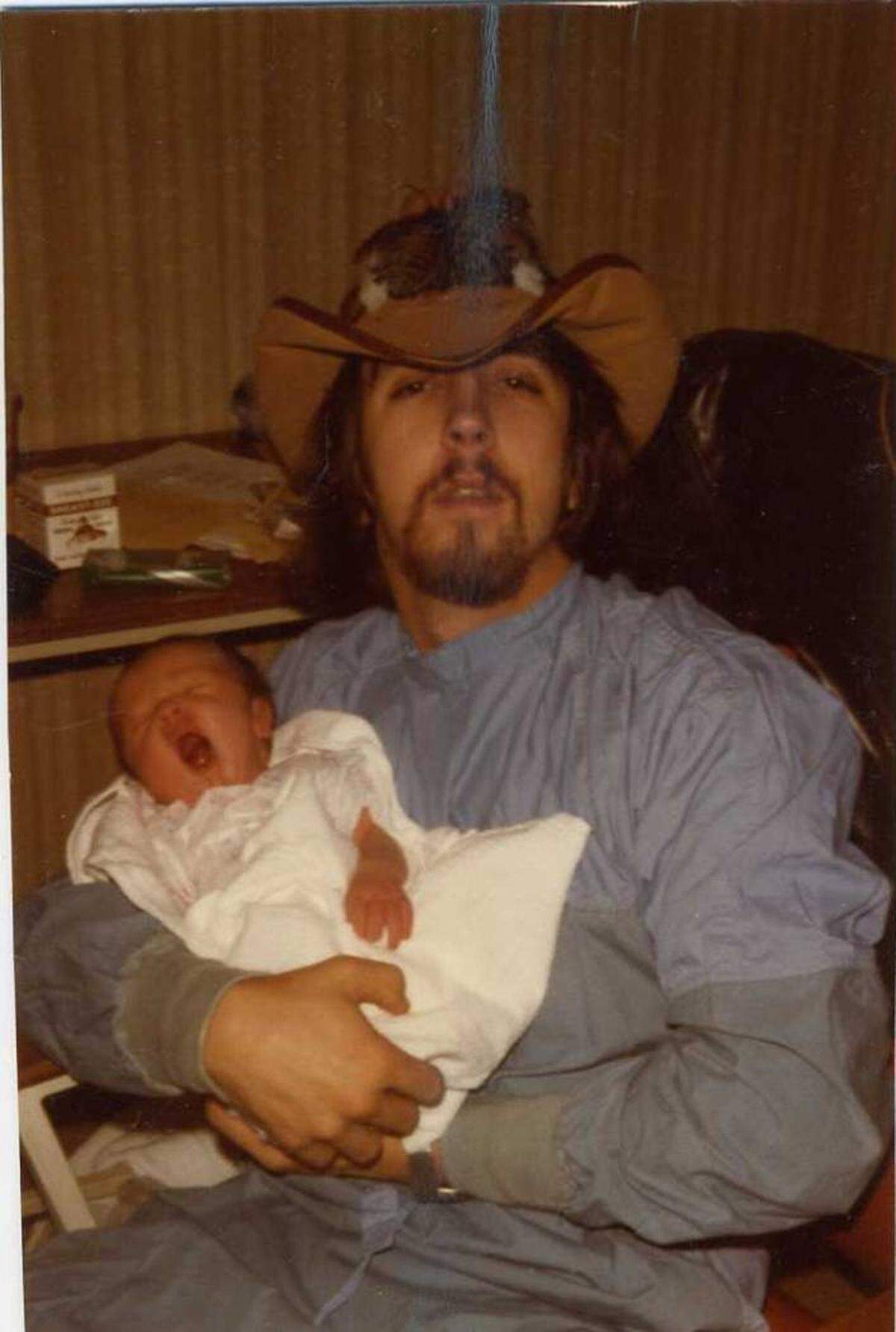
That was when Michael was 3 years old.
Growing up, he and his three younger siblings would visit their father at Central Correctional — a former maximum security prison in downtown Columbia — or Broad River Correctional a couple times a month, where they tried to have as normal a family life as possible. Mitchell would arm-wrestle his sons and comb his daughter’s hair. When their mother told him about some misbehavior, Mitchell would take them aside and “discipline” them under a guard’s supervision, Michael remembers.
But outside the prison walls, the absence of their father put the family in a hard place emotionally and financially. When they couldn’t afford heat, Michael recalls his mother hanging a sheet in the hallway while the children huddled around an open oven for warmth.
“She would close the door and I could hear her sobbing in the other room,” Michael said. “Then she would come out and act like everything was fine. When you’re a child, that’s hard to understand.”
Finding faith in West Columbia
But the Sims children found a larger family at Laurel Baptist Church in West Columbia. Several men there stepped up to take Michael and his siblings under their wings. He would eat at their houses and go hunting with them. When the family couldn’t afford groceries, boxes of food would just appear on their doorstep.
“As big as he is now, the first time I met them, I would go out in front of the church and spin him and his brothers around by the arms,” said Tim Treaster, a longtime family friend from Laurel Baptist. “That would be more of a challenge now.”
Treaster would host Michael for Bible study in his backyard and include him in youth activities, “but there weren’t any specific things we did.” Treaster said Laurel just formed a tight-knit community, and his family got similar attention when he left for a military deployment.
“I’m sure being known as the son of the Domino’s Pizza murderer, he faced constant harassment,” Treaster said. “A lot of people would take food and clothes to help them out. I just tried to be a positive role model.”
The actions of his church family not only helped the family hold together, it left an impression in young Michael’s mind of what a church was supposed to be.
“When we say ‘God works in wonders,’ that doesn’t mean the sky splits open,” Michael Sims said. “The church is the avenue God uses to love on people. The problems you see in our culture, our politics, our society, show that the church has not been able to do that.”
From football scholarship to SC pastor
When Sims grew up, he spent a year at the University of South Carolina on a football scholarship under Coach Lou Holtz but ultimately transferred to Columbia International University, a Christian school where he still sought the best way to chart his future.
Then, at a “church fair” for incoming students, he found out about a job as children’s director at Oakwood Baptist Church in Lexington. He thought it would be a good launching pad if he wanted to go into education, but he ended up staying there for 11 years before he became the family pastor at First Baptist of Lexington.
In that role, he counseled married couples and families dealing with issues that weren’t that different from what he’d seen in his own family life.
“Everybody is broken. We all have our own issues we’re dealing with,” Sims said. “I’d have teenagers tell me their dad punched them right before they went into church. ... Everybody needs some sort of support.”
“I don’t understand what everyone is going through, but I understand the hurt they’re going through,” he said. “I know what it’s like to feel deep pain and hopelessness.”
Sims says he’s seen God work in even the most difficult cases, including his father.
On an Easter Sunday while sitting in his cell at Central Correctional, Mitchell Sims was watching a TV sermon by the Rev. Wendell Estep at Columbia’s First Baptist Church. A lifelong skeptic of both God and organized religion, Mitchell began sarcastically talking back to the preacher, when he suddenly had a conversion experience.
“He said, ‘What about this?’ And the pastor answered his question very directly,” Michael Sims recalls now. “He did it a couple different times, and a minute later he’d receive an answer. So he prayed and said, ‘God, if you’re real, whatever life I have left is yours.’”
From that day forward, “he’s been the most devout Christian,” his son said.
Bob McAlister ran a prison ministry at Central Correctional at the time and was there the Sunday Mitchell told him he’d been saved. McAlister said he saw that kind of transformation “all the time” in prisoners, and he grew to respect Mitchell’s transformation when he asked him to reach out to Mitchell’s family as well.
“They had just a wonderful, godly mother who was just going through some rough times,” McAlister said. “They were impoverished, but the men (at Laurel) made sure her children got everything she could give them in terms of their needs, but most importantly the ways of Christ.”
Opening a new church, then COVID
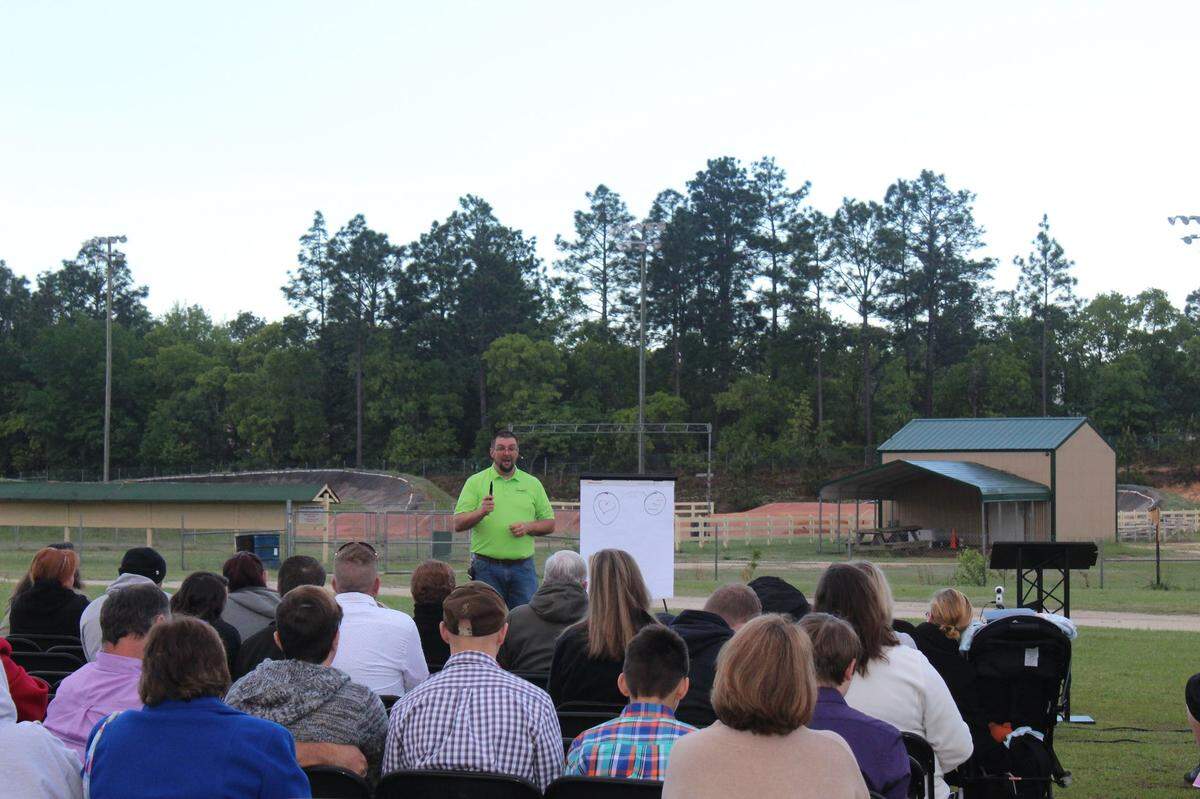
Sims carried that example with him when his pastor at First Baptist encouraged him to plant a new church. At the time, he wasn’t sure if he could do it, and both his mother and mother-in-law were dealing with health problems. But after his mother died in 2018, and his wife’s mother received a liver transplant, he and his wife felt they could move forward.
The Church at White Knoll first met at Carolina Springs Middle School in August 2019 and grew to about 125 parishioners before COVID-19 put a halt to in-person services. With school suddenly an uncertain place to meet, the Church at White Knoll resumed meeting in person late last year at Taylor Plantation, a lakeside wedding rental venue in the Red Bank area, worshiping down a dirt road behind a septic service company.
Although he estimated attendance is now about half what it was before COVID, Sims said he is less concerned with numbers or a permanent meeting place than he is with building the kind of relationships he grew up with.
“COVID could speed that up,” he said. “Self-seeking pastors miss out on what a biblical community is supposed to be. What’s special about a community is the way they love one another, and you don’t see that at a bunch of churches.”
One of the regulars at the Church at White Knoll is Treaster, who wanted to continue his support of the Sims family.
“They overcame a lot of challenges,” Treaster said. “If they had an ‘oh, poor me’ attitude, they would not have pressed on to do better and achieve what they have achieved.”
Looking at Sims’ accomplishments, McAlister summed up his central message, not only of his ministry but of his life’s journey:
“The way you start out in life is not how you have to finish up,” he said.
This story was originally published January 11, 2021 at 11:12 AM.
.jpg)