Crossing Columbia’s Assembly Street is ‘daunting.’ Here’s what the city is doing about it
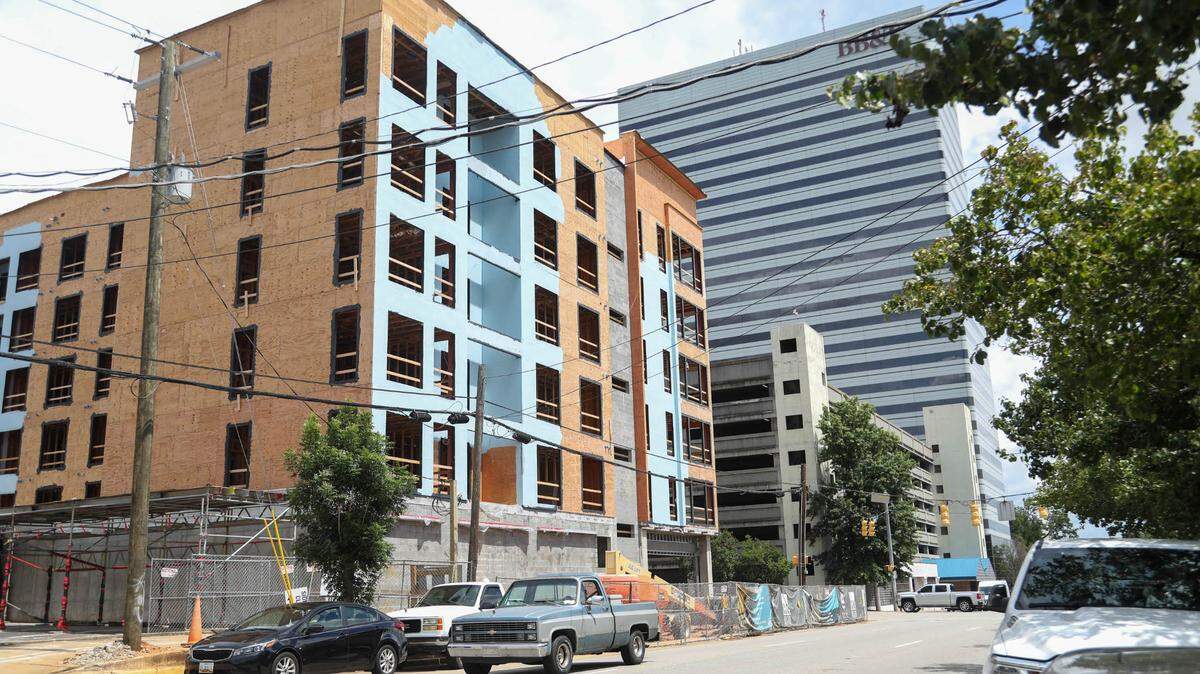
Eventually, Columbia city officials hope that crossing Columbia’s Assembly Street won’t be considered an act of bravery.
On Tuesday, the city council will consider the next step toward making it easier for shoppers and others to walk between The Vista and downtown. Now, to travel between the two districts, pedestrians must rush across Assembly Street’s six lanes of traffic.
“It’s a daunting task for a pedestrian to get across Assembly Street,” Columbia City Council member Howard Duvall said.
The city plans to hire a contractor to essentially put together a blueprint for how the city can fix the problem, he explained.
Improved sidewalks and medians, pedestrian “bump-outs” and more efficient signal lights could be coming to Assembly Street between Lady and Pendleton streets. The intersections at Lady, Gervais and Senate streets would each be improved for pedestrians.
While construction isn’t imminent, the city council is expected to approve a contract Tuesday to determine how much work the four-block stretch requires.
Assembly Street was built wide on purpose. Its 150 feet across — 50 feet wider than the rest of the streets on Columbia’s original 400 block grid. When the city was planned in the 1700s, founders thought wider streets would limit the spread of fire and disease.
Today, some worry the distance limits the spread of commerce, particularly after the rebirth of the 1600 block of Main Street and ongoing growth in The Vista.
“We want to make sure there’s no barrier … between two important hospitality and entertainment districts in the city,” said Duvall, an at-large council member. “And Assembly Street has been a barrier.”
Columbia has $3 million of the $16 million likely required to complete the project – $609,000 from Richland County and $2.4 million from a state Department of Transportation grant. Council members are expected to commit $665,900 of that money for initial planning during Tuesday’s regular meeting.
An agreement between the city and design-firm Mead & Hunt says this first stage of the work will include data collection, preliminary design, cost estimating and public meetings to establish what will be needed during the next stage, when construction would begin.
City leaders have spent years making incremental changes to the original Columbia throughway. In 2013, the University of South Carolina led a $4.6 million project to make similar pedestrian improvements between Blossom and Pendleton streets. That work included widening medians, shortening crosswalks and adding more lighting to sidewalks, according to a university overview.
The city project would pick up where the university left off. Council members are scheduled to meet 4 p.m. Tuesday at City Hall.