Crews can start removing toxic coal this summer from the Congaree River in Columbia
Crews may begin removing 40,000 tons of coal tar from the Congaree River in Columbia this summer after Dominion Energy received key permits from the U.S. Army Corps of Engineers.
The project, which includes temporarily damming a stretch of the Congaree, will take three to five years to complete. Obtaining the Corps of Engineer permits was the last big hurdle, Congaree Riverkeeper Bill Stangler said, saying the permits are “the thing we’ve been waiting on for years.”
Work can begin as early as May 1. Dominion Energy, which is responsible for the cleanup, expects to begin the work this summer, spokesperson Matt Long said.
“But the schedule depends on river conditions and timely receipt of all necessary approvals,” Long said.
Dominion is looking for a contractor to lead the project. When a contractor has been selected, the state health and environment agency will need to approve a final work plan. Routine construction permits from the city of Columbia and the Coast Guard are also awaiting approval, according to a DHEC spokesperson.
Some of the timeline however is already set by the Army Corps of Engineers, which limits the time work can be done in the river to between May 1 and Oct. 31, to avoid affecting the spawning season for shortnose sturgeon, according to the project permit.
Stangler said the cleanup is expected to happen in stages over several years and that Dominion will still be able to make progress on the project in the off-season. By its completion, tentatively anticipated in 2025, about 70% of the tar would be removed.
The work will be limited to Columbia’s side of the river and will include drying out the portion of the riverbed between Blossom and Gervais streets so the coal tar can be excavated. But before removal, crews will need to determine if any unexploded Civil War-era mines are in the riverbed. Historians believe Union soldiers may have dumped mines there.
The work is estimated to cost over $18.5 million.
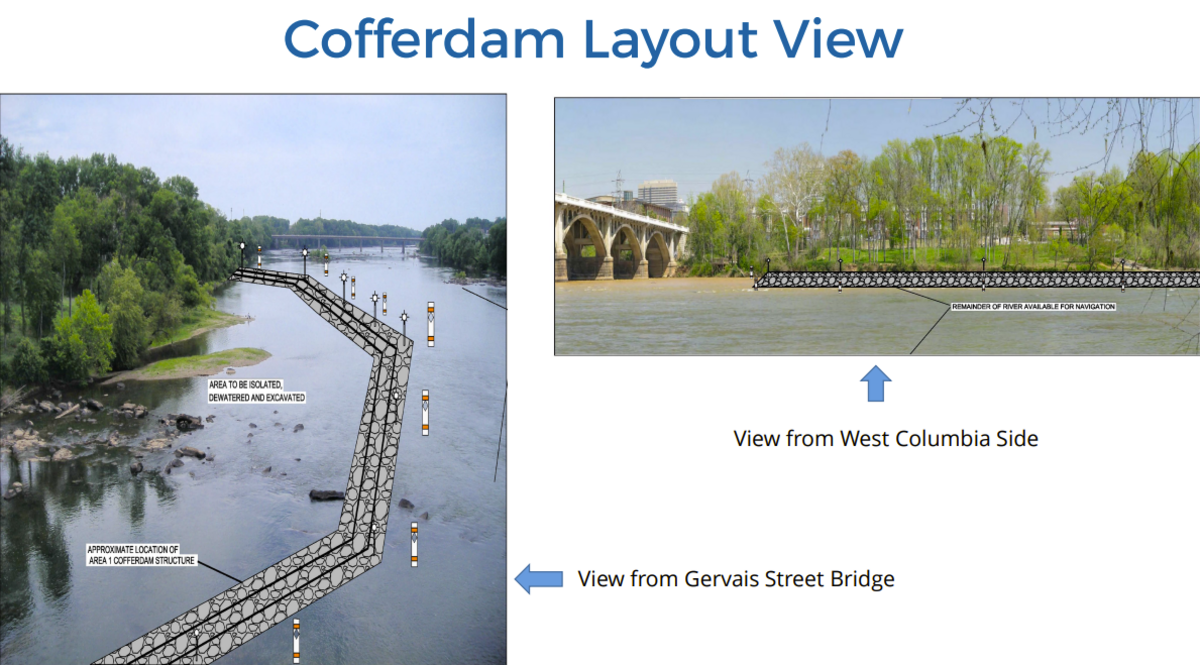
The coal tar drained into the river from a manufactured gas plant that operated on Huger Street between 1900 and 1950. The company burned coal to produce gas. Burning all of that coal created the tarlike byproduct, which drained into the Congaree.
Dominion Energy, which purchased the former S.C. Electric & Gas Co. three years ago, is responsible for the cleanup because SCE&G owned the land where the former gas plant was located.
In addition to the complicated array of tasks associated with the cleanup is the public’s reaction to it. During several public meetings, residents have made clear they want the tar removed from the river. Some have raised concerns about the number of trucks that will use Senate Street to transport the removed tar.
Stangler said another public meeting is planned for late March. A date for that meeting is expected to be set next week, Stangler said.
The coal tar contains various pollutants, but it is not seen as immediately dangerous to water quality, according to state regulators. The danger comes when an individual comes into contact with the substance, which can irritate and burn skin.
A kayaker first stumbled upon the tar in 2010 near the Senate Street boat landing and reported a burning sensation in his legs. The discovery eventually led the state’s health and environmental agency to investigate.
Coal tar cleanups can be difficult and take years to fully complete, The State reported in 2017. At the time, power companies in South Carolina had spent at least $100 million cleaning up coal tar.
Reporter Sammy Fretwell contributed to this report.
This story was originally published February 26, 2022 at 5:00 AM.