A small bat could soon be a SC endangered species. Here are the 22 listed now
The federal government has proposed declaring a small bat an endangered species in South Carolina and it will hardly be alone.
According to the U.S. Fish and Wildlife Service, there are 22 listed endangered species in South Carolina and another 17 cited as threatened. Under the service’s latest proposal, the Northern long-eared bat would be added to the endangered species list, bumping it up from its current threatened status in the state.
The proposal listing would give the bat federal protection. The intent is to save a species vital to controlling insects, the service says.
Below are highlights of some of the endangered species in South Carolina, along with a full list of the total 39 endangered and threatened species in the state.
Bachman’s warbler
The warbler is a bird with slender, decurved bill. Adult males have a black forecrown, a grey hind-crown and nape and a yellow forehead. They have yellow underparts with black patches on their upper breasts and white undertails. They also have olive-green upperparts, grey wings with olive fringes and yellow lesser coverts.
Adult females are duller with whitish a eye-ring, no black and a less well-marked head.
The species’ historical range included Alabama, Florida, Georgia, North Carolina, South Carolina, Tennessee.
Red-cockaded woodpecker
This woodpecker is a rather small black-and-white bird with a longish bill. It has a black crown, nape and moustachial stripe border with white cheeks and side of neck. A male has a small red mark on the side of its nape.
The species historical range included Alabama, Arkansas, Florida, Georgia, Louisiana, Mississippi, North Carolina, Oklahoma, South Carolina, Texas, Virginia.
Roseate tern
The roseate tern is a bird about 40 centimeters in length, with light-gray wings and back. Its first three or four primaries are black and so is its cap. The rest of its body is white, with a rosy tinge on the chest and belly during the breeding season. The tail is deeply forked and the outermost streamers extend beyond the folded wings when perched.
The species historical range included Connecticut, Florida, Maine, Massachusetts, New Jersey, New York, North Carolina, Puerto Rico, Rhode Island, Virginia, Virgin Islands.
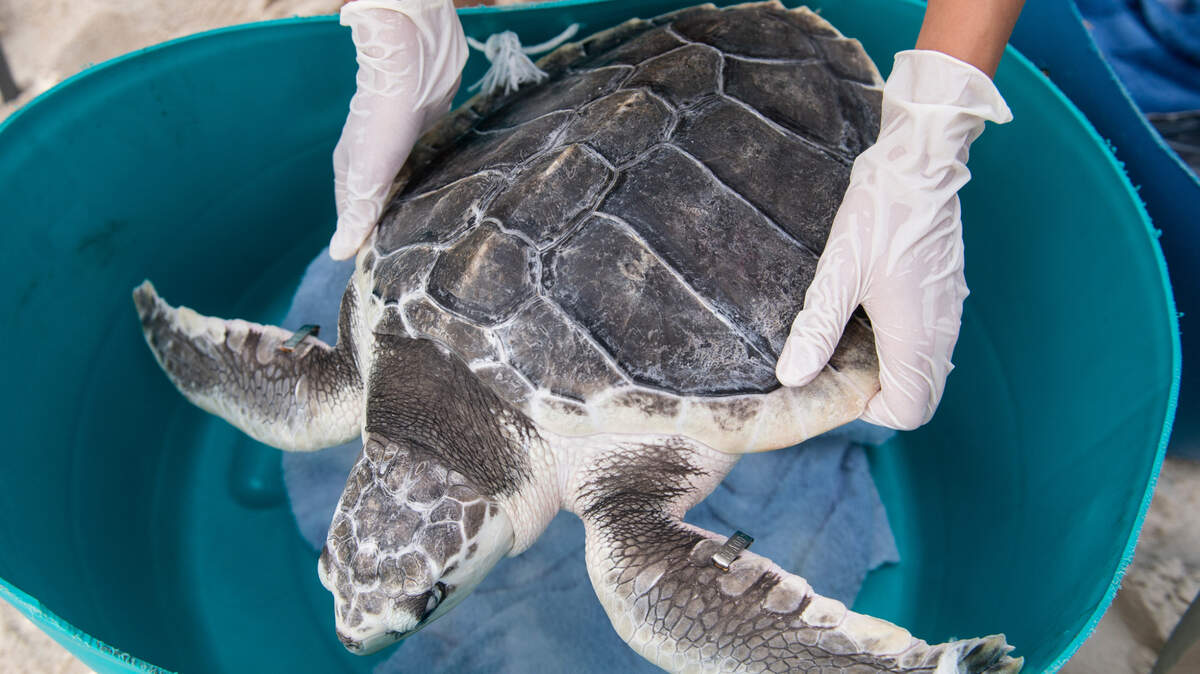
Kemp’s ridley sea turtle
The Kemp’s ridley turtle is the smallest of the sea turtles, with adults reaching about 2 feet in length and weighing up to 100 pounds.
An adult has an oval carapace that is almost as wide as it is long and is usually olive-gray in color. The head has two pairs of prefrontal scales.
The Kemp’s ridley has a triangular-shaped head with a somewhat hooked beak with large crushing surfaces. This turtle is a shallow water benthic feeder with a diet consisting primarily of crabs.
Hatchlings are black on both sides.
The species historical range included Alabama, Connecticut, Delaware, Florida, Georgia, Louisiana, Maryland, Massachusetts, Mississippi, New Jersey, New York, North Carolina, Rhode Island, South Carolina, Texas, Virginia.
Leatherback sea turtle
The leatherback is the largest, deepest diving and most migratory and wide ranging of all sea turtles. The adult leatherback can reach 4 to 8 feet in length and 500 to 2,000 pounds in weight.
Its shell is composed of a mosaic of small bones covered by firm, rubbery skin with seven longitudinal ridges or keels. The skin is predominantly black with varying degrees of pale spotting, including a notable pink spot on the dorsal surface of the head in adults. The paddle-like clawless limbs are black with white margins and pale spotting.
The species historical range included Alabama, Alaska, American Samoa, California, Connecticut, Delaware, Florida, Georgia, Guam, Hawaii, Louisiana, Maine, Maryland, Massachusetts, Mississippi, New Hampshire, New Jersey, New York, North Carolina, Northern Mariana Islands, Oregon, Puerto Rico, Rhode Island, South Carolina, Texas, Virginia, Virgin Islands, Washington.
All 39 threatened and endangered species listed in South Carolina
Amphibians
- Frosted Flatwoods salamander: threatened
Birds
- Bachman’s warbler: endangered
- Eastern Black rail: threatened
- Piping Plover: threatened
- Red knot: threatened
- Red-cockaded woodpecker: endangered
- Roseate tern: endangered
- Wood stork: threatened
Clams
- Appalachian elktoe: endangered
- Carolina heelsplitter: endangered
Flowering plants
- American chaffseed: endangered
- Bunched arrowhead: endangered
- Canby’s dropwort: endangered
- Dwarf-flowered heartleaf: threatened
- Golden sedge: endangered
- Harperella: endangered
- Little amphianthus: threatened
- Miccosukee gooseberry: threatened
- Michaux’s sumac: endangered
- Mountain sweet pitcher-plant: endangered
- Persistent trillium: endangered
- Pondberry: endangered
- Relict trillium: endangered
- Rough-leaved loosestrife: endangered
- Schweintz’s sunflower: endangered
- Seabeach amaranth: threatened
- Small whorled pogonia: threatened
- Smooth coneflower: endangered
- Swamp pink: threatened
- White fringeless orchid: threatened
- White irisette: endangered
Lichens
- Rock gnome lichen: endangered
Mammals
- Northern long-eared bat: threatened (proposed endangered)
- West Indian Manatee: threatened
Reptiles
- Bog turtle: threatened
- Green sea turtle: threatened
- Kemp’s ridley sea turtle: endangered
- Leatherback sea turtle: endangered
- Loggerhead sea turtle: threatened
This story was originally published March 23, 2022 at 10:05 AM.