Columbia’s police department is a quarter empty. What that means for public safety
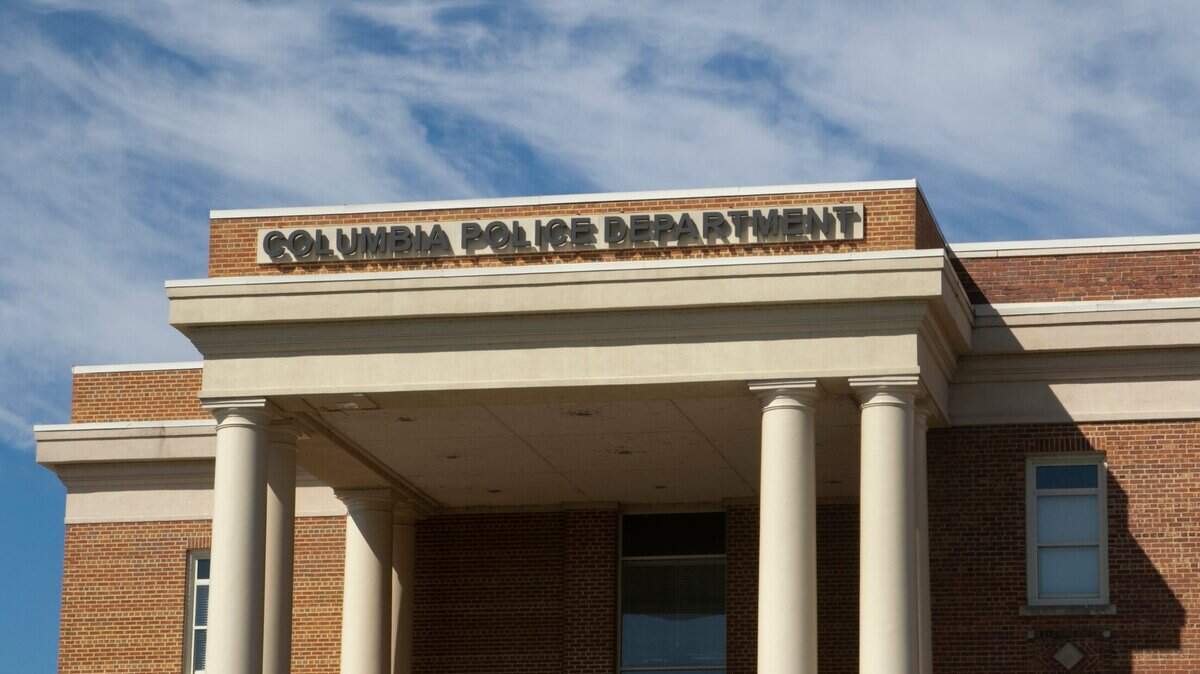
Lacking roughly a quarter of its desired police officers and staff, the Columbia Police Department is struggling more than some other local law enforcement agencies to stay staffed.
There are 100 open positions in the Columbia Police Department for sworn officers, with 291 out of 390 positions filled as of Oct. 17, the according to data provided by the department. Professional staff were also reportedly too few, with 88 of 127 positions filled.
“This is high for us,” said Columbia Police Department Deputy Chief Melron Kelly. Normally, the department has between 50-60 openings at a time.
The consequences of having more than 100 open jobs between sworn and professional staff include officers not being promoted to keep them in patrol positions, and a scaling back of community outreach programs that experts and department leaders say are crucial for the overall health of public safety in Columbia.
“Our citizens are expecting an officer to show up when a crime occurs. Whether it’s a shoplifting, robbery or murder, we have to work full time on those cases. Those are our priorities,” Kelly said.
Basic functions such as responding to 911 calls and investigating crimes are still being met, he said. But the department is no longer nimble enough to participate in community events or to move deserving officers up the professional ladder.
Police departments nationwide have reported problems with recruiting new officers, but why is Columbia’s situation so much worse than its neighbors?
Driving the vacancies
Columbia is not alone in needing officers. Police departments nationwide are struggling to recruit qualified candidates, and urban departments seem to be struggling to keep the officers they have, explained researcher and Clemson University professor Kyle McLean.
Nationwide, new hires are down while resignations and retirements have increased in the last few years, according to surveys from the Police Executive Research Forum.
But while Columbia may not be alone nationwide, locally, the city’s numbers are worse than neighboring departments. The Lexington County Sheriff’s Department is roughly 87% staffed, with 286 certified officers, not counting those employed at the county’s detention center.
The city of Lexington, which has a much smaller department than Columbia’s, is nearly fully staffed, with just four open officer positions.
Researchers are finding that more and more, officers are leaving urban departments for smaller agencies, McLean said. Though there is not data to show whether that is a significant factor for Columbia. Anecdotally, Kelly and other officials say it is not uncommon for officers to move from department to department.
“We don’t know for a fact that they’re going to suburban and rural agencies, but we do know for a fact that the Department of Labor says just as many people are working in policing, and urban police departments are telling us they can’t hire enough people,” McLean said.
It’s also unclear exactly why the shift is occurring, McLean added. Recently, he sees a lot more young officers who start in an urban department and then decide to leave for the suburbs, or for a rural agency.
“It’s not as fast of a pace. They can live a little bit more of a balanced lifestyle,” McLean said. “They’re not subject to the scrutiny that an urban police department is.”
The surveys from the Police Executive Research Forum seem to confirm that low morale following the COVID-19 pandemic and protests after the killing of George Floyd are major factors in why officers are leaving. The survey notes that it is unclear how many of those resigning have taken jobs in other departments.
Another potential driver could be pay, but both Kelly and McLean said that is probably not the only factor. Kelly added that pay for Columbia Police Department officers is competitive in the region.
The starting salary for an officer in the Columbia Police Department is $45,000 for those not already certified in law enforcement and $48,825 for those with that certification. A bachelor’s or master’s degree boosts that figure to just over $50,000 per year.
In the town of Lexington department, officers are similarly paid, at $44,742 for entry-level work. The mid-point salary in the department is $53,691, which most reach after three years, according to the department’s website.
In Lexington County, sheriff’s deputies start at $43,847, according to the department’s website.
Wages are allegedly driving some law enforcement departures in Richland County, however.
Richland County Sheriff Leon Lott earlier this month penned a letter to County Council members pleading for deputy pay raises as dozens of employees have resigned due to low pay. The department has lost 71 deputies so far this year, the letter states.
Kelly said the Columbia Police Department is not seeing mass resignations due to pay.
“Sometimes we’re seeing that people aren’t quitting because of pay, they’re quitting because of some of the demands of the job itself,” Kelly said. “It’s very taxing. We’re seeing people at their worst many days, and during the George Floyd protests ... we saw a lot of people exiting the profession.”
Kelly acknowledged that the department does lose people to neighboring departments but said the larger problem for the department is keeping new officers in the industry at all. He added that the department is still getting a lot of applicants, but many of them can’t pass the necesssary background checks to work for the agency.
Consequences and solutions
With the majority of officers tasked with responding to 911 calls, the “manpower crunch,” as Kelly described it, has meant the Columbia Police Department has suffered in other areas.
“I would love for us to spend a third of our time answering calls, a third just talking to people and a third doing paperwork or the administrative portion of it, you know. But we’re spending more time not being able to do that community outreach part of it, and it is very vital to what we do,” Kelly said.
In addition to lacking community outreach positions, Kelly said the department is also short on bailiffs for the courthouse, as well as transport drivers.
McLean said that while in the short term, a department may be able to fill holes by moving staff around to ensure 911 calls get responses, a 25% vacancy rate will likely cause damage to the department in the long run.
“Typically, the first things that are going to start to go are going to be community outreach initiatives,” McLean said. “Now you’re doing away with the areas of the department that are supposed to make these community issues (better), that are hurting the recruiting problem.”
The irony is that community outreach programs are good for recruiting new officers, McLean said. While the majority of recruitment material emphasizes guns and fast cars, research shows that’s not what is getting most young people into the industry.
Instead, people want to feel like they’re making a difference.
“They want more of a service-oriented job, a public service type of role as opposed to, you know, kicking down doors and throwing grenades,” Mclean added.
The Columbia Police Department has not scaled back all community outreach, and its new “Pathways” unit, which sends a mental health clinician with officers to calls related to mental health crises, is still operating. Still, that unit has just one officer, according to a department spokesperson, despite hopes to expand the project.
It’s unclear how long Columbia’s staffing problem will last. The department has a handful of recruiting strategies, including some that engage high school students.
But if the department’s numbers continue to dwindle, Columbia may begin using technology in place of people, Kelly said. Security cameras and ShotSpotter technology may be expanded to free officers up from responding to non-emergency calls, for example.
“We’re not there yet, but we’re always looking in law enforcement in general to leverage technology to do some of those jobs that humans don’t have to,” Kelly said.