Eccentric century plant emerges in Columbia, catching attention. Its owner never saw it bloom
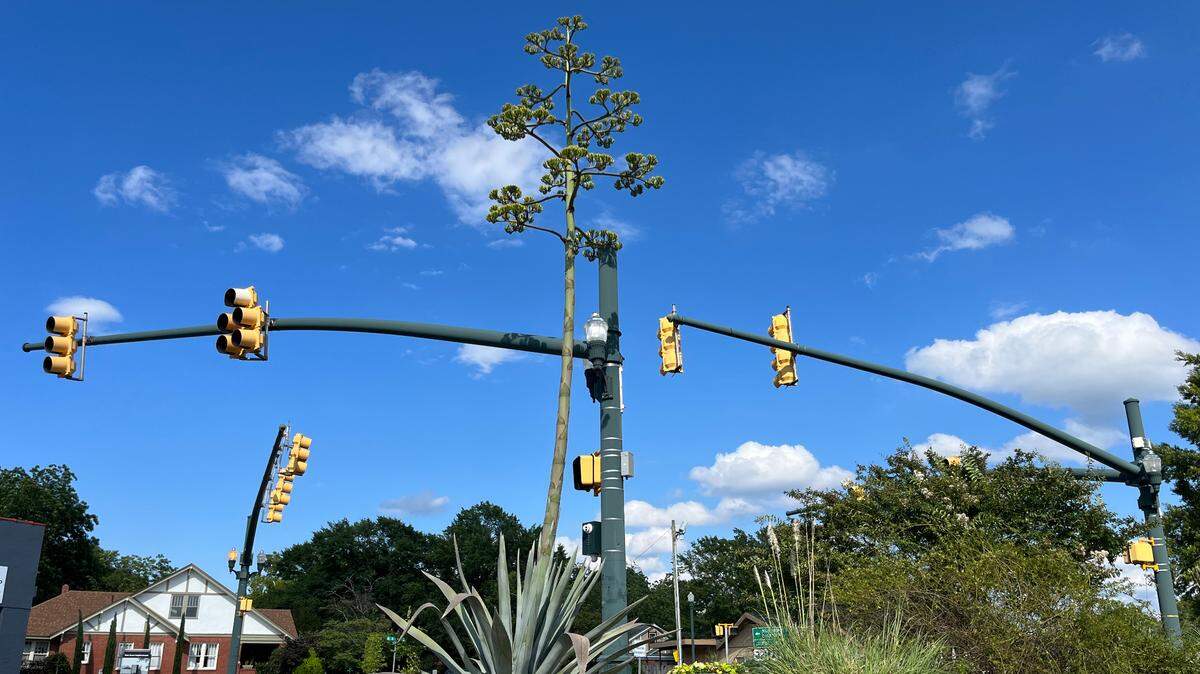
Unique, interesting, eccentric — These words describe Columbia’s most recent Agave americana, better known as a century plant, but they also describe James “Jeff” Merck, the man who planted it at the corner of north Main Street and River Drive.
The century plant is known for its unusual timeline. It only blooms every 10 to 15 years and dies immediately after. The plant is almost comically large and boasts huge spiked leaves for most of its life. Then, when it is ready to bloom, a tall spike grows out of the center of the plant, which large yellow flowers sprout off of.
The newest bloom on Main Street currently tops the nearby traffic light by a few feet and shows signs of blooming flowers.
Bexx Merck, Jeff Merck’s youngest daughter, inherited her father’s guitar repair store, Strings Attached, when he passed away in 2021. Jeff always wanted the garden in front of the shop, where he planted the century plant, to be a spectacle, Bexx said.
She thinks he would have seen the century plant’s bloom as the perfect addition.
“It’s funny because we’re here because of the plant, but that makes total sense,” Bexx Merck said. “He would be absolutely losing his mind, so excited about this plant.”
Bexx Merck helped run Jeff Merck’s business for a little over a year after his death before closing the store in March. The century plant out front began to bloom just a few weeks later.
For Merck and her sister, Caitlin Bockman, the bloom seems like a message from their father.
“It’s very fitting, and it’s unusual. You know, you got to really catch it in its element. I think that was him,” Bockman said. “He was passionate about a lot of things and interested in a lot of things, but it meant you had to kind of catch him. When you did, it was very beautiful, and I think it’s kind of the same for this plant.”
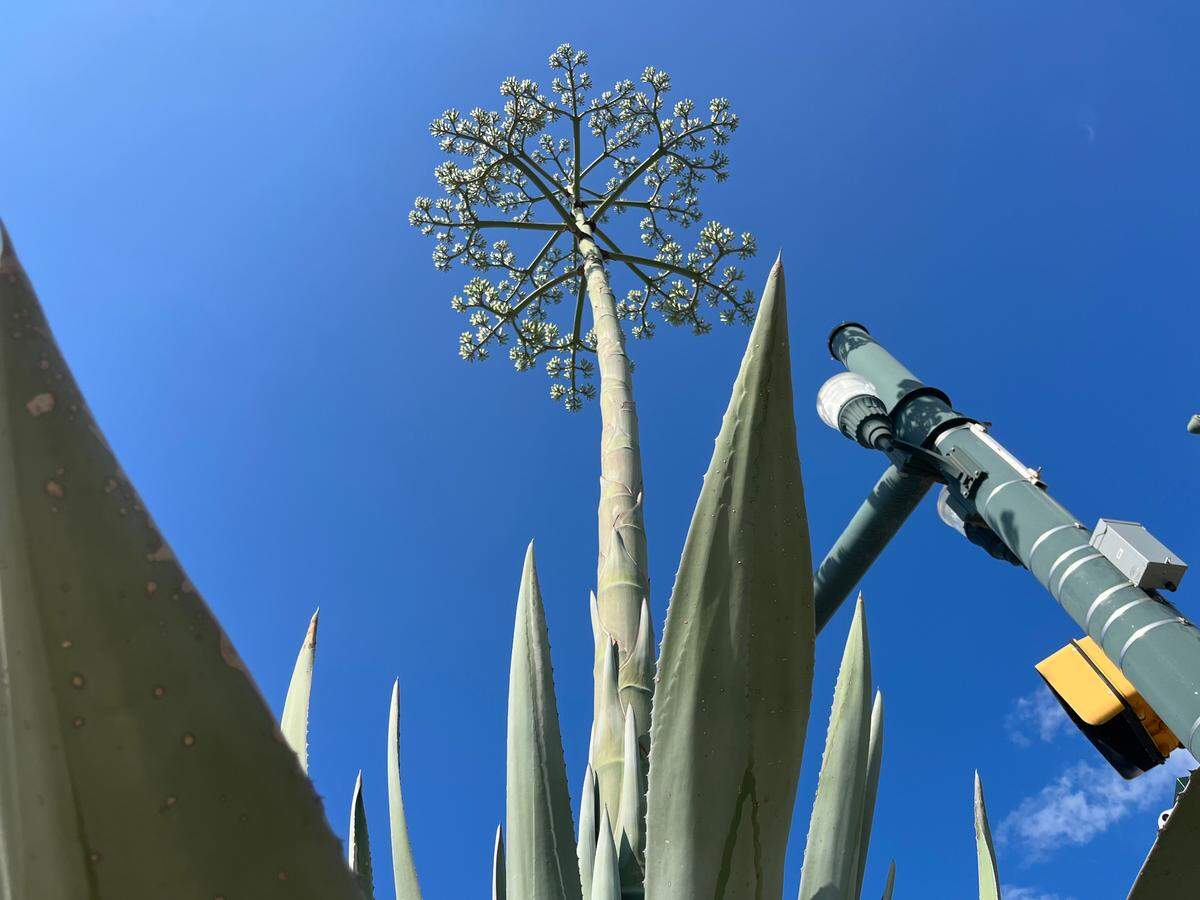
Cory Tanner, an extension horticulturist for Clemson University’s Cooperative Extension, said while the plant is not necessarily rare to the Midlands, its unique bloom often attracts visitors.
“It’s almost like pillows or something kind of tiered up the stock,” Tanner said. “Perhaps something reminiscent of Dr. Seuss.”
Jeff Merck always loved plants and brought them up in conversation like some might bring up the weather, his daughters said. At his home, he created a garden so big that it required approval from the zoning board and sometimes upset neighbors.
“It was a little bit like a controversial wonderland,” Bexx Merck said.
His shop, where he worked as a trained luthier repairing stringed instruments, had a similar eclectic energy. One day he convinced Bexx to help him collect pallets, which they took apart and covered the wall with. He often collected driftwood and other unique objects to display in his home and business.
While he enjoyed the look of his shop and the garden out front, Bockman said what her father really loved was the opportunities it gave him to connect with people. He would spend time in the garden, meeting neighbors and doing anything he could to connect with the world around him.
“I think part of his impetus for wanting to know so much was so that he could have different ways of engaging with people,” Bockman said. “Because ultimately that was really what he had a passion for; it was people, and helping people and building community.”
In addition to his work as a luthier, Jeff Merck was a self-taught guitarist, a sailor and a Methodist minister. He enjoyed teaching, was fascinated by divinity and was always learning.
“The expression ‘a jack of all trades and a master of none,’ but for him, he was a jack of all trades and a master of most of it,” Bexx Merck said. “He would just dive into something with his whole heart.”
Once the century plant’s stalk starts to emerge in the spring, it will bloom throughout the summer until it completes its life cycle and dies in the late summer or early fall, according to Tanner.
However, the plant does produce offsets or “pups” at its base that will eventually take over after the original plant dies.
“They build up energy reserves for 10 or 15 years, and then they put all that energy into one massive bloom at the end of their life,” Tanner said. “So it’s kind of a spectacular way to go out, if you will.”
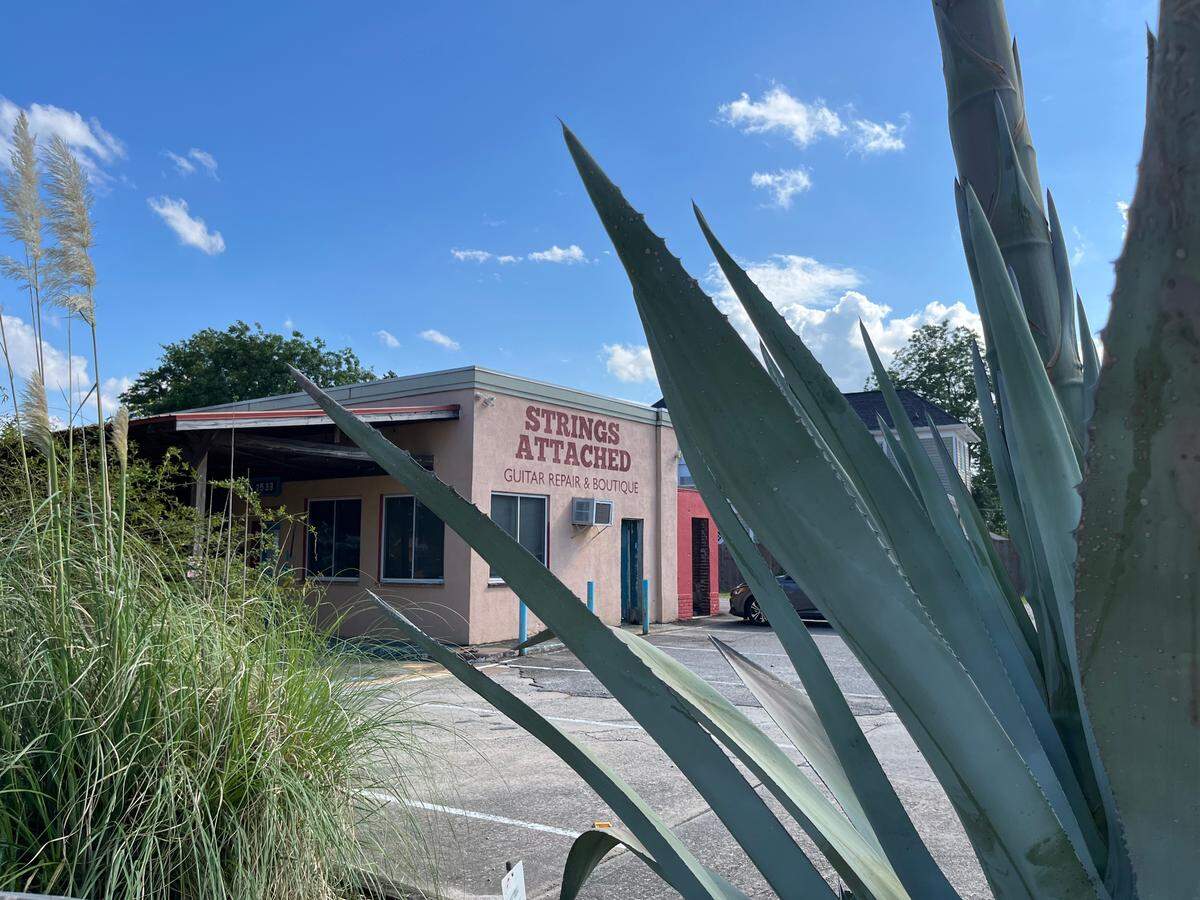
People wanting to visit the strange plant before it dies can find it next to the traffic light in front of the Merck’s old store, Strings Attached Guitar Repair and Boutique at the intersection of Main Street and River Drive.
This story was originally published June 15, 2023 at 5:30 AM.