
As tensions over growth persist, Lexington considers proposals for hundreds of homes
With tensions remaining high between Lexington County and the town of Lexington over issues relating to residential development and annexation, the town is taking a deliberate approach as it considers two proposed subdivisions. The two developments would respectively add 267 and 128 homes to the town if approved and annexed.
The bigger of the two subdivisions hit a snag with Lexington Town Council, which responded to concerns from residents by removing a vote on the project from its agenda earlier this month and asking that developers rethink a couple key aspects of the project.
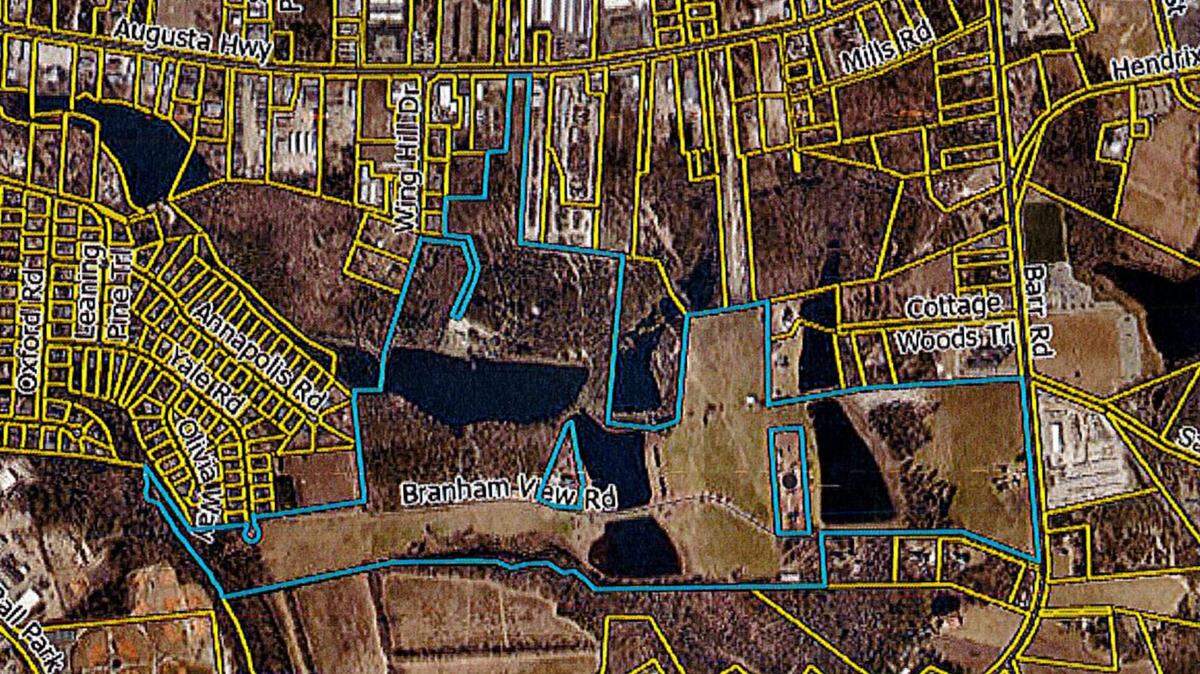
That subdivision would center on the 300 block of Barr Road, a two-lane road that connects to West Main Street/U.S. 1. The town Planning Commission moved the project forward in May with some notable requirements:
Several ponds exist within the subdivision’s proposed 161-acre footprint, and the property would be required to be looped into a special tax district to make sure that bridges and dams related to those ponds are maintained.
Right- and left-turn lanes would need to be installed at the subdivision’s main entrance off Barr Road, along with a left-hand turn lane from Barr Road onto Wildlife Road and a right hand-turn lane from Wildlife Road onto Barr Road to help with increased traffic in the area.
At that Planning Commission meeting, the development team indicated that discussions about these issues were already ongoing with town staff and the S.C. Department of Transportation.
While no vote took place on the project at the Town Council meeting earlier this month, a few members of the public expressed concerns about the density of the project and making sure that proper time is given to consider the impacts to the ponds. The project connecting to an existing subdivision along Yale Road for a secondary entrance was also raised.
“My biggest concern with the project is the connectivity of the subdivision to Yale Road,” said Town Councilman Gavin Smith. “It’s just the impact that it would have on that neighborhood and those residents by connecting the new neighborhood or the new development to an existing and established neighborhood and the impact that it would have on those neighbors in there. That’s just not something that I can support.”
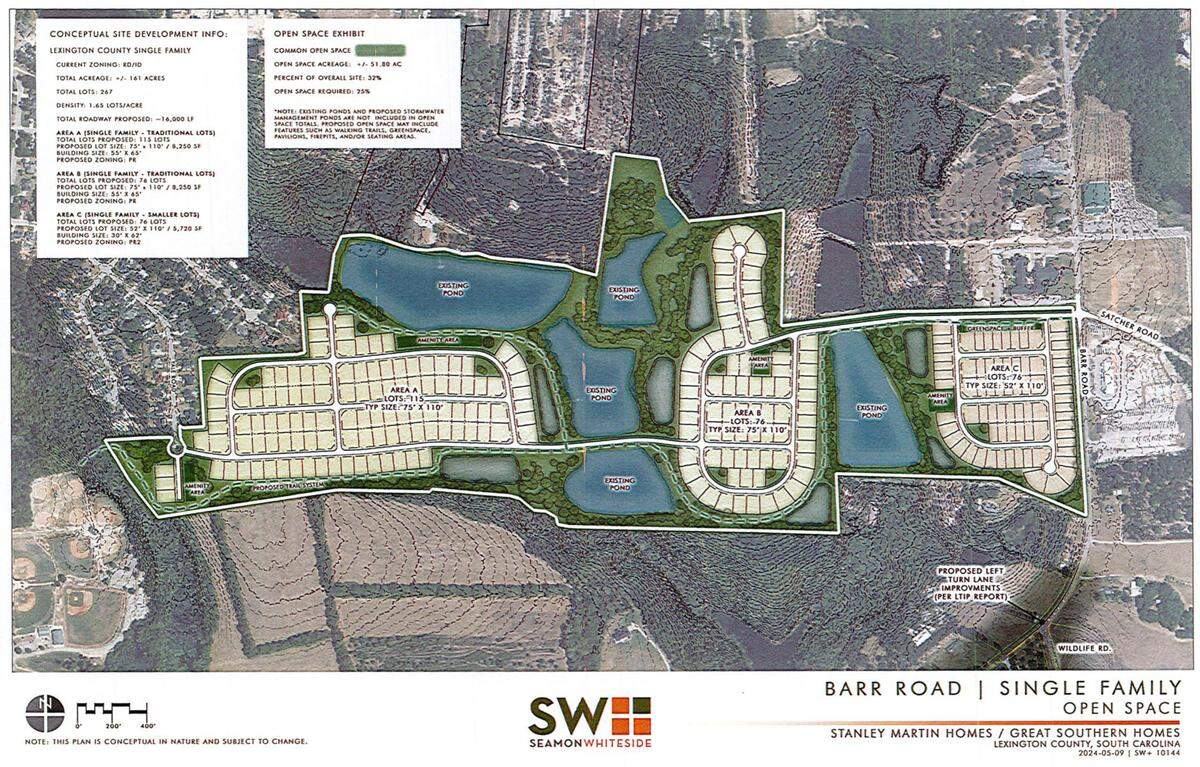
While Mayor Hazel Livingston said ample time is built into the process to assess the impact to the ponds and related infrastructure, she joined other members of council in pushing for lower density. As proposed, the development would have some homes on a smaller lot size and others on a larger lot size. The mayor wants all of the homes on the larger lots.
“I think that we should always be responsible in our development process,” Livingston said. “We should always be cautious to make sure that if we’re involved that our police department is able to handle what we’re looking at bringing in, that road improvements are being made and that we’re talking to the citizens around the property that it affects and just having conversation. Conversation is always good.”
Both Livingston and Town Councilman Todd Lyle noted that the development could go in as proposed if it isn’t annexed into the town.
“Interestingly enough, also, without any approval required, they could go to the county and get two units per acre, whereas what they proposed to us was 1.65,” Lyle noted during this month’s meeting. “And we actually told them to come back with something less.”
Livingston noted that the development possibly being approved by the county without being annexed would have drawbacks.
“The town requires road improvements,” she said. “We require road improvements at the neighborhood that’s being developed, at the entrances of it. We also require road improvements at intersections that’s close to it that would be heavily affected, and the county does not require that. And the number one thing you hear is, ‘How can we improve traffic?’ ”
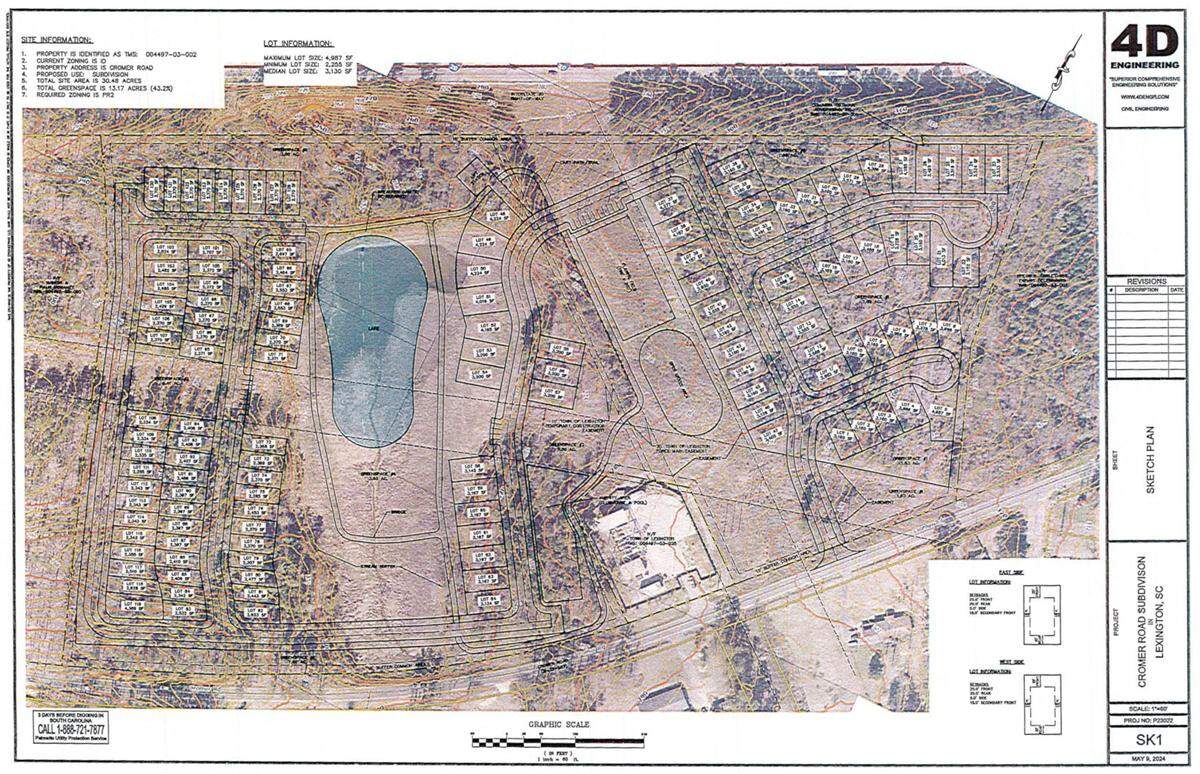
The other proposed subdivision — which would go in on 30 acres along the 300 block of Cromer Road, off Sunset Boulevard/U.S. 378 across Interstate 20 from the town — was denied annexation in May due to it not aligning with the town’s land-use map.
Developers for neither project could be reached for comment.
For Livingston, the process with the Barr Road subdivision is indicative of Lexington’s thoughtful approach to considering new residential developments, which she feels should assuage concerns the county has expressed about the town pushing development along its western borders into more rural parts of the area.
“In the last six years, nine new subdivisions with 447 total lots have been permitted in the town,” the mayor said. “And six of those subdivisions, 381 lots, not one house has been built of the 381 lots. Comparatively, 388 lots were approved in Lexington County during the month of May.”
In December, the county canceled in December a circa-1978 agreement to maintain roads within its municipalities, seeking to put in place a new agreement that ensures that new residential developments annexed into towns and cities would adhere to the county’s zoning standards. Most municipalities balked at this, with months of tension ensuing.
Most cities and towns within the county have been offered back the old agreement as local leaders continue to seek a compromise, but Lexington is one of three municipalities that hasn’t received this olive branch.
“What characteristics are unique to Lexington, Chapin and Swansea and non-existent in the other 11 municipalities that somehow disqualify them from the road maintenance agreement?” Livingston said in a prepared statement.
“What exactly is the message to the tax-paying citizens of Lexington, Chapin and Swansea from County Council? We will gladly receive your gas tax revenue but we will not provide maintenance for your future roads because we don’t approve of how you run your municipality? That is certainly not ethical, but is it even legal?”
Beth Carrigg, who chairs County Council, said that while not all municipalities have been offered the old agreement, the county is willing to work with any and all municipalities who come with proposals.
“We have offered to look at each development on a case-by-case basis,” Carrigg said. “If they have something they want to move forward with right now, we’ve offered to look at it. We’ve offered to sign off on it if it’s something that we believe is beneficial to the growth of the western area of Lexington County. The town of Lexington, we’ve offered to take their developmental standards, we just like input, a seat at the table, that means a voice in any planned-use developments that have a residential component or a mixed-use development that has a residential component, where they ask us to take in the roads for future service.”
This story was originally published July 10, 2024 at 12:43 PM.
.jpg)