Columbia lost its bid to host NCAA March Madness again. The problem? Not enough hotels
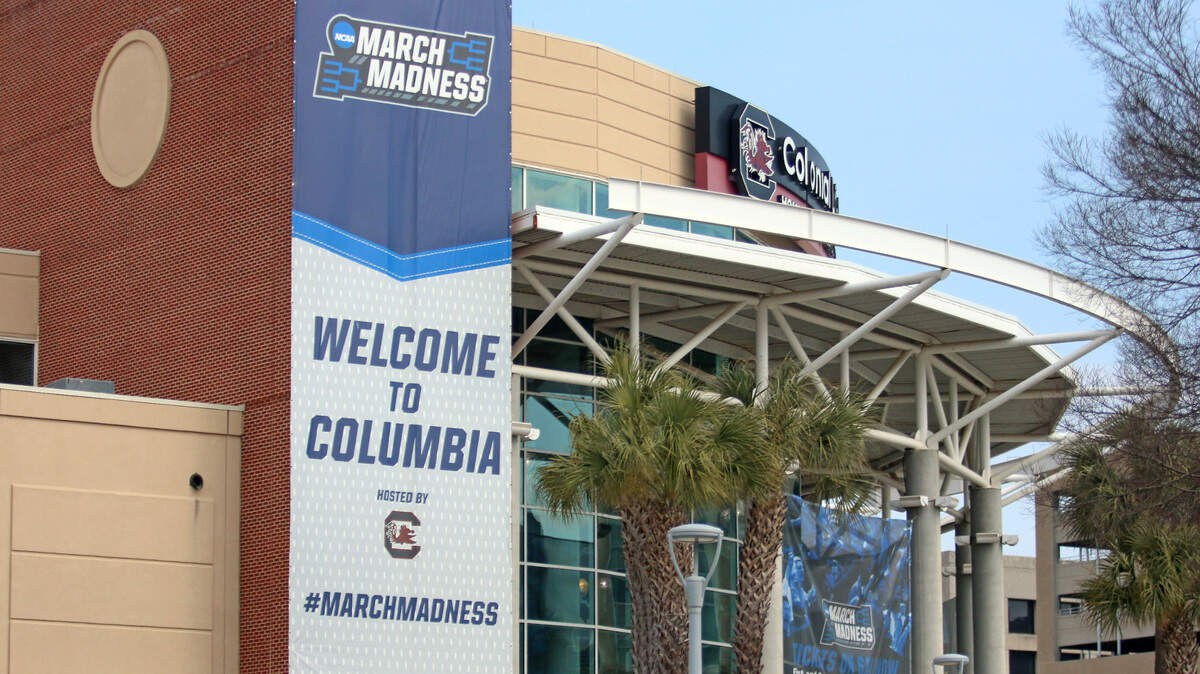
Columbia will not host rounds of the NCAA’s March Madness men’s basketball championship in 2027 or 2028, despite submitting a bid earlier this year.
Columbia’s problem is its lack of full-service hotels, explained Scott Powers, executive director of Experience Columbia Sports, the city’s sports tourism agency.
“While it wasn’t a surprise, we’re disappointed,” Powers said, explaining that the NCAA informed the city earlier this month that it would not be among host cities for tournaments in 2027 or 2028.
In 2019, the city broke a nearly 50-year streak and was chosen to host a portion of the NCAA men’s basketball tournament for the first time since 1970. Almost 48,000 tickets were sold for the six games hosted in Columbia that year, and the overall economic impact to Richland and Lexington counties was $11.3 million.
It was a big moment for Columbia, not only because of the economics, but also because March Madness draws international attention and it was a chance for South Carolina’s capital city to show its assets.
The city keeps hoping to recapture that moment, but every year since the city last won a host position the requirements have gotten more stringent, Powers said. In 2019, they found creative ways around the full-service hotel problem. But the NCAA hasn’t been willing to make the same concessions in more recent years.
Columbia and the surrounding area do have a lot of hotels. There were at least 160 hotels with a total of 13,263 rooms in the Columbia metro area as of December 2023, according to the state Restaurant and Lodging Association. That’s also a significant increase from December 2019, when there were 129 hotels and under 12,000 rooms. So the region is also adding hotels. But they aren’t adding the right kind of hotels fast enough.
The NCAA wants host cities with eight to 10 full-service hotels with in-house food and beverage options, with four meeting rooms of at least 2,000 square feet. And it wants each of the eight teams playing in the tournament rounds to have their own hotel to avoid any bad blood before or after games. There are only four hotels in the region that meet those requirements, Powers previously told The State, and the city hasn’t built any new ones in almost 20 years. The last NCAA-approved full-service hotel that opened in Columbia was the Hilton Columbia Center in 2007.
Columbia wasn’t the only city in the Carolinas to miss out on the host gigs. Charlotte is the only city in the Carolinas to have been selected by the NCAA this round. Powers thinks this indicates that smaller cities might not stand a chance in the future.
Powers said he will keep bidding to host NCAA tournament rounds, but he’s not optimistic that Columbia will get selected, at least until after 2030, because bids have to be submitted up to two years prior and Columbia won’t change enough in that time. He said one solution could be to limit the number of small hotels that can be built downtown in favor of larger projects.
Developer Ben Arnold has plans to build one new full-service hotel in the Vista in coming years, and the Convention Center has also been planning a hotel project adjacent to its property.
Powers added that he doesn’t think the NCAA’s decision is an indication that Columbia isn’t a good fit to host high-profile events, pointing to the recent Premier League Rivals in Red match hosted at Williams-Brice. While there are limits to what the city can support, he said, Powers believes Columbia will still continue to build momentum to host bigger events.
“Obviously we know we’re not going to host a Superbowl,” he said.
This story was originally published October 22, 2024 at 12:04 PM.