
Columbia photographer hiked through landslide rubble to capture Helene’s impact in NC
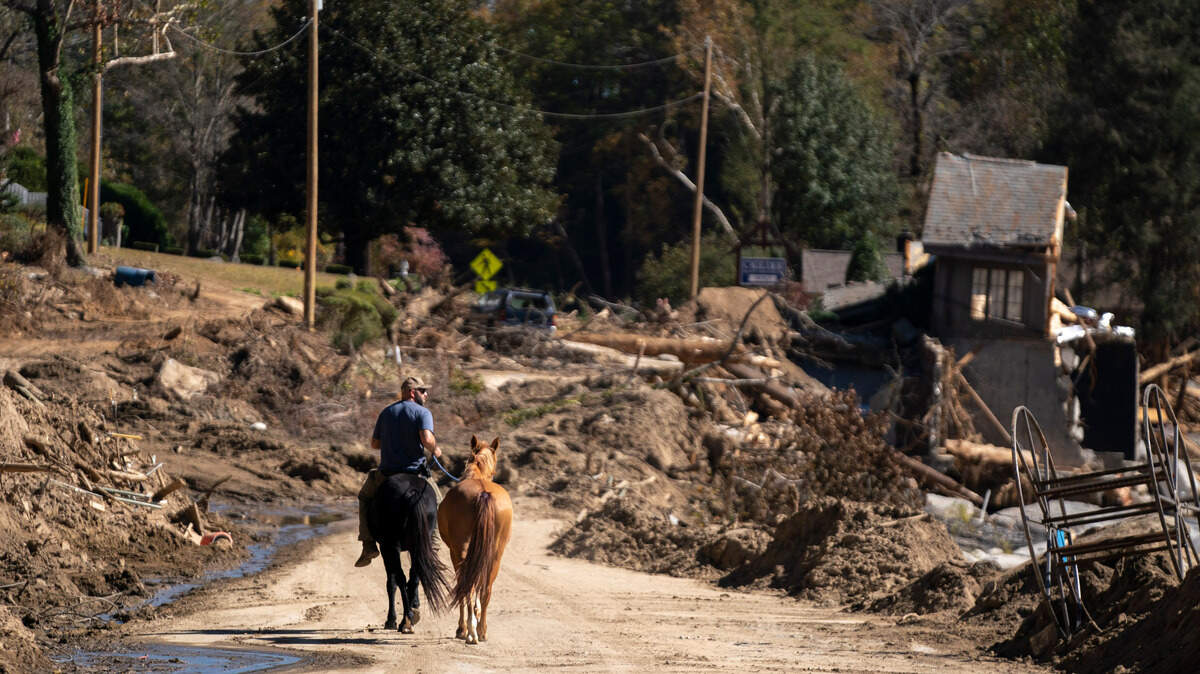
Sean Rayford has photographed 11 hurricanes in the last nine years. His coverage of Hurricane Helene started pretty much the same as any other.
On Sept. 25 of last year, the Columbia-based freelance journalist was on the Florida Panhandle, documenting people filling sandbags to fight the flooding that would come when the Category 4 storm made landfall, which happened the next day.
The days that followed weren’t so typical, both for Rayford and the western North Carolina mountains. As the weakening but still powerful storm pushed into the region, it brought extreme wind and rain, leading to flooding and landslides that washed away houses, buildings and roadways. Power was knocked out for nearly 900,000 customers in the state, with thousands left without power for weeks after the storm passed.
Rayford ventured up into the N.C. mountains from the Florida coast as his coverage for photo service Getty Images continued through Oct. 3. His images, which he’ll display at an exhibition opening Friday at the main branch of the Richland Library in Columbia, capture the remarkable devastation left in the mountains by Helene:
- Asheville’s historic Biltmore Village left gutted, with a large silo tipped over into the street
- A huge line of people at a gas station hoping they might be able to get fuel
- Buildings left partially filled with mud and debris
- Cars tipped into rivers and smashed through houses
- Rescue workers hiking through landslide debris and partially destroyed roads to access small towns cut off from the outside world
- Helicopters landing in fields and on unused bridges to reach those in need
Capturing these images meant dealing with the same conditions impacting local residents. Rayford has set up a van he can live out of when he’s out on assignment, but accessing particularly pummeled areas like Bat Cave and Chimney Rock left him searching for days for navigable routes and then ultimately hiking through unforgiving terrain.
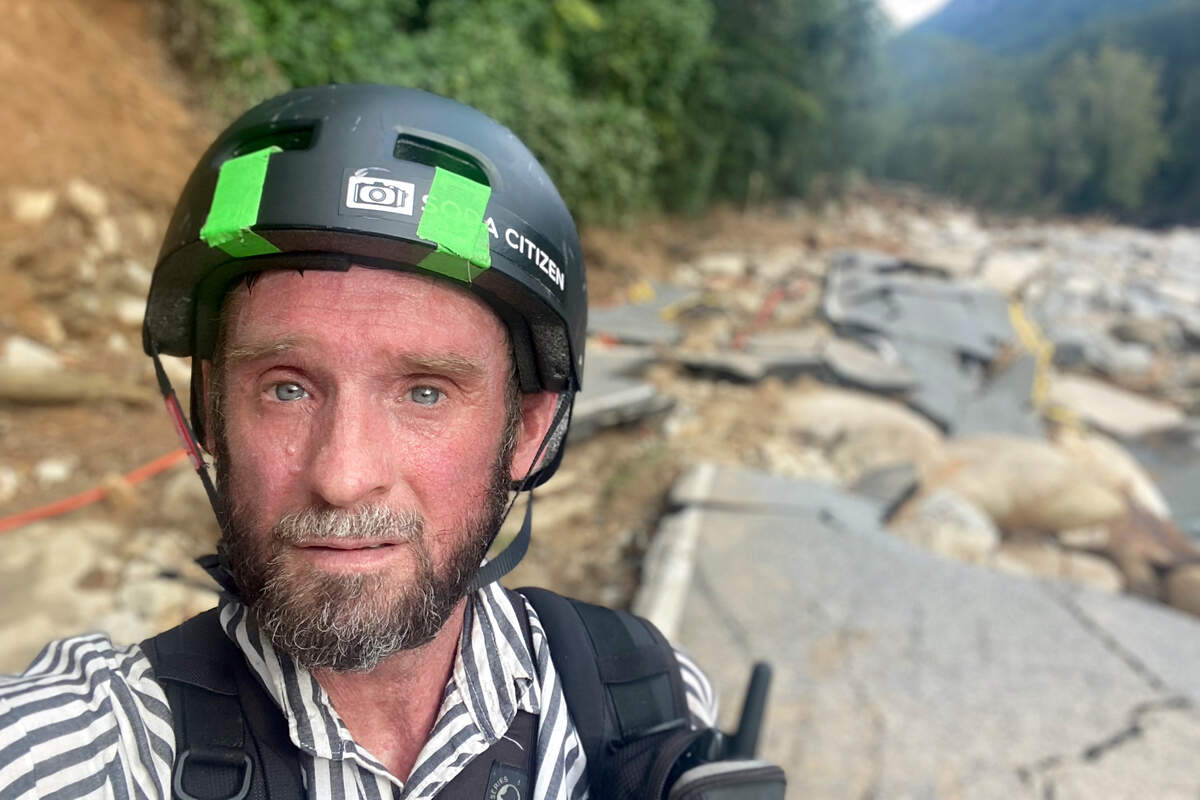
“I’m running probably 30-40 miles a week, so I’m in good shape,” Rayford said of the moment he found himself within hiking distance of Bat Cave. He hadn’t been able to run for about four days while he was covering the storm.
“So I [was] completely down for an adventure.”
The photographer’s experience in North Carolina balanced adventure with tragedy, as he met many people hit hard by the storm. One family he details encountering in a video recounting his coverage is reported to have lost 11 members to Helene.
When he’s covering such disasters, he’s one of the first people victims meet, arriving alongside first responders. It’s a responsibility Rayford says he takes seriously. He helps where he can, such as buying pet food for a community he passed on the way to Bat Cave.
“That’s the goal, to be a first responder, so that you can document the people that are responding first,” Rayford said. “Because otherwise, you can’t capture all the private, small groups, the church groups, the random groups that got together to check on one of their loved ones, and then after they got together, decided that they were just going to continue doing that type of work in the area, because they were there and equipped and prepared.”
In North Carolina, he was impressed and gratified by the efforts of people trying to help out, highlighting the way the volunteer fire department in Bat Cave rallied the community. In addition to their work to set the community right as quickly as possible, they helped Rayford with UTV rides to get around while he was there. He returned to Bat Cave to further document recovery efforts later in October.
In the days immediately following the storm, the department and other volunteers were doing everything they could, including keeping people fed.
“They’re serving meals three times a day there, so everyone that’s still in town is basically doing something for the recovery,” Rayford recalled. “All hands on deck. If you don’t have some physical ability, you’re cleaning, you’re cooking. Everyone seemed to have some participation going on.”
Less than a week after his initial coverage of Helene ended, he was covering another hurricane, as the Category 3 storm Milton made landfall Oct. 9 near Siesta Key, Florida.
“In the recent few years, what we’ve seen with a lot of these storms is this period of rapid intensification,” Rayford said. “Once it gets to like a Category 2 down in the [Gulf of Mexico] the last few years, I’m kind of at the point now where I’m preparing for it to be worse than that because of what’s been happening recently.”
The exhibition “HELENE: photography by Sean Rayford” is on view through March 1 at the main branch of Richland Library (1431 Assembly St. in Columbia). The library will host an opening reception Friday from 6:30 to 8:30 p.m.
This story was originally published January 16, 2025 at 5:00 AM.
.jpg)