Are convenience stores overwhelming this Columbia neighborhood? Residents think so
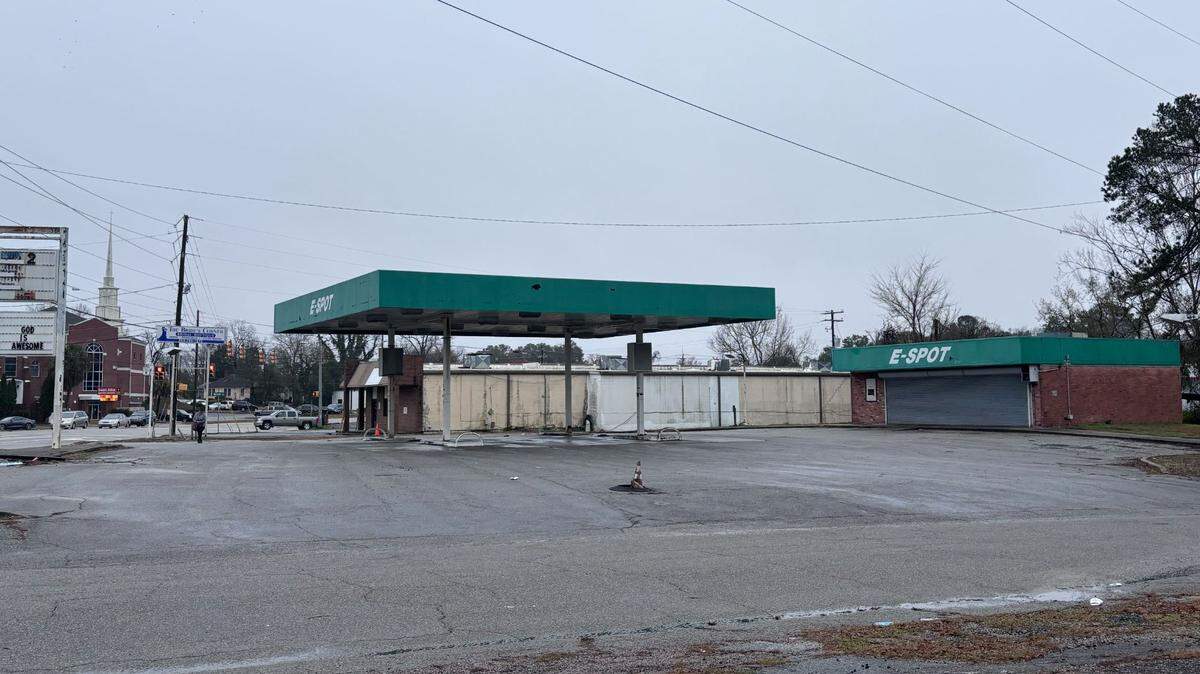
The building at the corner of Beltline and Farrow roads has been empty and dilapidated for years. Residents in the surrounding Colonial Heights and Booker Washington Heights neighborhoods would rather it stay that way than see yet another convenience store open up in the area that leaders say is already suffering from an over-saturation of the stores.
“We are trying to improve that area” said Regina Williams, president of the Booker Washington Heights neighborhood association, in a plea to Columbia’s board of zoning appeals last week asking the body to deny a request to establish a new convenience store at the site, previously home to the convenience store E-Spot.
“We need help. We do not need anymore of these types of stores,” Williams said.
Williams was joined at the meeting by local elected and religious leaders and longtime residents of area neighborhoods. Almost all of them delivered the same plea: Help the neighborhood by keeping more convenience stores out.
After more than an hour of testimony from residents and responses by the property owner, the city’s board sided with the residents, denying the property owner’s request to re-establish a convenience store.
The move was a success for neighborhood residents, but they say the problem is illustrative of a bigger problem with too many convenience stores in their neighborhoods.
Liquor permits?
While downtown gets flashy new restaurants, Five Points gets artsy new shops and Harbison is a constant bustle of commercial activity, residents in many North Columbia neighborhoods get convenience stores, they say.
There are more than a dozen gas stations or convenience stores within a 1.5 mile radius of the farrow road property at issue Thursday, according to available information on Google Maps. The site sits in between the neighborhoods of Booker Washington Heights and Colonial Heights.
In Booker Washington Heights alone, there are eight stores that sell beer, wine and liquor: six convenience stores and two standalone liquor stores, according to the neighborhood association.
The Farrow Road property owner, Sheetal Patel, purchased the vacant two-parcel property on Farrow Road in October for a total of $350,000 with plans to set up a convenience store shortly after.
The building’s previous owners had also attempted to get permission from the city to put a gas station and convenience store on the site, but those plans were rejected in 2019 because of community resistance.
Patel anticipated this push back in his application to the city, promising that if a convenience store were approved for the site, he would not sell any alcohol.
“I suppose there’s community opposition to this that perhaps boils down to a concern that somehow alcohol will sneak in through the back door,” Patel’s attorney, Alex Shissias said at the Thursday meeting.
Multiple residents said they believed that once a convenience store is approved for the site, a liquor permit would not be far behind. Leaders of the nearby St. John Baptist Church also said they did not want another convenience store nearby the church playground and preschool.
Shissias stressed that Patel would not be “an absentee landlord” and that he should not be punished for the behavior of predecessors.
But residents say the struggle over conveniences stores has been ongoing for years, not just at this site.
“People want things that are going to add to the value of the community,” said Richland County Council Member Tyra Little in an interview with The State. “They want things that are going to bring some excitement in the neighborhood.”
Little represents Richland County District 3, which includes a number of North Columbia neighborhoods like Booker Washington Heights and Greenview. The consensus among residents is that they are sick of seeing convenience stores and dollar stores.
The area is short on health clinics, fresh food options and quality housing, as well as simple pleasures like nice restaurants and retail stores, leaders say. Instead of convenience stores, residents would like to see vacant land in the community used to address some of those needs.
The slate of issues facing neighborhoods in the 29203 zip code is nothing new. The newly proposed convenience store is less than a mile from North Pointe Estates, the center of what has previously been called Columbia’s most violent block. But the area is also home to strong residential streets with homeowners who have lived there for decades and are desperate to see something new.
Community action
The problem with having so many convenience stores comes down to a few factors, residents say. One is the quality of life issue about simply wanting to see different options in the community. But the convenience stores have also been known to attract crime, and both residents and law enforcement have frequently pointed to certain convenience stores and gas stations as repeat problem businesses.
“Decisions like this are incredibly important in terms of the positive trajectory that area is on,” said Columbia Police Chief Skip Holbrook when asked by zoning officials.
Holbrook said he wasn’t speaking against any business, but that he shared the concerns of residents, particularly about crime in the area. The chief has publicly spoken numerous times about crime problems at convenience stores that sell single-serve drinks and individual cigarettes, and that allow loitering on their property.
The sale of alcohol is also not exactly the problem, said Gwen Singletary, president of the Wiley-Kennedy Foundation, an advocacy organization for the 29203 zip code.
“I’m not trying to be a prohibitionist saying alcohol can’t be sold,” Singletary said in an interview with The State. “My issue is what goes on with the alcohol sales.”
People will often stay at the store and consume their drinks on site, and some of the shops are open late at night but don’t have any security, Singletary said. She also leads an organization called the United Alliance of North Columbia neighborhoods, which has in recent years challenged the liquor licenses of certain convenience stores to address high crime rates.
“I look at the number of those [stores] already in my community,” Singletary told The State. “It feels like they’re preying on underserved communities.”
But she also said if those stores enforced trespassing rules and did more to reduce crime and loitering, they would not have such a detrimental impact on the area.
Patel’s attorney, Shissias, did not respond to an interview request from The State. But at the Thursday hearing he said he did not think Patel should have to answer for the actions of other business owners.
“We’re being tarred by the bad behavior of prior occupants and stores near us, I don’t think that’s terribly fair,” Shissias said.
This story was originally published February 13, 2025 at 1:06 PM.