Do you live in this Midlands city or not? Holes in map cause confusion for police, trash
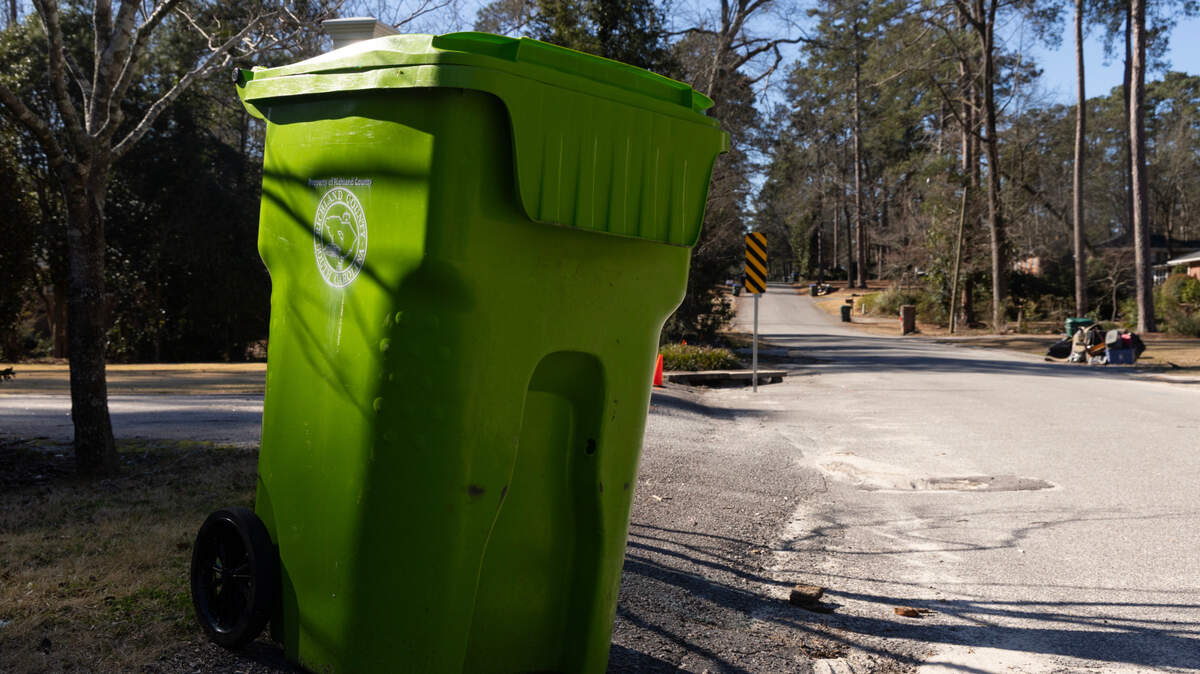
The map of Forest Acres looks like a particularly hole-y piece of Swiss cheese, or maybe a paper target at a gun range.
Big gaps of unincorporated Richland County carve out sections of neighborhoods from the growing city, just northeast of downtown Columbia. The pockets developed over time as the city grew around them. But now there are large spaces where the city doesn’t have the jurisdiction to provide services.
Those gaps have created real problems for everything from emergency response times to trash pickup, city leaders say: An estimated 25% of the houses that most people think of as being in Forest Acres are actually part of unincorporated Richland County.
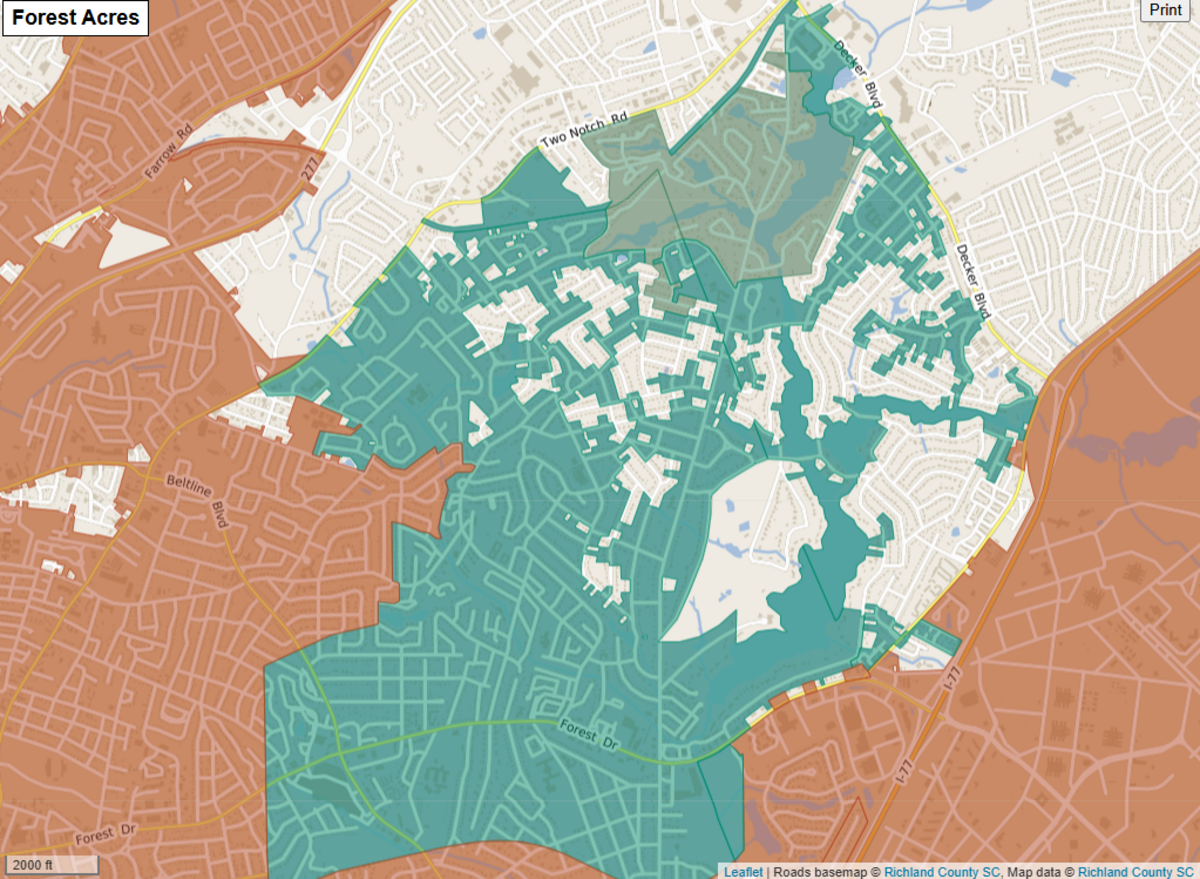
Even residents themselves don’t always know where they actually live.
People are shocked, said Forest Acres city manager Shaun Greenwood, when they learn “how many people that think they live In Forest Acres don’t actually live in Forest Acres.”
The city even has a page on its website, “Am I in the City?”, where people can put in their address to see if they live inside or outside the city limits.
Over the last few years the city has made an effort to close its many holes, but it’s a sluggish process. The city hopes to absorb about 1,500 homes to close the gaps. Since 2019, they’ve brought in fewer than 50.
City leaders would like to see a legislative solution, but because the city’s problem is relatively unique, leaders don’t necessarily expect one. In the meantime, they’re trying to close the gaps themselves.
Whose responsibility?
When rain and wind from Hurricane Helene hit the Midlands last fall, it took down trees and power lines in towns and cities across the state. But the jurisdictional headache in Forest Acres made responding to those emergencies much harder, said Lynnsey Baker, communications manager for Forest Acres.
“People were calling for help not knowing if they were in Forest Acres or Richland County,” Baker said. It put a strain on the small city’s resources, responding to houses that technically were not the city’s responsibility. But it also created confusion and slowed down the city’s ability to respond to every house in need.
The jurisdictional confusion has also caused delays in response to 911 calls and other calls for emergency services, city leaders said. Forest Acres’ police has an average response time of three minutes, according to the city.
There are four intersections that cross through the center of Forest Acres that the city’s police department cannot enforce because the intersections fall in unincorporated Richland County and therefore out of Forest Acres’ jurisdiction, according to a list provided by the Forest Acres police department.
This confusion between agencies is perhaps the most immediate problem Forest Acres is dealing with as a result of the big sections of neighborhoods that bob in and out of the city’s boundaries. And it’s not just a problem for enforcing pubic safety.
Imagine you’re driving a garbage truck for Forest Acres. You’re driving down a residential street and the three houses on your left are your responsibility, but the next two houses after that are in Richland County and so the county will send its own truck to collect for those houses. Then the next three houses after that are Forest Acres responsibility again.
“There’s waste on both sides, because you’ve got both our trucks and the county’s trucks sort of driving the same streets, but only picking up half the stuff,” Andrews said.
It also creates confusion for residents whose next-door neighbors live in a different city.
“You’ve got people who don’t really understand why someone next door to them can do something that they can’t,” because the city and county have different rules, Greenwood said.
Richland County did not answer multiple requests from The State to provide more information about how it provides services in those areas.
Any fix?
To begin to address the almost daily problems created by the Forest Acres map, the city several years ago started a targeted campaign to get more people to voluntarily switch from being county residents to residents of the growing city.
That campaign, called Annex the Acres, has taken the form of social media marketing, postcard mailers, word-of-mouth and even house-by-house door-knocking efforts. But still, despite years of work, the city has barely moved the needle to reach their goal of annexing 1,500 homes.
Between 2019 and 2024, the city annexed 42 properties into the city — less than 3% of the city’s total goal. Between 2016 and 2018 the city only annexed four properties, so the new rate of nearly a dozen annexations per year is a big increase. But it still isn’t enough to begin to address the problems the holes have created, leaders say.
Cities that provide utilities like water typically don’t have to worry about this level of gaps in their community because those cities can use utility agreements that form a preemptive agreement to annex if the city chooses with anyone receiving city water. But Forest Acres doesn’t provide its own water, so it doesn’t have that mechanism.
So instead, they’re trying to get residents to ask to be annexed themselves. One problem the city has had is simply communicating what they say are the benefits of annexation. Oftentimes, annexation is used when a city wants to grow its physical footprint and expand its tax base.
Andrews said that isn’t what Forest Acres is interested in. Closing the holes in the city map could net Forest Acres an estimated $450,000 in new property tax revenue from the homes in the gaps, according to the city’s analysis. But Forest Acres doesn’t have room to expand outward, and so growth is not the real goal, Andrews said.
“We’re interested in just maximizing our [existing] footprint,” he said.
City leaders say they would love to see a legislative solution to their problem. A few years ago a bill was floated that could have given a city like Forest Acres more control of annexations, but it never got out of committee. Andrews said he doesn’t know if there’s any appetite among state lawmakers to revive any similar effort.
In the meantime, they will have to continue closing the gaps one house at a time.
This story was originally published February 28, 2025 at 5:00 AM.