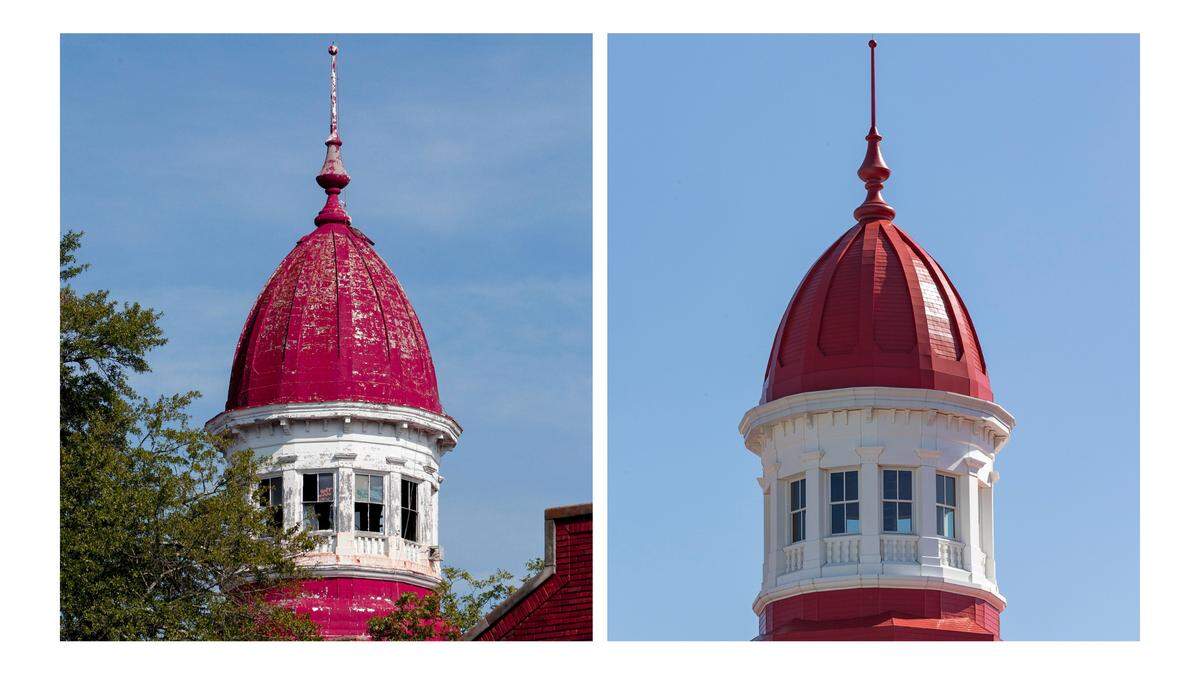
The cupola of the historic Babcock Building at the South Carolina State Hospital, left, and the restored cupola on the same building in the BullStreet District that was renovated into apartments.
Tracy Glantz
tglantz@thestate.com
Some days the sun just seems to shine brighter than others.
It felt that way on Feb. 25 in Columbia, when University of South Carolina leaders, state and local elected officials, and various business and medical dignitaries gathered on a warm, balmy late winter day in the northeast section of the BullStreet District and formally broke ground on the new USC School of Medicine.
Set to be completed in 2027, the medical school will be a state-of-the-art, 315,000-square-foot research and education facility that will be a prominent part of USC’s $300 million health sciences campus planned across the east side of the BullStreet District. A standalone neurological hospital also is slated to be part of a future phase of the health sciences campus.
It’s a bold, potentially transformative project for USC, bringing its Columbia medical school operations from their longtime digs at the Dorn Veterans Affairs Medical Center property to a spot closer to the city center and the university’s main campus.
But while the Feb. 25 medical school groundbreaking certainly marked a red letter day for the university, it also represented a significant 10-year arc for the BullStreet District itself. For the last decade, Greenville’s Hughes Development and the city of Columbia have been in the throes of reimagining the sprawling 181-acre former State Mental Hospital site into a mixed-use district with residential, office, retail and recreational uses.
The first major physical piece of the ambitious BullStreet development was formally initiated on Jan. 6, 2015, when officials broke ground on what was then known as Spirit Communications Park (later renamed Segra Park), a $37 million stadium and entertainment venue that would become the home of the Class A Columbia Fireflies minor league baseball team, currently an affiliate of the Kansas City Royals.
The history of the The South Carolina State Hospital shows around the development of the Bull Street District. Tracy Glantz tglantz@thestate.com
There is a certain symmetry to the timeline connecting the two major groundbreakings, the 10 years between when the shovels turned the first dirt on the baseball stadium to Tuesday’s gathering to kick off construction on the new USC medical school. While there is still much to be done at BullStreet — the city and developers have long insisted overhauling the site would be a 20-year undertaking — there has undoubtedly been significant progress in this first decade.
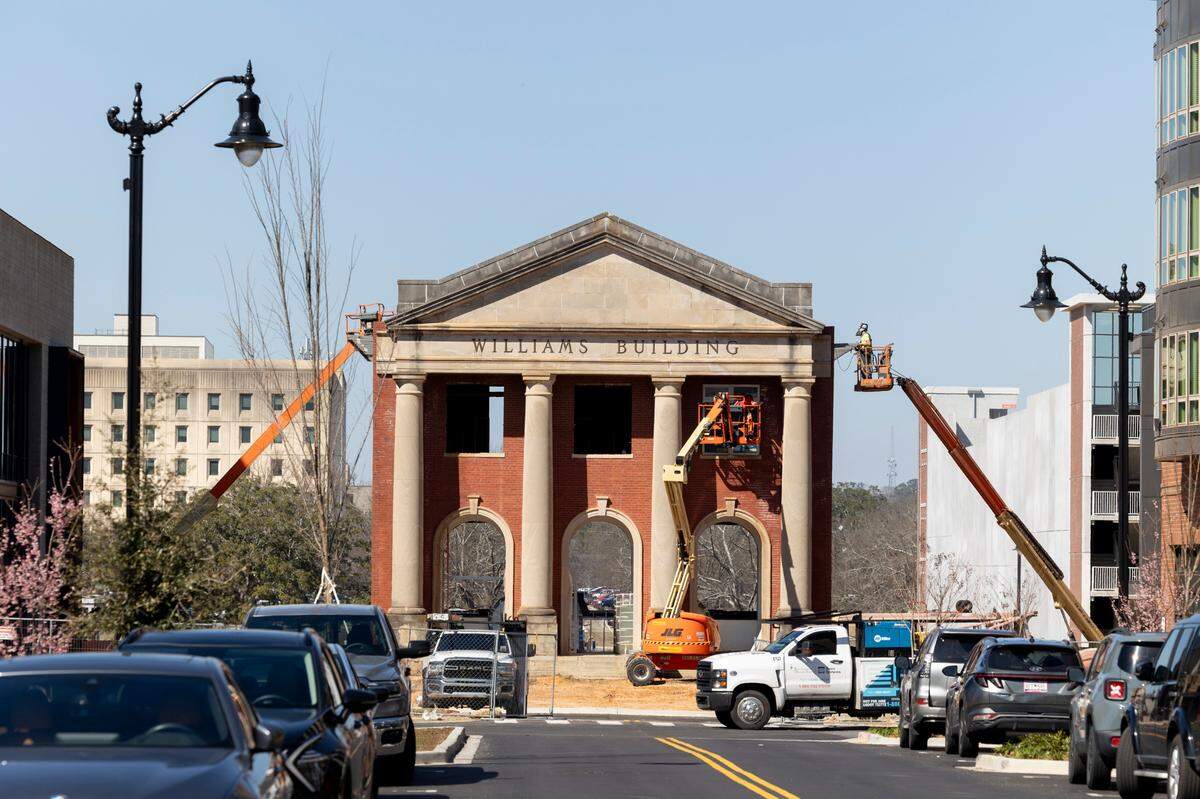
Hundreds of residences are now part of the district, both in newly constructed complexes such as the tony Bennet at BullStreet and in historically renovated properties such as the former Babcock Building, which has now been rechristened The Babcock and is home to more than 200 luxury apartments.
National retailers Starbucks and outdoors co-op REI call the site home, as do restaurants such as Publico, Iron Hill Brewery and the recently opened Tupelo Honey. There is gleaming office space in the First Base Building alongside Segra Park, as well as in the state-of-the-art WestLawn Building on the west side of the property, where Robinson Gray law firm is located.
The BullStreet site is home to the Pvolve workout gym, IMAGE health and beauty studios, the SOCO co-working space, a Founders Federal Credit Union branch and a number of other businesses, including a new event venue called The Laundry.
And now the earth is moving to make way for the new USC medical school, the biggest singular piece yet for BullStreet. The gravity and potential of what the university’s health sciences campus could mean for the district at large isn’t lost on Robert Hughes, president and CEO of Hughes Development, the site’s master developer. He said the $300 million investment from USC will ring out not only in the district, but will also have a lasting impact for the region and state for years to come.
“We always said, if BullStreet was successful, its success would radiate outwards and the impact would spread a lot further than just the four boundaries of the BullStreet District,” Hughes told The State in a recent interview. “What [USC] is building there, not just the medical school and the research, but the health science campus, the future neurological-focused hospital, they are going to improve healthcare across the region and across the state and beyond.”
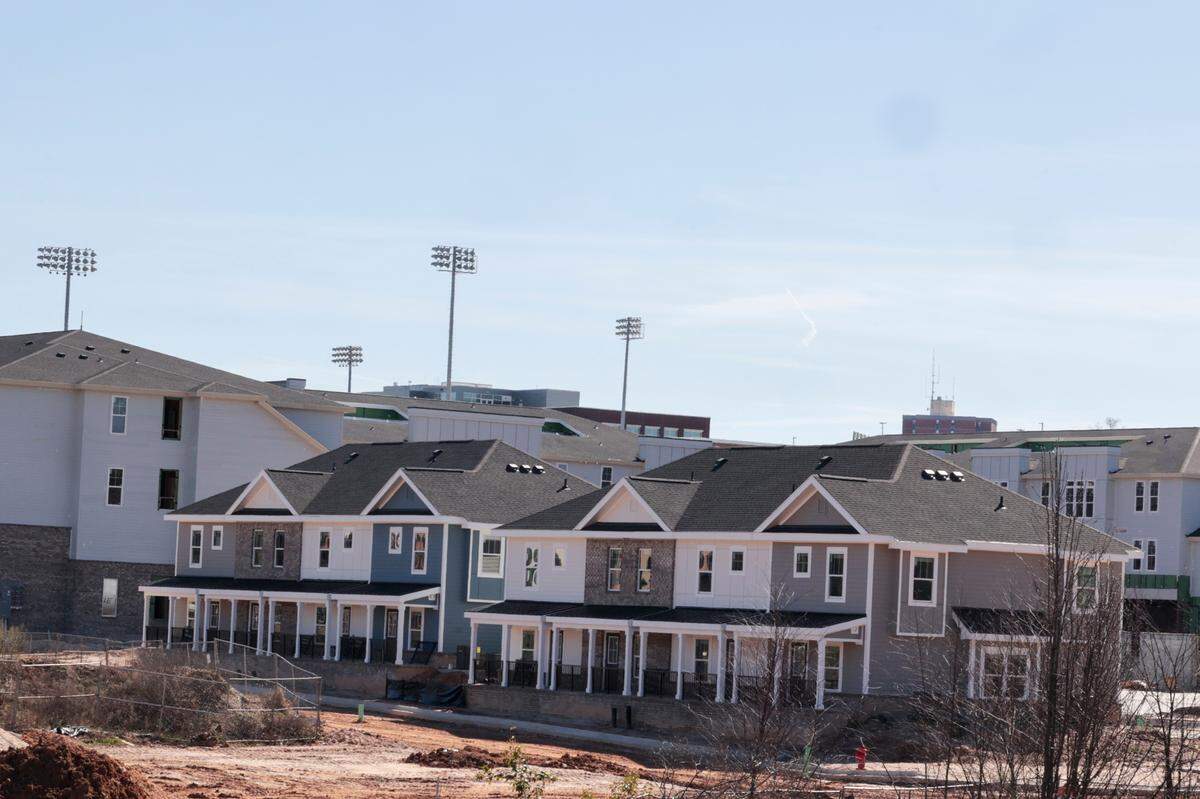
Construction is underway for Midtown at BullStreet District. The nearly two-acre housing development includes18 two-bedroom townhouse units and 72 one-, two- and three-bedroom garden-style units. Tracy Glantz tglantz@thestate.com
More and more, a place to call ‘home’
Perhaps the most fundamental change at the BullStreet site in the last decade — and one that has served as an essential building block as the district has seen increased development in more recent years — is that there are now many people who actually live on the site.
For instance, there is the Bennet at BullStreet, next-door to Segra Park, which is home to 269 apartments. There’s Merrill Gardens, an active senior living facility just east of the stadium that has nearly 200 residential units. There are a host of two- and three-bedroom townhomes on the south end of the 181-acre site. And Midtown at BullStreet, a complex that will include 90 apartments, is under construction on the north side of the site, near Paige Ellington Park.
The clear centerpiece of BullStreet’s residential aspirations, however, is The Babcock. The massive, hulking building that was the fulcrum of the site’s former life as the State Mental Hospital was given new life in recent years, as Virginia’s Clachan Properties spent more than $60 million to turn the building into 208 luxury apartments. Those units opened in the summer of 2023.
Hughes noted that revitalizing the Babcock Building, which had been abandoned for years, was a critical infusion of lifeblood for the BullStreet project.
“One of the things we said early on was, until Babcock was renovated and brought back to life, it would cast a shadow across the rest of BullStreet,” Hughes said. “It has the second most iconic dome in the state, I would say. It’s on 10 acres of land, roughly, right at our front door, that had been vacated since in the mid-90s.”
Workers install the new cupola dome at the Babcock building on Friday, August 18, 2023. Joshua Boucher jboucher@thestate.com
The rebirth of Babcock didn’t happen without one particularly harrowing hurdle. In the early morning hours of Sept. 12, 2020, a raging, multi-alarm fire engulfed portions of the Babcock building, a blaze that ultimately required more than 50 firefighters to quell. One of the most notable aspects of the damage was the destruction of the iconic dome — or cupola — that sat atop the building.
“That was the hardest day of my professional career,” Hughes said of the fire. “It was emotional. It was incredibly painful to watch. I will give all the credit that I can to the developer of that property, Clachan Properties, who almost immediately said, ‘We will rebuild, we will come back, we will build this back stronger and better.’”
Part of that rebuild included the installation of a new cupola, which was completed in August 2023 and can now be easily spotted soaring above the trees as you approach the BullStreet site from Elmwood Avenue.
In total, by the end of 2025 there will be more than 750 residences at the BullStreet District, and Hughes estimates more than 1,500 people will be living at the property.
Columbia Mayor Daniel Rickenmann noted the continuing development of BullStreet, particularly the manner in which the project has leaned into momentum with a mix of offices, small retail, residences and restaurants. The first-term mayor, who previously had a long run as a city councilman, also said having an increasing number of people living on the property is key.
“I think that’s what’s going to make it successful,” Rickenmann said. “Each piece is completing the puzzle, having people living there, having restaurants there with people coming in and out.”
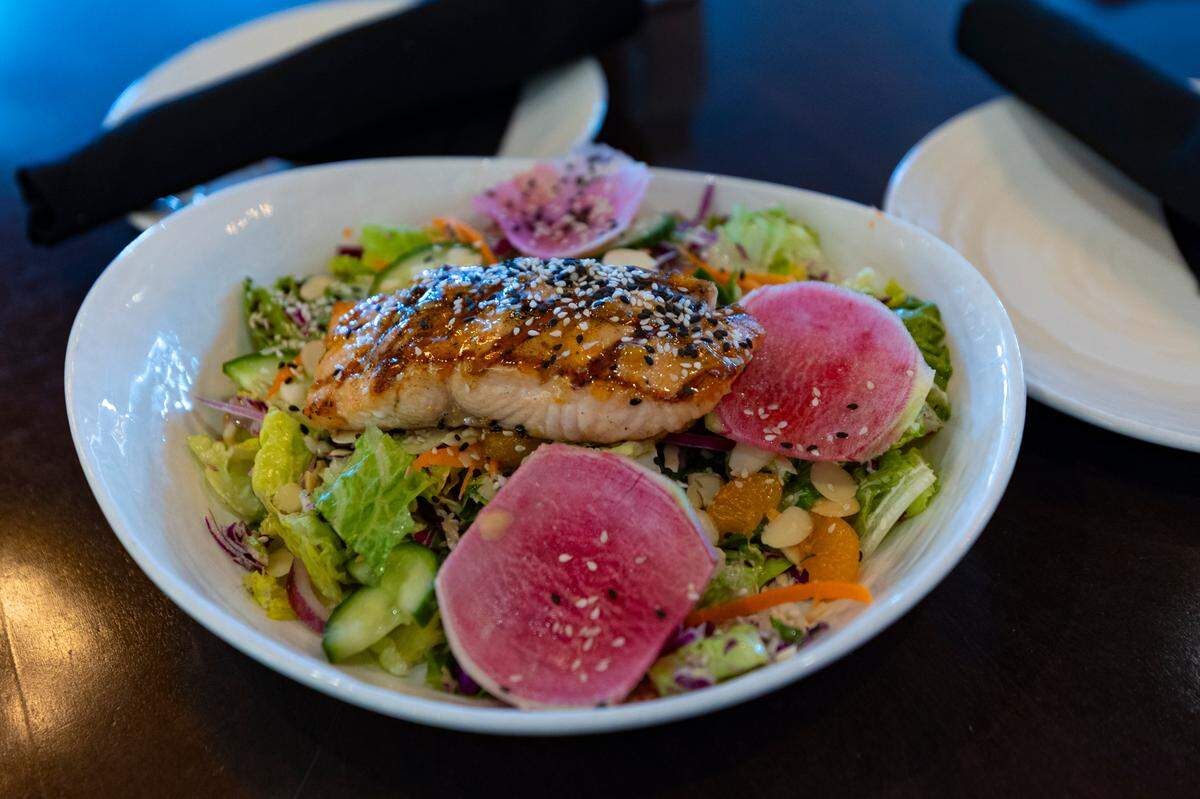
The grilled sesame salmon is a new entree at Iron Hill Brewery & Restaurant in the Bull Street District. The Philly based chain opened in the district in 2023. Tracy Glantz tglantz@thestate.com
Restaurant scene beginning to take shape
The BullStreet project was not one that raced out of the gate in terms of restaurant and retail additions. To be certain, there were factors that played into that, including cultural shifts in brick-and-mortar retail, the COVID-19 pandemic and rising interest rates and construction costs. And, simply put, the reinvention of what was a massive, largely abandoned 181-acre site was always touted as a heavy lift.
The city of Columbia committed more than $100 million in infrastructure for the district, and Hughes noted the municipality has fulfilled the promises it made in regard to the project. Democratic state Sen. Tameika Issac Devine, who spent nearly two decades on Columbia City Council from 2002 to 2021 before being elected to the Senate in 2024, said getting the site ready for development was critical.
“It was always supposed to be a 20-year project,” Devine recalled to The State in a recent interview. “I can remember people getting frustrated early on and saying, ‘Why isn’t more happening?’ It was always going to be a long-term project. But when you look at it, a lot of it was building infrastructure, and once that was there, a lot of things will come.”
Indeed, progress has been made.
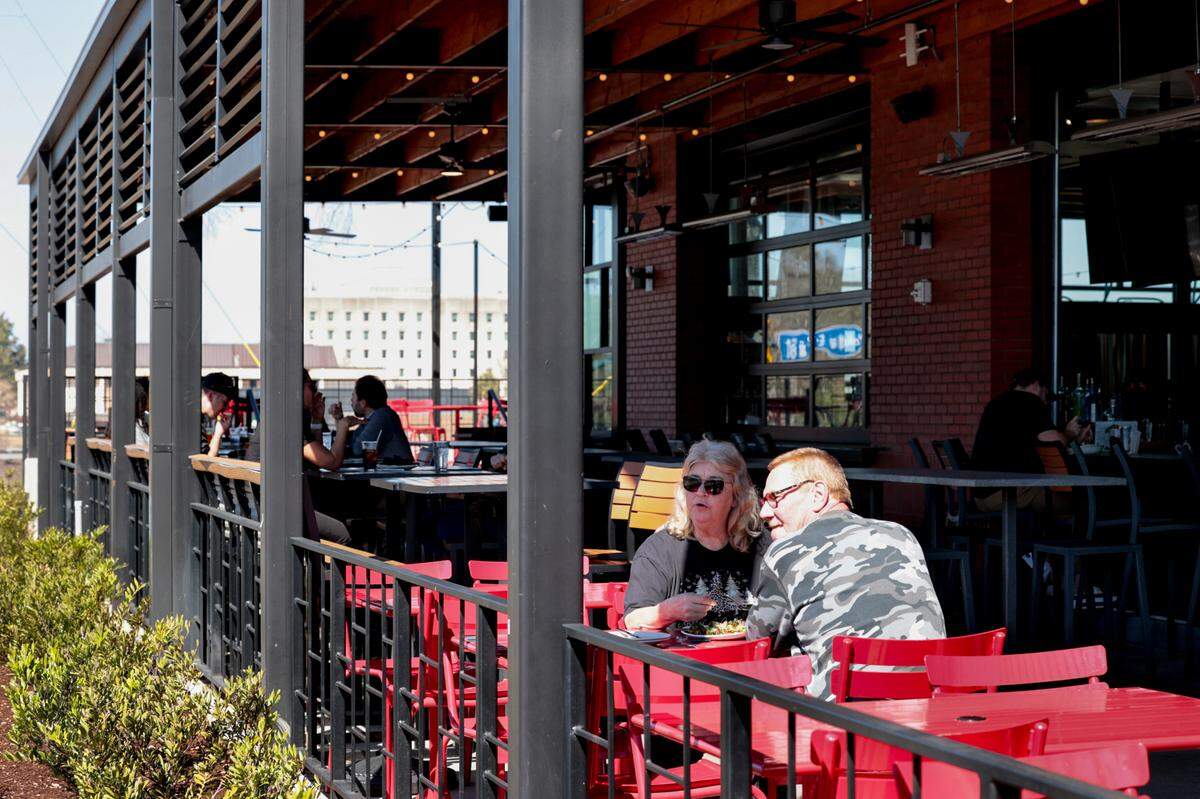
On the restaurant front, BullStreet has seen a flurry of openings and announcements in recent years. For instance, Publico opened its second Columbia location in 2022 alongside Segra Park. Iron Hill Brewery & Restaurant opened in the district in summer 2023, and diners can often be seen relaxing and enjoying beer on the open air patio that fronts Bull Street.
Tupelo Honey Southern Kitchen & Bar, the popular chain known for its brunch, opened its doors in February at 2138 Pickens St., on the ground floor of the Bennet apartment building. It is the first Columbia location for Tupelo Honey.
More is on the way. Shuckin’ Shack Oyster Bar has announced it will open a restaurant at 2151 Boyce St. in the district, not far from the baseball stadium. Methodical Coffee, which is well known in the Greenville area, is constructing a 3,400-square-foot coffee shop inside the district’s WestLawn Building. Coastal Crust Pizza, which has locations across the state, announced it will open a BullStreet outpost at The Lawn, a planned community space between the WestLawn Building and the Bennet.
June and Dwayne Moore dine at Iron Hill Brewery & Restaurant in the Bull Street District. The Philly based chain opened in the district in 2023. Tracy Glantz tglantz@thestate.com
And earlier this month, the district made headlines with the announcement of GATHER COLA, a new food hall planned at the corner of Sabal and Freed streets. It comes from the same company who founded the acclaimed GATHER GVL food hall in Greenville. The BullStreet version will span more than 32,000 square feet across multiple levels, with numerous spaces for food vendors, two bar areas, retail spaces, office space and more.
The food hall concept, where multiple food and beverage vendors are gathered in one location in a relaxed setting, has proven popular in other cities. The BullStreet GATHER location would be Columbia’s first food hall. It is under construction now and could open later this year.
“What food halls create is a great sense of community and great options for friends and families to get together in a very low stress, very relaxed, very fun environment,” Hughes said. “You look around the Southeast, there are great food halls in almost every city. For GATHER, which was rated one of the top 10 food halls in the country [in Greenville] to pick Columbia and pick BullStreet was a great win for the entire city.
Hughes noted that Rickenmann helped play a key role in convincing GATHER to set up a location in BullStreet.
“A lot of people don’t know this, but Mayor Rickenmann was in Greenville having lunch with the leaders of GATHER with me probably 18 months ago, when they were first showing interest in BullStreet,” Hughes said. “He came and we sat and had lunch and he expressed interest that the city had in working with concepts like GATHER. Here we are 12 to 18 months later and they are breaking ground.”
The mayor said the city’s economic development arm has been focused on bringing new activity to the Columbia restaurant scene, and the meeting with GATHER was just one example.
“Part of what we did [with GATHER] is we went up there and met with the ownership and ate and checked it all out, talked about why we thought it was a good fit for Columbia, talked about demographics and shared all the information,” Rickenmann said.
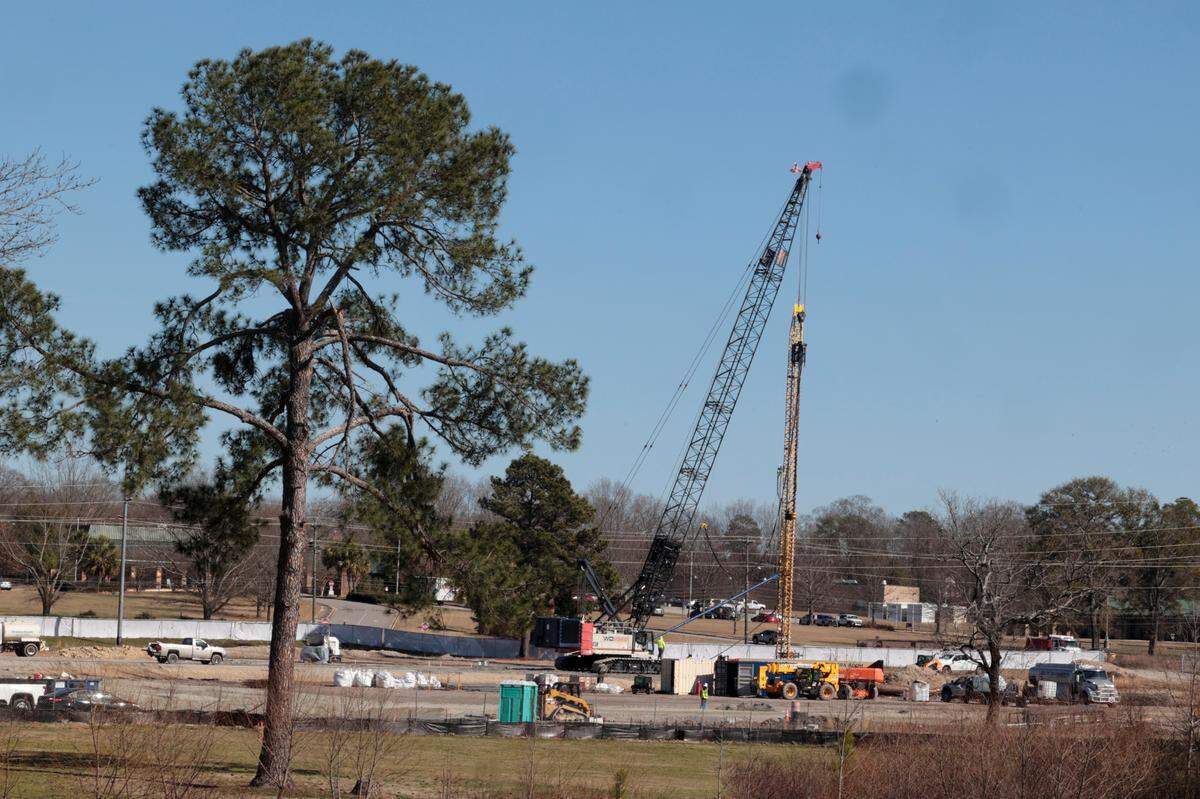
Groundwork has begun on the University of South Carolina Health Sciences Campus at the BullStreet development. Tracy Glantz tglantz@thestate.com
As USC arrives, the future awaits
The coming USC medical school represents a particularly dynamic addition the BullStreet District, and to the tapestry of downtown Columbia, in general.
University President Michael Amiridis was among the dignitaries gathered for the Feb. 25 groundbreaking of the new facility.
“The modern, new building you will see taking place on this site ... it will not only provide a state-of-the-art facility for education and research, it will be more than that,” Amiridis said. “It will be the first step in the development of our comprehensive health sciences campus, right here in the BullStreet District. And it will bring the school of medicine closer to the heart of the [USC main] campus, and all of our other health sciences programs and resource we have at the main campus.”
Amiridis also took time to laud Hughes Development chairman Bob Hughes (Robert’s father) for an “expansive vision” for BullStreet, noting the project is “transforming a neglected property into a thriving destination in the heart of the city.” Hughes donated the land where the medical school will be to USC.
While BullStreet developers didn’t specifically know the university would become a part of the district when things were just getting started a decade ago, Robert Hughes said the project was structured in such a way, and with a certain amount of flexibility, that the district could take advantage of such an opportunity if it arose.
Now that the medical school phase is officially under construction, Hughes said it will be massive for the district and South Carolina.
“The intangible benefits of world-class facilities training world class doctors, putting out world class research, then you layer in the specialty hospital, it’s hard to articulate the lasting impact that will have, far beyond BullStreet, for the Midlands and our entire state,” Hughes said.
Rickenmann said he thinks the USC medical school, along with the planned neurological hospital, could be a significant catalyst for BullStreet and the Midlands region.
“It really puts Columbia where it should be,” the mayor said. “Columbia is connected. ... Ninety percent of the state can be here in two hours. That makes a big difference. I think it is really going to be the glue that kind of helps us get to the next level.”
Officials including Gov. Henry McMaster, center, and USC President Michael Amiridis, third from left, break ground at the BullStreet District for the new USC School of Medicine. Chris Trainor chtrainor@thestate.com
This story was originally published February 27, 2025 at 5:00 AM.
Follow More of Our Reporting on Stories shared from The State’s Instagram account
Chris Trainor is a retail reporter for The State and has been working for newspapers in South Carolina for more than 21 years, including previous stops at the (Greenwood) Index-Journal and the (Columbia) Free Times. He is the winner of a host of South Carolina Press Association awards, including honors in column writing, government beat reporting, profile writing, food writing, business beat reporting, election coverage, social media and more.
Get one year of unlimited digital access for $159.99