College bar near USC stadium riddled with reports of violence, underage drinking, druggings
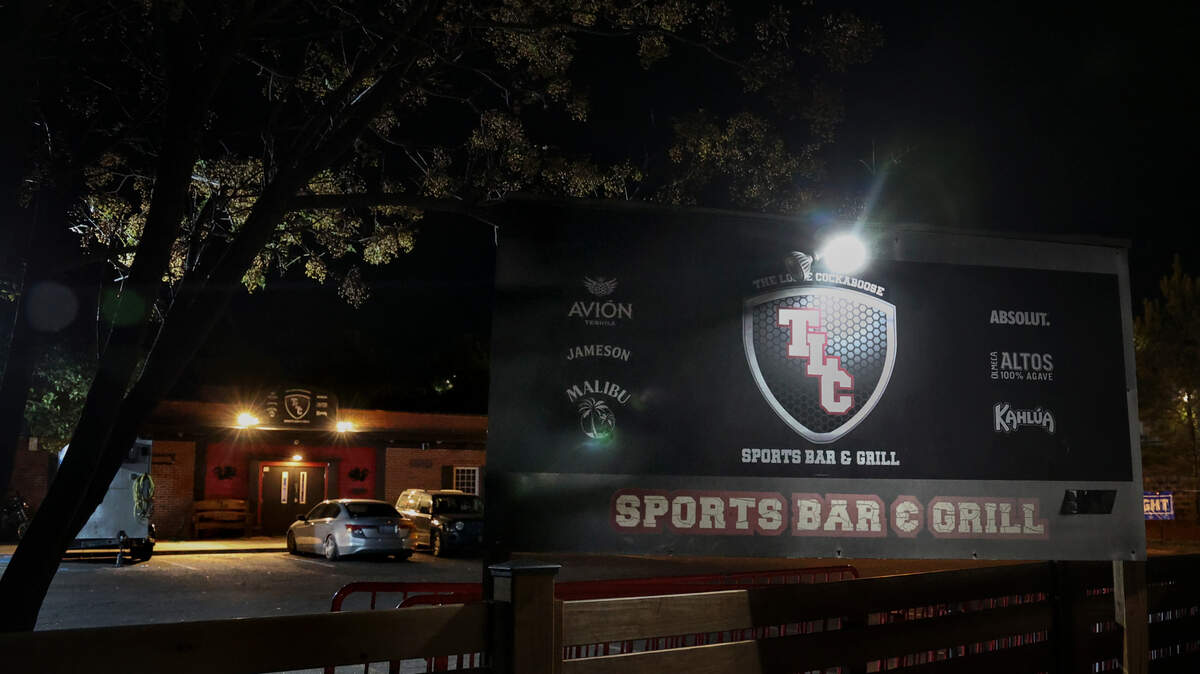
It’s after 9 p.m. and the line to get into TLC Sports Bar & Grill is winding, with dozens upon dozens of eager customers in tow. More are hopping out of rideshares with beer cans and red Solo cups in hand, which are inevitably left on the street.
Patrons packed inside the bar order tequila sodas and Michelob Ultras — sometimes four at once. Out on the patio, they choose from a wall of cheap liquor while some smoke Marlboro cigarettes sold from the vending machine inside. And there is dancing and dancing and dancing.
It’s “TLC Tuesday.”
TLC Sports Bar & Grill, also known among Columbia’s local college students as “The Loose Cockaboose,” is nestled in the heart of the University of South Carolina’s football corridor on Stadium Road.
Just blocks from Williams-Brice Stadium, where the Gamecocks play each fall, the watering hole, trimmed with garnet and black, is a neighbor to some of the most popular tailgating spots. TLC is an enduring game-day staple — so close to the stadium you can hear cheers from spectators.
When football season ends, TLC remains popular for a weekend — or weeknight — hangout. And it’s a choice venue among USC’s Greek Life organizations, often rented out for fraternity and sorority socials.
But for some, the bar hasn’t been typical college revelry. Late last year, the Richland County Sheriff’s Department said that four women reported they may have been given a date rape drug at the bar. Sheriff Leon Lott, who called TLC his “problem bar,” said he suspects more victims have been drugged there.
A review of incident reports, court records and other documents indicate a history of problems at the bar, including violence and overserving. State officials have cited the bar twice during the last two years for selling alcoholic beverages to patrons under 21, among other violations.
The bar’s owner, Justin Kershner, denied accusations of bad behavior at his bar. He goes above and beyond what is legally required to keep his staff and patrons safe, he said. The drugging accusations weren’t true, Kershner said, adding he wasn’t aware of any toxicology reports that proved they were.
But the Richland County Sheriff’s Department believed the date rape drug allegations were serious enough to issue a rare public safety announcement about the bar. It warned patrons to never leave their drinks unattended.
“Always be aware of your surroundings,” the warning read.
The four suspected incidents reported to the sheriff’s department happened within six weeks last fall, including two only hours apart.
One incident is bad, Lott said.
Two is terrible.
Three is a pattern.
Reported druggings
On Sept. 13 at about 3 a.m., a woman who was at the bar reported her roommate was possibly drugged there. According to an incident report, the woman believed her roommate had been drugged because they had the same amount of drinks, but only the roommate had gotten “extremely intoxicated,” possibly because she was “roofied” — being drugged without a person’s knowledge. She noted they did not leave drinks anywhere.
Both went to the hospital for testing.
On Oct. 31 around 11:30 p.m., a deputy patrolling Stadium Road was approached by a woman asking for help for her friend outside of the bar, according to an incident report. She thought her friend had been roofied.
When the pair arrived at TLC around 9 o’clock that night to celebrate Halloween, they met a man who was “physically touching them and being overly sociable,” according to the incident report. The deputy said that the victim had difficulty keeping her eyes open and was swaying while seated. She was taken by EMS to the Medical University of South Carolina hospital and was later advised to request a toxicology report, according to the report.
Just hours later, around 2:30 a.m. on Nov. 1, a deputy was called to a Richland County hospital by a USC police officer for another suspected drugging.
A woman was at TLC when she began to feel “groggy,” and when she left she was not able to remember “anything else.” Her sorority’s “house mother” believed she had been given “some sort of narcotic,” according to a police report.
At the time, the deputy was unable to determine if a crime was committed, and medical staff was not able to provide information as to whether she had consumed illegal substances, according to the report.
After the sheriff’s department issued its warning, another woman reported that she also believed she was the victim of a date rape drug at TLC on Sept. 10, according to a Nov. 8 incident report. She wanted to make her case known along with the other four cases.
Results of the toxicology tests were not made available to The State.
Lott said he fears many more cases have likely gone unreported. And in a busy bar, with shoulder-to-shoulder crowds, it’s impossible to find the person slipping something into someone’s drink, he said, even with video footage.
Luckily, the women suspected of being drugged were with friends. But Lott said he worries for those who may have been victims, and who may have been alone and faced sexual assault.
“I’m afraid it’s happened,” Lott said. “We just don’t know.”
Underage drinkers may fear consequences for drinking or using fake IDs. But Lott said those are the least of his worries.
“Because a lot of the girls that go in different bars are underage, so they’re illegal, they’re going to be very reluctant to report even getting sexually assaulted,” Lott said. “That’s my fear. That we’ve got so many more victims out there that we just don’t know about.”
Local colleges, including USC, often afford their students “amnesty” under good Samaritan policies. If they are victims of a crime or help another victim of a crime, even if they are drinking underage or using illicit substances, they won’t get in trouble with the university. State law provides limited protection from liability in court, whether they are on or off campus.
USC, where many TLC patrons attend, is aware of the reports from last year involving the TLC Sports Bar, a spokesman told The State. The university encourages students with any information about the alleged druggings to contact law enforcement authorities or the university’s Office of Civil Rights and Title IX.
The university takes steps to educate students on the use of alcohol and illicit substances, how to be good bystanders and how to help if someone is intoxicated or possibly drugged, said Aimee Hourigan, USC’s director of substance abuse prevention and education.
Greek Life organizations may still rent out the bar for social events, and USC has little control over those decisions, according to university policy. But members, especially sorority women, have been made aware of TLC, Lott said.
Kershner, the bar’s owner, said the reported incidents involved “college girls that got too intoxicated.”
“It’s not what people say it is,” Kershner said. “Sometimes there’s not a villain.”
As a father and grandfather, Kershner said, he cares about every person who walks through TLC’s doors. He orders food for people if they need it and calls for Uber rides. When a customer is causing trouble, his staff escorts them out with well wishes, inviting them back another time.
“Someone’s gotta be the bad guy,” Kershner said. “I guess it’s me. … The person selling the alcohol is always the bad guy.”
TLC has extra security scanners, ID scanners and security guards who have earned certifications from the South Carolina Law Enforcement Division, Kershner said.
But it hasn’t seemed to prevent reports of danger described by the sheriff.
A bad reputation, inherited
Kershner, who bought The Loose Cockaboose in 2015, is no stranger to scrutiny.
Before taking TLC’s helm, he owned a club in Five Points called The Library.
The club, which was located in an unassuming storefront on Harden Street, was called out by the sheriff’s department for being a hangout for members of a nationally known criminal street gang identified by undercover agents, The State reported.
Kershner maintained that The Library was safe.
Lott said it was a “sore spot.” He said it needed to close.
Kershner’s bar was eventually shut down by city officials, who said the business was operating without a proper permit.
Kershner had said the bar was not open for business. But when Columbia Fire Chief Aubrey Jenkins and members of the city’s Hospitality Task Force visited The Library in the early morning hours of Nov. 17, 2013, they found the club serving alcohol, a DJ playing music and a doorman standing outside selling tickets.
The bar had stopped using the name The Library. Signs with that name had been taken down, which meant the business license was no longer valid, Jenkins told The State at the time.
Kershner was issued a citation for operating without a license, and surrendered his alcohol license for the establishment months later. He was cleared to reopen another club, Club Twist, several months later after fixing code violations and paying a fine.
Kershner admitted TLC already had a bad reputation when he took it over in 2015.
It had a problem with “unsavory” characters, Kershner said, and routinely stayed open well past 6 a.m. But after he bought TLC, he worked hard to turn it around, making it a fun environment for USC students, Kershner said.
One reason for the bar’s bad reputation in those days was a tragic accident involving a TLC patron that killed a 6-year-old girl in Lexington several years before Kershner purchased the bar.
Billy Hutto, a repeat DUI offender, ran a red light going 60 mph and slammed into the car of the Longstreet family in Lexington County while they were on their way to church in January 2012. Their daughter, 6-year-old Emma, was killed.
Hutto pleaded guilty and was sentenced to 10 years in prison, and was released in 2019. His petition for a pardon was denied in January.
In a 2015 civil trial, a jury found The Loose Cockaboose was serving liquor after the state-mandated closing time, and had also served an obviously intoxicated Billy Patrick Hutto. The previous owners of the bar were ordered to pay $3.85 million to the Longstreet family.
A ‘propensity’ for underage and excessive drinking
Allegations of overserving and underage patrons has drawn the attention of the South Carolina Law Enforcement Division.
Since 2022, SLED has issued 42 alcohol-related citations to people inside TLC who were found to be under the age of 21, according to SLED. The citations include charges of minors in possession of liquor, minors in possession of beer, possession of a false ID, use of false ID and public disorderly conduct.
SLED has also issued TLC an administrative violation for permitting purchase of beer by a person under 21 and another for sale of liquor during restricted hours. A bartender was issued a criminal citation for sale of beer to a person under 21.
However, TLC’s liquor licenses are currently intact.
TLC is named as a defendant in a lawsuit filed on Jan. 2, 2025, which described the bar as being “known for its propensity for underage drinking and excessive drinking of alcohol.”
According to the lawsuit, the plaintiff, a Beaufort woman, claims TLC allowed two customers to become “intoxicated” by alcohol at the bar and let them leave the bar in their vehicle in October 2024. They had been served “excessive quantities” of alcohol and were visibly impaired, the lawsuit said.
They later invited the woman and others to a business known as The Fraternity Lot and took her on a “drunken” ride in an ATV, crashing into a dumpster, severely injuring the woman, according to the lawsuit.
It is illegal in South Carolina to allow a customer to consume alcoholic beverages to the point of intoxication. TLC and another local bar failed to adopt and enforce safe alcohol sales and service policies, the lawsuit claims.
“This conduct of voluntarily serving alcoholic beverages to customers to the point of impairment and intoxication … is grounded in a profit motive due to the substantial revenues … from alcohol sales,” the lawsuit reads. “This conduct will not be curbed or abated by these Defendants unless” they are forced to pay “substantial” punitive damages.
The case is pending in Richland County Court.
Another lawsuit filed in 2022 alleged that a bouncer at TLC mistakenly identified the plaintiff and his friend as two people who had been involved in an “altercation” with one another. The bouncer grabbed the pair in an attempt to remove them from the bar while their friends tried to explain that they had not been involved in an altercation.
The patrons were not a threat, according to the lawsuit. But the bouncer used “excessive force” while removing them, throwing them on the ground, punching the plaintiff in the head and knocking him unconscious to the ground, where he struck his head on the pavement.
The plaintiff was unconscious on the ground, bleeding from his head, but the bouncer turned away. Though employees of the bar witnessed the “physical assault,” no one called for medical assistance, according to the lawsuit.
The plaintiff was later taken to a hospital and treated for a head injury and significant trauma to his mouth, receiving numerous staples to the back of his head, the lawsuit said. It claimed that TLC allowed the bouncer to remain employed with little to no supervision or training.
This lawsuit was recently settled out of court in late February.
Injuries, threats and shootings
On Aug. 28, 2024, at 2:30 a.m. deputies were called to the bar for an assault. The victim said that as he and a friend were leaving TLC, he approached a bouncer to give them a fist bump. But a second bouncer got upset, according to an incident report, and said, “I will stab you on sight.”
The man replied, “you won’t do it.” His friend intervened, and an “altercation” between the two patrons and the two bouncers began, according to the report. The patrons said they did not fight back, and that a third bar employee got involved, climbing on top of him and forming a fist, “ready to punch,” but didn’t.
On Sept. 6, 2024, just before 2 a.m. there was a report of a shooting at TLC.
By the time deputies arrived, the victims had already gone to a hospital in their own vehicles, according to an incident report. They were told the shooting may have stemmed from an altercation at the bar earlier that night that led to the suspect being kicked out. As he was leaving, he threatened the bouncers, saying, “I got something for you.”
Seven shots were later fired at the bar, according to a report. Three people were injured, one by a gunshot wound to her thigh.
On Sept. 15, 2024, a man visited the sheriff’s department to report he was assaulted at TLC the previous day. According to an incident report, he walked to another part of the bar to investigate an argument and was pushed down by someone and kicked in the side. He later visited a local hospital because of his injuries.
Deputies had apparently responded to a call about the fight, but no one involved was on the scene when they arrived.
Fights ending in black eyes, lacerations and other severe injuries plague TLC, according to 21 incident reports. In some cases, witnesses were “too intoxicated” to explain what they saw to deputies. Patrons making threats, brandishing firearms inside and firing guns outside the establishment have also been reported. And there were also six reports of stolen smartphones, purses or credit cards with hundreds of dollars of unauthorized charges.
An incident report of a fight back in January 2023 said it was documentation of “ongoing issues” at the bar.
“If a bar is known to be serving folks who are 18 and 19, that’s an issue,” Hourigan, who facilitates substance abuse prevention at USC, said. “As a community, we have to hold those folks accountable when they’re creating these risky environments for our students.”
This story was originally published March 26, 2025 at 5:30 AM.