SC county and town have argued over roads for more than a year. Can they move forward?

A year ago, Lexington County and its municipalities were feuding over who would be responsible for managing local roads. Now, the county and its largest town are negotiating the best way for the area to grow together.
Staff from the county and the town of Lexington have been negotiating a joint zoning plan that, both sides hope, would seamlessly merge the town and the unincorporated areas of the county around its edges.
“It feels like we’re headed in the right direction we should’ve been all along and that’s working together ... to figure out how we can get the best results for citizens who live in town limits and those who, not only live directly on the outskirts of town, but those who live outside of town limits and travel through [it] every day,” said Town Councilman Gavin Smith.
The county moved to reinstate a previous road maintenance agreement it had with the cities and towns within its borders in January, after more than a year of resistance to Lexington County’s plans to drop maintenance of some new roads built to the municipalities’ separate development standards. That opened the way for the two sides to have other conversations about how to move forward, county officials said.
“When we put the roads agreement back in place, we were asked to ... get with the towns and talk about the comparisons,” County Administrator Lynn Sturkie told a meeting of Lexington County Council March 25. “We asked to get staff together with Lexington staff to go through and do a comparison, and come up with what we’re calling a transition model.”
The proposed zoning plan presented at the meeting laid out how the two jurisdictions handle housing now, and where they could come together in the transition zone. The plan is years in the making and would help the town and county address traffic needs on the outskirts, town Mayor Hazel Livingston told The State.
“It’s something that’s been a dream for years for many council-people and if it goes through, it’s going to be a huge win, especially for traffic,” Livingston said.
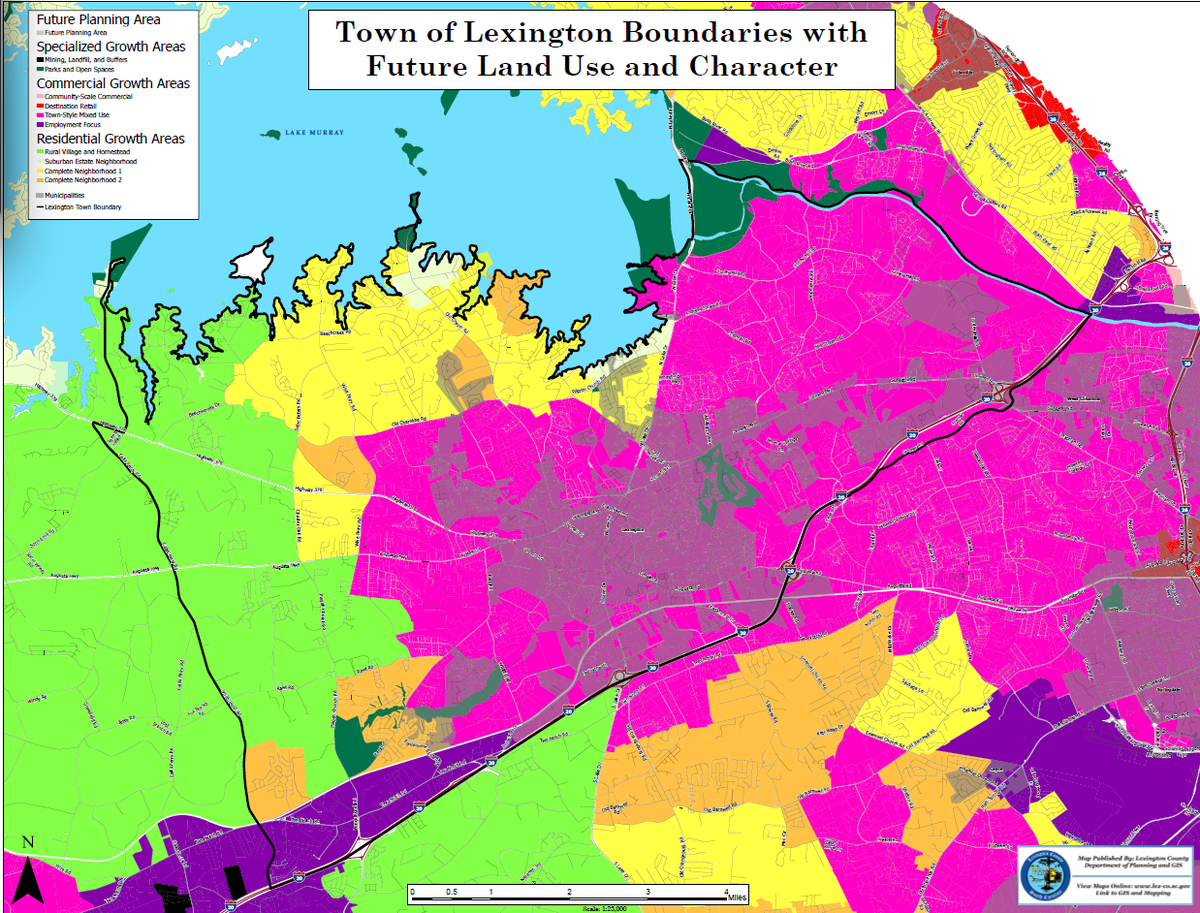
Currently, the town of Lexington sets a density limit of five houses per acre, and the county has it at four. The town would adopt the four-house limit for areas near the town limits, the county proposal said. Houses in the transition area could be no more than 35 feet tall, or approximately three stories. The town will also follow the open space requirements that the county already follows in its Lake Murray overlay district, which covers the northern edges of the town.
The county will now follow the town’s requirement that developments of 150 houses or more must have at least two exits to a main road, stricter than the county’s requirement of 200 houses. Developments with 300 houses must have at least three exits, with additional exits required as more houses are added.
“I’d like to see the county adopt their standard, where there’s two exits,” County Councilman Darrell Hudson said during the meeting.
The town of Lexington will look to follow design standards akin to what the county requires in its eastern overlay district, while the county will adopt the town’s rules for traffic impact studies on new developments.
Robbie Derrick, Lexington County’s community development director, told council that staff are still considering how to mesh the new transition zone with the existing eastern overlay with which it will overlap, and establish shared rules for multifamily and apartment construction. The town’s current plan limits new apartments to the proximity of the interstate, while the county depends on the zoning district and street classification.
The two jurisdictions already have compatible rules about minimum lot sizes, setbacks, parking, buffers, landscaping and road connectivity, according to a comparison presented to the county council.
This story was originally published April 8, 2025 at 5:00 AM.
.jpg)