40K USC students are on summer vacation. How do Columbia businesses survive?
They appear suddenly in Columbia, during the hottest of months.
Parking spaces in the downtown core, typically at a premium through the fall, winter and spring, can sometimes actually be found in the summer, their painted lines beckoning disbelieving drivers, almost as if inviting a hug.
City center office workers desperate for cold libations after a long day can find a welcome friend — i.e. an open happy hour barstool — that would hardly ever be available from September through early May. And weary commuters from nearby Midlands areas suddenly find reasonably passable roads as they traverse into and out of the city for their jobs.
Indeed, it is summertime in the capital city, and students at the University of South Carolina, for the most part, are gone until late August.
As has been the case for generations, USC — South Carolina’s flagship university — continues to have an outsize impact on daily life in Columbia and the Midlands. And it is a key component of the state and the local region’s economic engine.
According to the university’s 2025 economic impact study, USC has a more than $7 billion impact on the state, which marks a 35% increase in statewide impact compared to just eight years ago, researchers found.
The university’s fiscal power, as you might expect, is particularly pronounced in Columbia. The aforementioned study puts USC’s annual economic impact in the Columbia metro area at more than $4.2 billion, with researchers reporting that the school supports one out of every 10 jobs in the area.
Undoubtedly, a solid portion of that impact is driven by the presence of the university’s large student population in the city during the normal academic year. Last fall the school surpassed 38,000 students on the Columbia campus for the first time, and it seems inevitable that number will crest 40,000 in coming years.
As the CEO of the Columbia Chamber, Carl Blackstone has a front row view of the local business community. He notes USC’s effect on the local economy, pointing not only to the nearly 40,000 students and thousands of employees on the Columbia campus, but also the draw the school’s athletic programs have during the academic year. That’s when 80,000 people turn out for Gamecocks home football games and 17,000 or more routinely line up to watch the women’s basketball team on a given night.
“USC plays such a pivotal role in everything that goes on in Columbia,” Blackstone said. “Whether you’re tied to the university or not, your business is going to be impacted some way or another.”
With much of the university’s robust student population gone for the summer, businesses in the city core are tasked with adjusting the way they do business. And while some local business leaders say they have to get creative during the summer dip in their receipts, others note that the dynamics of the Columbia region are changing, and that’s altering the way they see the annual student exodus.
Making it through ‘the J months’
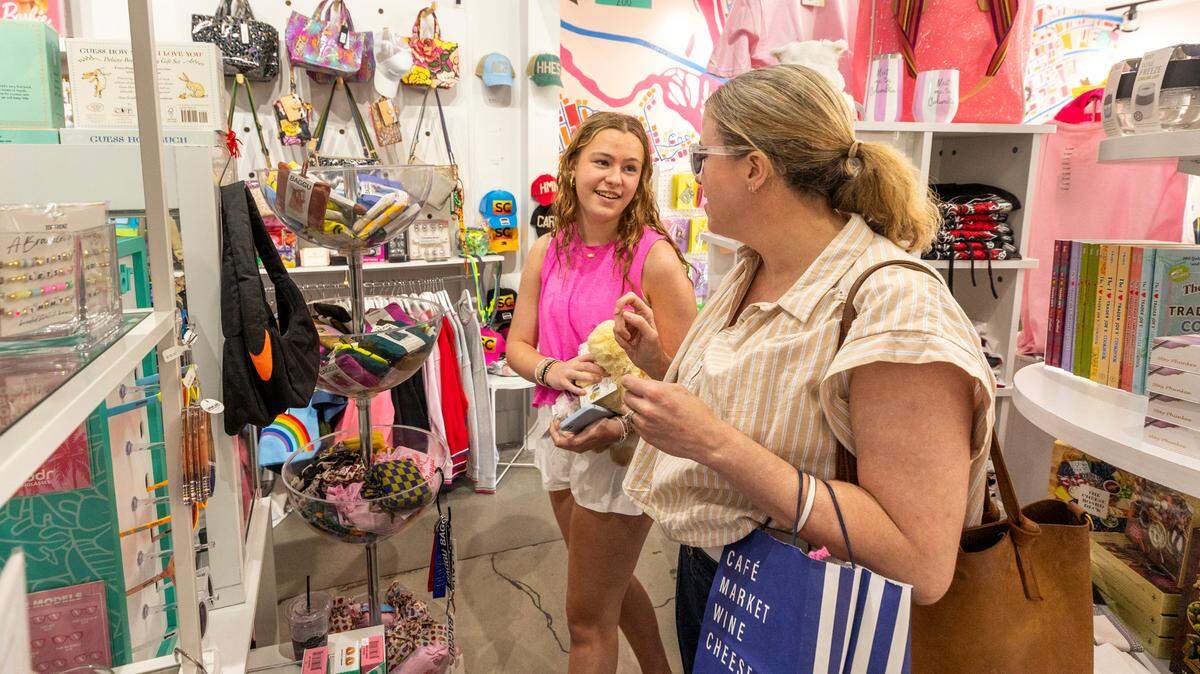
Ashley Lindler gets the full effect of the summer exodus at her shop A Little Happy in Columbia’s Five Points.
The gift shop, which first opened in a temporary space in Five Points in 2021, then moved to its current spot at 707 Saluda Ave. in 2023, caters heavily to those with a college interest. While the store offers a wide array of gifts — Lindler has joked in the past that it’s like an “upscale Spencer’s” — it has a particular focus on items that are popular with students in the Greek life at USC, especially sororities.
So, in the summertime when school is out, she admits the business does see a drop in traffic.
“I just got off the phone with my dad and he was like, ‘How are y’all doing?’” Lindler said during a recent chat with The State. “I was like, you know, we are barely surviving right now. We are making enough money to basically pay people to keep it up.”
Lindler said the “J months” — January, June and July — are typically the slower months at the store. January because folks are wheeling back on spending after the Christmas splurge the month before, and June and July because USC’s students are gone.
But Lindler doesn’t see the summer flow as a complete negative. She adjusts the hours at A Little Happy during the summer, closing at 5 p.m. rather than 6 p.m., and is able to focus on the bigger picture ahead of the fall resurgence.
“You just have to ride it out and plan for it,” Lindler said of the summer swoon. “The other thing is, it gives us a chance to plan for when the kids come back. So, although it’s a slow season, it’s not bad for us to kind of be able to reevaluate, look at the shop, see what needs to be moved around, see what inventory we need to phase out, and what needs to be reordered.”
Blackstone, the Columbia Chamber leader, also stressed the need for businesses in the downtown area to plan for the the city’s college population to dissipate in the summer months.
“That’s the Columbia market,” Blackstone said. “In other places you have to plan in different ways. Like in Myrtle Beach you plan for a downturn after Labor Day. Here it’s just the it’s just the nature of being in a college town. So you have to staff accordingly, and your fixed costs of any business are the things you’ve got to control. And you control that by adjusting your workforce.”
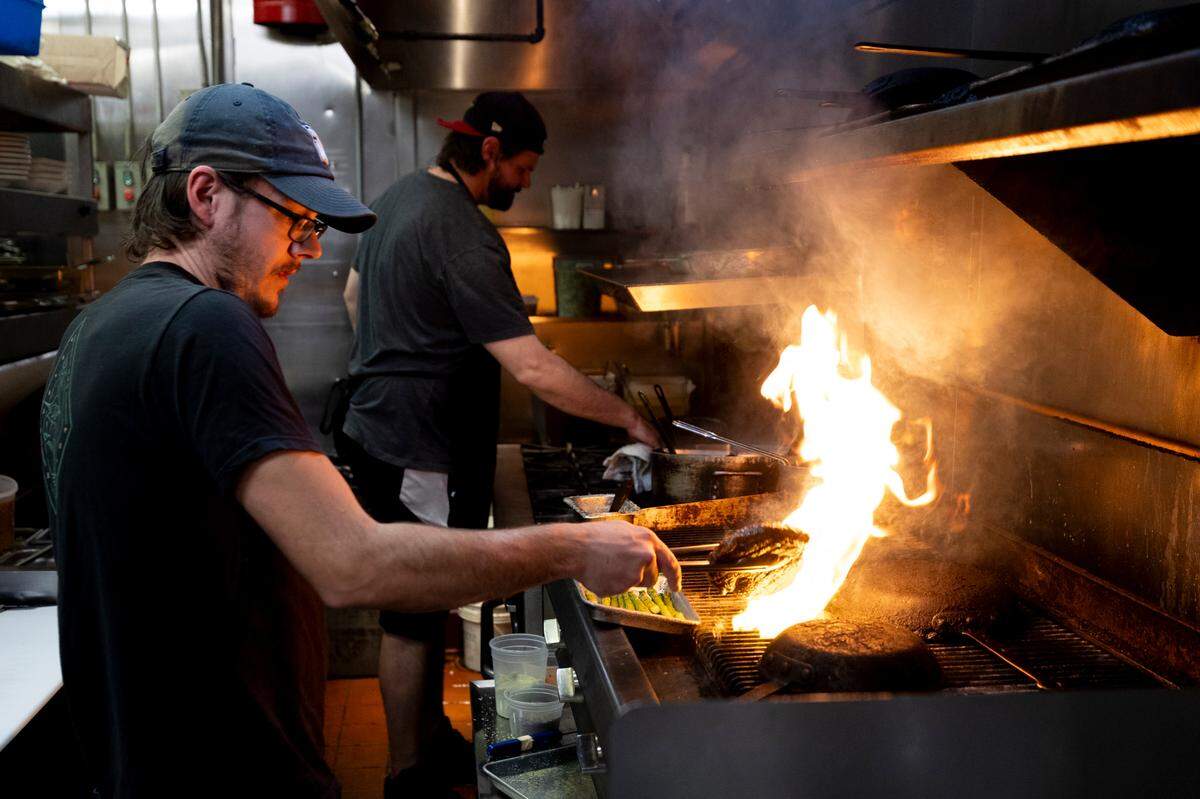
For local restaurateur Steve Cook, the impact of summer goes beyond USC students being gone.
Cook — who has ownership stakes in a host of Midlands restaurants including Saluda’s fine dining and Arroyo taco shop in Five Points, Il Bucato pizzeria on N. Beltline Boulevard and, most recently, Ember steakhouse in Lexington — said the fact that local public schools are out and families are going on annual vacations also plays a role.
For instance, he said that business at Saluda’s — which in a broader, larger sense has been getting better year after year — typically sees a dip in June and July.
“It’s not just the college students, although that is a huge part of it,” Cook told The State. “Everybody, you know, just goes on vacation. We do fine after [college] graduation and USC goes away. When it really falls off — and I’ll say this used to be a lot more drastic — is after high school graduation.
“Once your kids get out of school, you’re looking at the beach.”

Growing up?
Cook’s idea that perhaps the summer fall-off is not as sharp as it once was is a theory echoed by Matt Kennell, the longtime CEO of Columbia’s City Center Partnership, the group that advocates for businesses and property owners in downtown’s Main Street District.
While he conceded that the Main Street area is quieter during the summer months, the downtown leader said it feels like the slow down used to be much more pronounced.
“It used to be a really big problem,” Kennell said. “I mean, 10 years or so ago I would get these just sad phone calls from merchants, like, ‘I don’t know if I can make it another week. When are the students coming back? We’re just dying.’ And I really don’t get those calls a lot anymore, which is a good thing. I think it shows that downtown is a little more stable.”
The Main Street area north of the State House has certainly evolved in the last decade-plus. Once an aging corridor with a stagnant business climate, it is now a thriving hub featuring restaurants, bars, hotels, the Nickelodeon Theater, boutiques, retail stores and more.
But while Main Street has diversified with businesses and services that draw people of all stripes, there’s no question that student life has played a hand in the district’s rebound. The Hub, the high-rise private student housing tower in the former SCANA office building on Main Street that opened about a decade ago, brought more than 800 college residents into the district. In the years since, The Standard student apartment tower on nearby Assembly Street has opened with nearly 700 students living there.
And now there are plans afoot for two more residential towers in the 1400 block of Main — one with 22 stories for student living and another with 26 stories of market rate apartments.
“I think student housing certainly has become integral to the district,” Kennell said. “And I think the other part of it is that it’s starting to spin off a demand for young professional housing. ... So, I think the student housing is leading to a market that didn’t exist before. They’ve lived in super luxury [apartments] as college students, and that’s leading to an increased demand for upscale market rate or young professional housing [after they graduate].”
Cook said he thinks at least part of the reason the city is perhaps able to weather the summer absence of students a bit better than in the past is simply growth in the region. For instance, census data indicates the combined population of Richland and Lexington counties in 2010 was approximately 648,000. That combined population has now ballooned to 734,000.
“I just think things have kind of grown up for a little bit,” Cook said. “I would just chalk it up to a growing population in the Columbia area in general, and not just being a university-based town.”
He added that summer traffic also depends on what kind of business you’re operating, and exactly where.
“If you are on the university’s campus, you’re gonna suffer a lot more than, like, Forest Acres businesses,” Cook said. “It just depends on kind of where you’re located.”
Lindler, the owner of Five Points’ A Little Happy, said during the summer you’re less likely to see students and young adults spilling out of Five Points bars and restaurants in the evening. Still, she was quick to note the neighborhood still has busy times in the summer, and there have been recent lunchtimes when it was tough to get a parking spot in the popular village east of USC.
Things just flow a little different in the summer, she said.
“People are still coming and grabbing coffee and walking around on Saturdays,” said Lindler, who is a member of the Five Points Association board. “People are still going to The Gourmet Shop and eating brunch and lunch, and so we still have those crowds that are coming for the hospitality aspect of it. It’s just not the same rhythms that we have when the kids are in school.”