What’s pushing this growing SC town to consider changing its government?
Blythewood could be changing its form of government. Exactly why leaders in the rapidly growing town northeast of Columbia opted for the referendum, putting the decision before residents for a vote, remains a topic of local debate.
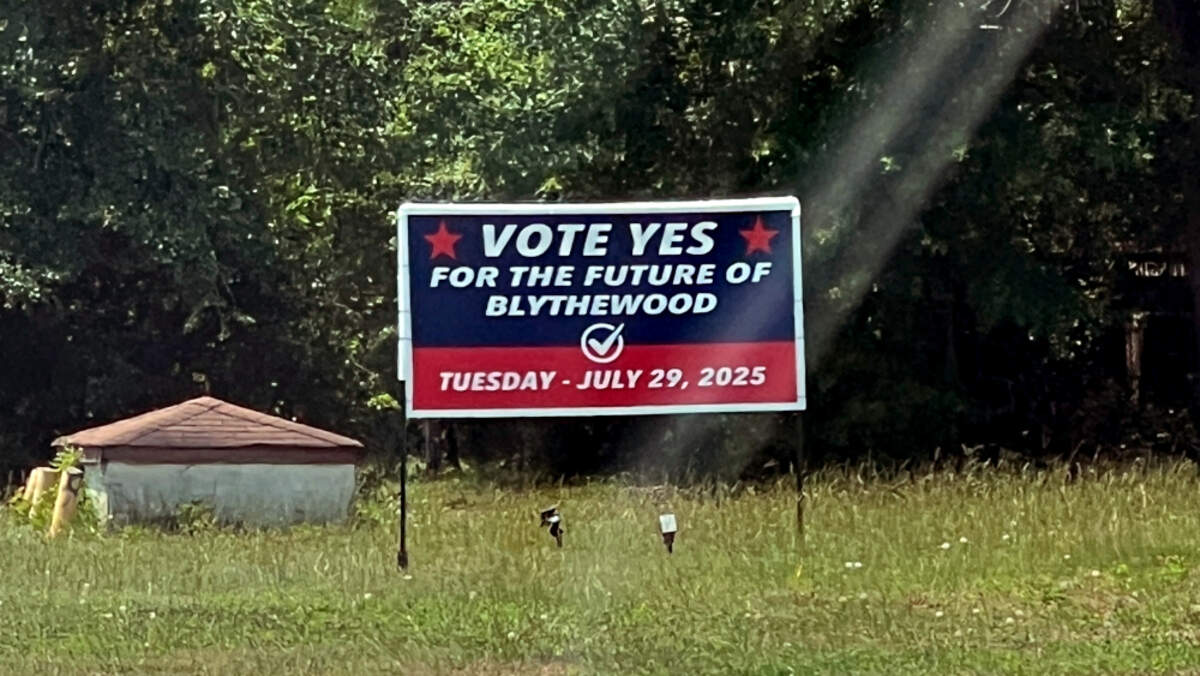
Amid continued tension between the mayor and the other members of council, residents will cast ballots July 29 to decide whether to shift the way Blythewood’s government is set up. Holding such a vote is a relatively infrequent move in South Carolina.
All four members, besides the mayor, voted in May to move forward with the referendum to decide whether to change the current mayor-council form of government to a council-manager model.
If the change is approved, the administrative duties of the mayor would be transferred to a full-time town administrator. Several other powers and responsibilities would also be shifted.
The mayor and council disagree as to the real reason behind holding the referendum. Although initially the council said the change is in effort to accommodate the town’s growth and was not related to Mayor Sloan Griffin, each of the council members has expressed grievances with his actions in office and are seeking to curtail his authority.
“[Residents] found out at the same time as me when that item was asked to be put in the agenda,” Griffin told The State.
It wouldn’t be the only potential shakeup for Blythewood this fall. The new form would go into effect Nov. 24, shortly after a regular election that will decide who occupies two council seats currently held by Erica Page and Rich McKenrick.
Why is the vote happening?
Back in April, council members, excluding Griffin, announced the effort to change the form of government, saying it is needed due to the town’s rapid growth and has nothing to do with the mayor.
However, the town council members’ opinions of the mayor are no secret to residents. Each of them spoke at length during the second vote discussion on May 27, airing grievances with Griffin’s actions and pointing to benefits of the proposed form of government.
“This ‘strong mayor’ form of government can be dangerous,” Councilwoman Andrea Fripp said during the May 27 meeting, speaking to the form Blythewood currently employs. “Maybe it’s worked in some administrations, but when it doesn’t, it allows for one person and their agenda to have a choke hold on Town Hall.”
She added that this form allowed Griffin to take actions with no knowledge of the council, including throwing an $18,000 personal Christmas party with town funds and hiring a friend who was actively under SLED investigation for stealing money from the town she managed. The potential hire was later indicted.
“I can, without hesitation, tell you that this has been a one-man show,” Fripp said. “This council, under this ‘strong mayor’ form of government, has been left in the dark. The bickering that you see, that you all complain about, it’s about us trying to hold this mayor accountable.”
Fripp told residents that all members, except the mayor, are part-time employees of the town, so a full-time administrator is needed to run the day-to-day operations.
“Our position is we just want all five elected officials to be included in what’s going on, not just one,” Fripp said.
Griffin’s stance is that the referendum doesn’t need to happen at all. The “optics don’t look good,” he said in regard to changing the form during his first few years in office. He called the effort “ludicrous” and said it would send a negative signal to Blythewood’s residents.
The mayor said May 27 that he feels the public was lied to in April about the real motivation behind the change in government, claiming it is due to personal issues against him.
“What did I say that was a lie?” Mayor Pro-Tem Brock asked Griffin during that meeting. “We have told you countless times that there is a breakdown in communication between you and this body.”
Under the proposed form, the town would have a “more fair and equitable governing body” with “much better checks and balances” over residents’ tax dollars, Fripp said on May 27.
The mayor would have no formal authority above that of other council members under the proposed council-manager form. The council has expressed interest in transitioning Griffin’s role to more of a figurehead for the town.
“You are a great face for the Town of Blythewood, kissing babies, shaking hands, in the lobby at the State House advocating for Blythewood,” Brock told Griffin on May 27. “That’s great, and I would love to empower you to do that. That’s what a council-manager form of government does.”
What are residents saying?
“We intend to vote no matter what, but we have a better understanding of what is being offered on both sides,” resident Dierdre “Dee” Glander said of her and her husband after a July 7 information session about the potential change in government.
“I think that the [town administrator] they hire has to be someone that can say, ‘You’ve got your own agenda, you’re not thinking about the rest of the people that you’re working with,’” Glander said. “I think that’s what’s happening now.”
Glander told The State that she and her husband have attended multiple council meetings where members are “just bickering back and forth” and that the leaders have, on one occasion, closed a meeting before allowing her husband to speak in front of the council.
She isn’t alone in her frustration. More than 10 residents spoke in front of the council when leaders took their May 27 vote on the referendum. A majority encouraged the council to vote “no,” reasoning that the form of government is not the problem – it’s the council’s lack of efficiency.
“We don’t need a change in government, we need a change in the way that they handle the government,” resident Cindy Merritt told The State on May 27.
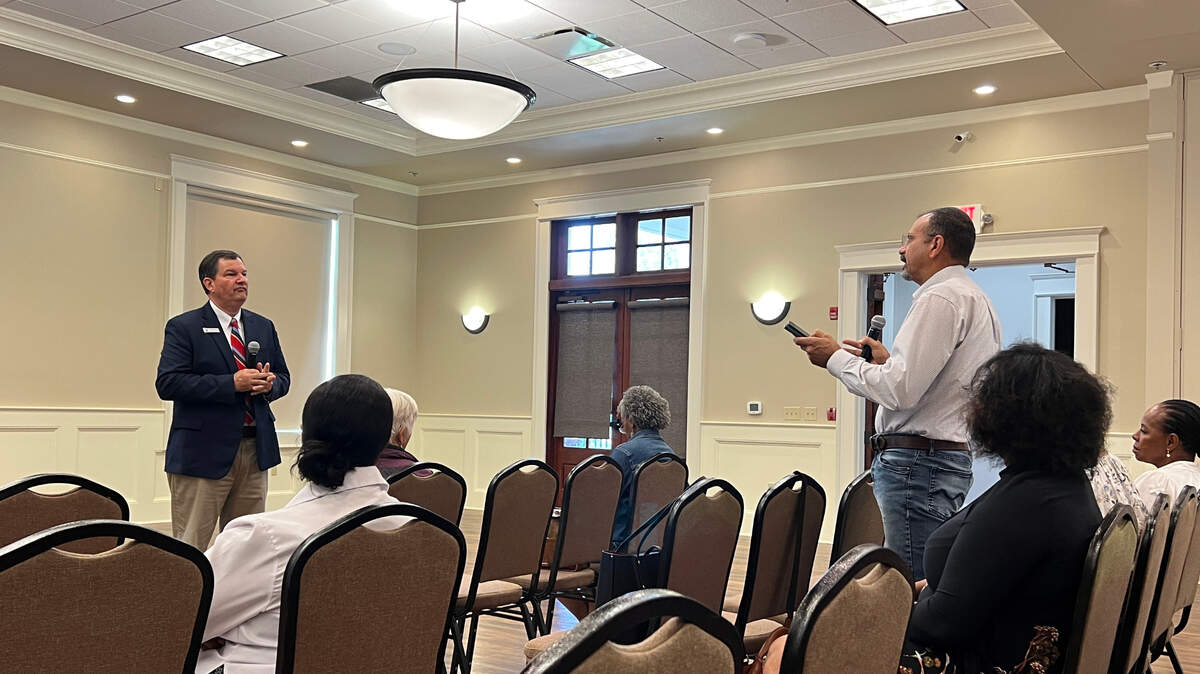
During the July 7 information session, several residents asked questions seeking guidance on how they should vote, with some saying the town council is “not working.”
Two citizens spoke in favor of reforming the government on May 27 to prevent one seat from having too much power. Former Blythewood mayor Keith Bailey countered that the mayor’s existing power is necessary.
How does Blythewood’s government work now?
The town held two public information sessions hosted by a representative from the Municipal Association of South Carolina, Charlie Barrineau, to inform residents on the differences between the town’s current and proposed forms of government.
In the current mayor-council form, the mayor acts as the chief administrative officer, with the full council setting town policy. They preside over meetings and can call special meetings, and are responsible for preparing the budget and running day-to-day operations. They can appoint and remove town employees, subject to rules set by the council.
Typically, the smallest communities in the state operate under this form, Barrineau told residents July 7, but any of the three forms can be effective, regardless of size, when members of the council collaborate effectively. He disagreed with it being nicknamed the “strong mayor” form of government.
“I think that it gives the perception that the mayor may have more authority than he or she does,” he said.
The mayor and council are currently responsible for establishing departments and their functions, and hold the power to hire an administrator to assist the mayor. Blythewood has an interim town administrator, Ed Driggers, who assists leaders in those duties, but he is not fully responsible for day-to-day operations.
The town has always had a town administrator, which Brock said is a common misunderstanding. The administrator acts as a resource for advice to assist the mayor in carrying out those responsibilities.
It is important for the mayor to still collaborate with the other elected officials, even if they can make final calls, Barrineau said.
“There’s some mayors that may take the position, ‘Well, the law says that it’s my call. I made the decision I’m going to appoint this person,’ and I would tell you that they’re right, that’s what the law says,” he told residents. “[But] we’ve got four council members. They’re elected officials, too. They have as much authority in the policy as the mayor, and so, if we fail to communicate to the body what we’re doing, we’re not going to be successful.”
How would the government work if voters went for the change?
Under the proposed council-manager form of government, the mayor would still preside over meetings but would act and vote as a member of council. The mayor would no longer have administrative powers beyond that of the other council members.
34 of the state’s 271 municipalities operate under this form, Barrineau said. In the central Midlands, five governments have this form, including Batesburg-Leesville, Cayce, Columbia, Newberry and Winnsboro.
The council would hold all legislative and policy powers. They employ a manager, attorney and judge, elect the mayor pro-tem – the seat currently held by Donald Brock – establish departments and adopt the budget. They are responsible for appointing boards and commissions.
The full-time town administrator would be the town’s “chief executive.” They would appoint, set salaries for and remove employees at will. Barrineau said the mayor and council would have no direct involvement in hiring other staff.
The manager would prepare and administer the annual budget, make financial reports, advise the council on departments and appointments, and designate a manager to replace them during temporary absences.
However, the council still retains decisions on policy. The town administrator could, for example, present a budget plan to the council, and the council could override it and create their own.
Council members can make suggestions for day-to-day operations, such as encouraging a public works department to tackle a specific issue, but “it’s got to be the administrator’s call, because our goal is to create efficiency,” Barrineau said.
If the change is approved, the council would initiate a hiring process for a full-time town administrator. Interviews with candidates would take place privately, but the decision-making on the new hire would be public, Brock said. The town’s current interim administrator, Ed Driggers, is retired and uninterested in taking the position.
It would be important for the council to allocate a significant amount of money for that administrator’s salary, Griffin said, to ensure the town is bringing on an experienced professional. The previous full-time administrator’s salary was approximately $120,000, he said.
“To get someone with good quality, good skill sets, I believe we’ll be spending between $175,000 and $200,000,” Griffin predicted.
If the change is rejected, Griffin would maintain his administrative role with continued assistance from interim administrator Driggers until a permanent administrator is hired.
This story was originally published July 15, 2025 at 5:00 AM.