‘Fry-nal’ verdict: Inside Rush’s switch from and return to its classic fries
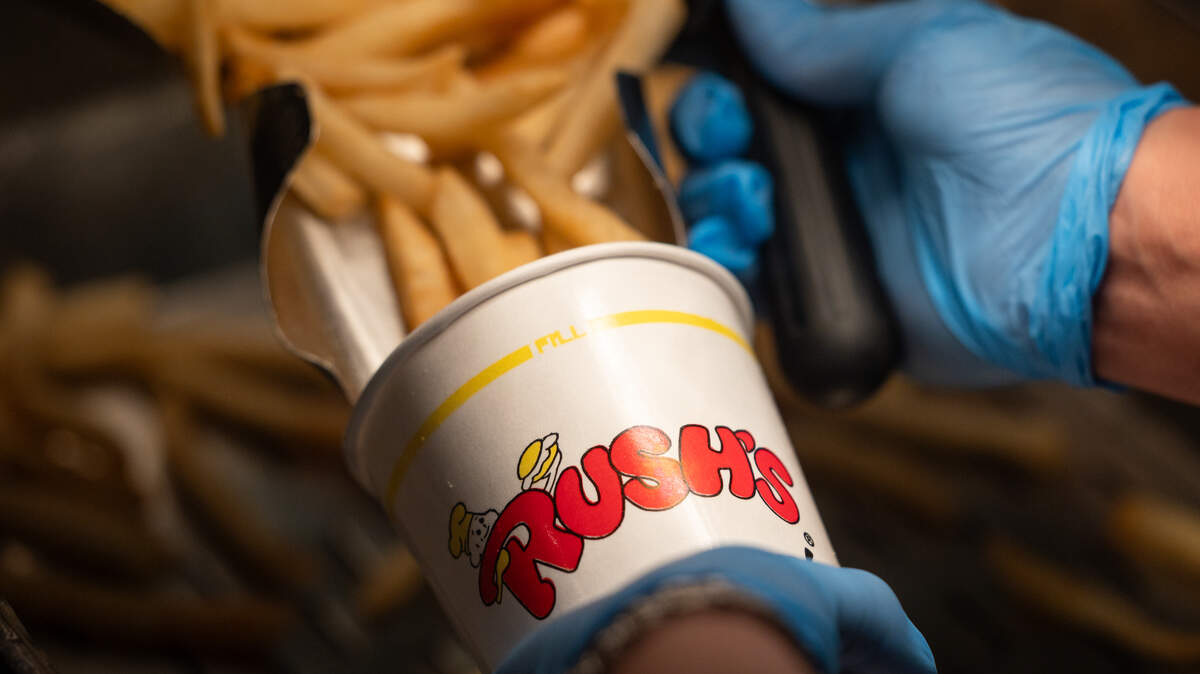
The people of the Midlands certainly have their passions.
Some, for instance, live and die with the fates of the athletic teams at the University of South Carolina, particularly the Gamecocks’ football and women’s basketball squads. Others find solace in the outdoors at places such as Lake Murray, where hundreds of boats glide across the water on any given summer weekend.
But in recent months, many in the Midlands have directed their passion toward the culinary decisions of beloved local restaurant chain Rush’s.
For many customers, it was a winter of discontent when Rush’s switched in January from its longtime straight-cut style of fries to a crinkle-cut style. That eventually gave way to a summer of rejoicing when Rush’s reversed course, bringing back its original fries to great fanfare on July 18.
Rush’s history stretches back to 1940, having started with a single drive-in on Broad River Road. Today there are eight Rush’s locations across the Midlands. The fast food spots have become known through the years for their burgers, chicken, ice cream, milkshakes, barbecue sandwiches and, yes, their french fries.
Don Alcorn has been with Rush’s since the 1960s, and currently serves as the company’s president. He’s been front and center as the local chain has grown in popularity and scope through the years. While Rush’s has remained remarkably consistent in its menu offerings through the decades, there have been a few changes over time.
For instance, Alcorn notes that the restaurant changed its style of apple turnovers at one point, because the turnovers they had been using were discontinued. The same goes for the restaurant’s hot dogs, when the franks that had previously been used were no longer offered by suppliers.
But seemingly no change the restaurant has made through the years has drawn the publicity — or social media scrutiny — of Rush’s decision to switch up their fries.
The initial idea of swapping to crinkle-cut fries from the longstanding straight-cut was one that was driven by trends in Rush’s business and the fast food business at large, Alcorn said. Specifically, they had been hearing more from people wanting crispier fries with to-go orders, as crispier fries tend to hold their heat better as the customer travels to their destination.
“Last summer we started getting more requests from our customers for extra crispy french fries,” Alcorn said. “Traditionally, french fries don’t travel well and, particularly since COVID, with a lot more carry-out, a lot more drive-thru activity, customers ordering food through DoorDash and all that, the traditional french fries just don’t hold up as well. So the whole potato industry itself has been trying to address the issue, and that’s the reason why we started looking at some options.”
After the decision was made to go with crinkle-cut fries, the company put on a marketing campaign dubbed in social media posts and elsewhere as the “2025 Fry Glow Up” and the “Fry-nal Countdown.” The date to switch over to the crinkled fries was set for Jan. 31.
The reaction from fans, particularly on Facebook, was immediate. And it pointed to the delicate balance nostalgic local favorites have to strike when making a change.
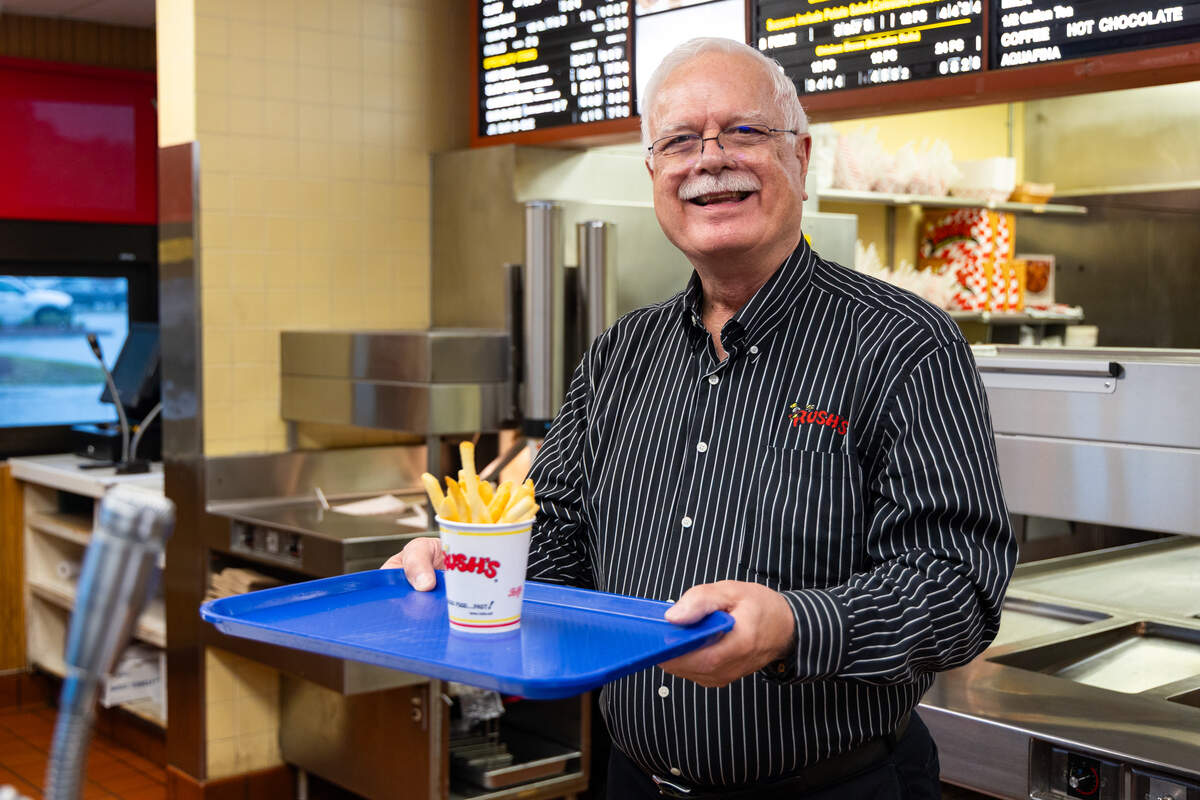
The journey back to ‘Fry Liberation Day’
From the moment Rush’s announced in January that it was switching to crinkled fries, there was significant social media pushback, which was unceasing for months.
No matter what the business posted on Facebook through the spring and early summer, even if it had nothing at all to do with french fries, there would inevitably be scores of comments in which customers expressed disdain for the crinkled spuds.
For example, on June 16 — nearly five months after the crinkle cuts had been introduced — Rush’s made a post on Facebook about its barbecue sandwiches, touting the smokiness and sauciness of the pulled pork offerings.
That post ended up receiving 100 comments, but very few were about barbecue. Nearly all of them assailed the restaurant over the french fry switch-up.
“It would be nice to have the OG fries to go with that BBQ Sandwich,” one commenter wrote. “But no OG fries... NONE of my money will be spent!!!” Another commenter wrote, “We can’t be friends until the fries return!!”
It was just one example of many posts through the course of several months in which customers expressed their discontent with the crinkled fries, and pined for a return to the straight-cut potatoes of old. Alcorn said company officials immediately took notice of the sentiment.
“From almost day one, we started seeing the Facebook response, and it started building and building and building,” Alcorn said. “And we heard it from some of our customers at the front counter. Now, we heard from some customers who said, ‘Hey, I like the crinkle-cut.’ But, the majority were not in favor of it.”
As officials monitored customers’ french fry feelings in the weeks after the Jan. 31 switch over, it became apparent that the mood wasn’t changing, and the company made the decision to pull the trigger and return to its original straight-cut fries. Such a change couldn’t be made overnight — there were supply chain and production issues to consider and other red tape to cut through, Alcorn noted — but on June 26 the company announced in a Facebook post that the old fries were returning on July 18.
And the people rejoiced. That post announcing the July 18 return has been viewed more than 180,000 times and received more than 1,100 comments, the overwhelming majority of which were glowing. One commenter on the post even labeled July 18 as “National Fry Liberation Day,” and added, “We’ve all been low-key dreaming about those straight-shootin’, golden, OG fries that don’t need no ridges to be legendary.”
Alcorn, who has just about seen it all in his many decades at Rush’s, admits he was surprised folks reacted as strongly as they did to the switch to crinkled fries. He was quick to say that he has been glad to see customers react positively to the subsequent return of the straight-cuts.
“The reaction was a lot more than I thought it would be,” Alcorn said. “I had no clue people would react to a french fry that way, but they did. And so we changed it back.”
“The customers demanded it and we responded, and they seem to be happy,” he added.
Walking a menu tightrope
The Rush’s french fry shakeup illuminates a conundrum that could be faced by any number of legendary local restaurants. There is a tightrope to walk between giving customers the tried-and-true experience they’ve always enjoyed and making changes that owners think could be beneficial to the business.
Daniel Boan is familiar with shaking things up at a longtime, traditional Columbia restaurant. He is the co-owner of Drake’s Duck-In on Main Street in Columbia, which has been around, in one form or another, since 1907. The downtown spot has long been known for its fried chicken, chicken sandwiches, breakfast and more.
Drake’s underwent an overhaul in 2023, and reopened in 2024 with a completely renovated and updated dining space and a revamped menu. Gone were the the rickety, multi-colored booths and tables that once lined the walls, replaced by a host of new booths, chairs and tables. While some menu items were not touched — the fried chicken stayed exactly the same — there were changes to the food roster, including an expanded breakfast menu, offerings of beer and wine, and a switch to fresh-cut french fries.
In the year since the updated Drake’s reopened, Boan said most customers have overwhelmingly reacted positively to the change. But he conceded there have been patrons who say they miss the previous version of the restaurant.
“A lot of people love the changes,” Boan noted. “But I think anytime you change something that people are comfortable with — particularly when you’ve got places like ours, that’s been around forever, and people just know it, and it’s the same year after year — I do think there there’s a resistance to seeing that change. And I think that’s the case for life in general, and how people see their city. ... But, change is inevitable.”
Phill Blair has been a restaurateur in the Midlands for two decades. Currently the owner of the popular WECO Bottle & Biergarten in West Columbia, he was also the owner of The Whig, the venerable subterranean bar in downtown Columbia that closed in 2022 after a 17-year run.
Blair notes that WECO will occasionally stop carrying a certain type of beer, and customers have to make adjustments to that. He also laughs when he thinks about how, during the height of its run at the corner of Main and Gervais, The Whig stopped serving its famed pizza because of changes to the menu that made it impossible to have massive pizza ovens in the kitchen. He said that, more than a decade after that pizza decision was made and three years after the Whig closed, people still bring up that pizza to him once a week.
“It’s tough, because you’ve got people that are going to just be upset because their familiar thing has changed,” Blair said. “And then you’ve got a lot of armchair quarterbacks who think they know what’s best for your business.
“We upset plenty of people over the years,” he added with a chuckle. “You know, we killed Whig pizza. And we brought some things in and out of the menu based on space and cost and stuff like that.”
As for Rush’s specifically, Blair notes that he is a “lifelong customer,” and admits he’s glad they switched back to straight-cut fries. He said he gave the crinkled offerings a shot on several occasions, but ultimately thinks the original fries are better.
Alcorn admits Rush’s underestimated just how beloved and revered their straight-cut fries were to its band of fans. A silver lining of the whole episode, he notes, is that it shined a light on how much the restaurant is cherished by the people who have been coming for years.
“We realize that we do have a very strong, loyal customer base,” Alcorn said. “They are quick to tell us, whether it’s with fries or anything else, the things that they like or don’t like. And we encourage that. We need to have that feedback, good or bad.”
This story was originally published August 13, 2025 at 5:00 AM.