
Here’s how to best survive an active shooter at University of South Carolina & other places
As has been seen in incident after incident, an active shooter can appear anywhere, anytime across the country.
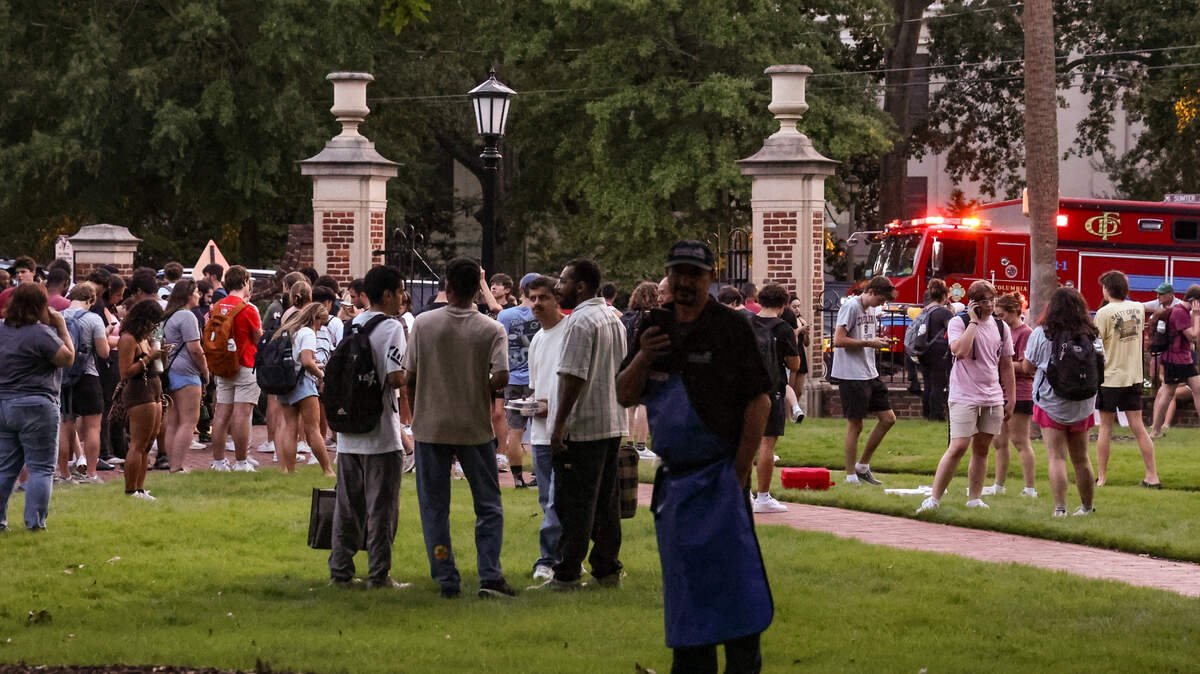
Fortunately, on Sunday no shooter was found after someone reported shots fired at the University of South Carolina.
The U.S. Department of Homeland Security says such situations are “unpredictable and evolve quickly.”
And they are typically over within 10 to 15 minutes, often before or as law enforcement arrives.
That fact has resulted in a nationwide effort by law enforcement, schools, businesses and any place people gather to educate people on what to do should someone begin shooting.
The FBI calls it run, hide or fight.
The University of South Carolina on its website calls it avoid, deny, defend.
“The most successful strategy for surviving an active shooter event is to avoid the situation altogether,” USC’s Law Enforcement and Safety Department says. “This includes prevention strategies such as early identification, intervention, and awareness.”
Trust your instincts, if something doesn’t feel right, get out of there and call for help.
In all cases in a public area, you should note the exits in case something happens, not after.
The FBI says once shooting has started, run in the opposite direction of the shooter with empty hands up. Do not hesitate. Leave belongings behind. Do not call 911 until you get to a safe location. Do not activate fire alarms. This could make people flee who would be safer where they are.
Tips to follow if you can’t run
Here’s what USC and Homeland Security say to do if you can’t run.
- Secure yourself inside the most fortified room available and lock the door. Use anything such as heavy furniture to barricade the door.
- If you can’t barricade the door, use objects such as belts, clothing or chairs to secure the door as best you can. Make yourself a “hard target,” by turning off the lights, remaining out of sight, and being quiet.
- Call 911 even if you can’t speak and are only able to leave an open line, but otherwise turn your cell phone off. Turn off anything making sound such as a TV or computer.
- Hide behind large items (i.e., cabinets, desks).
- Do not respond to requests to open the door or come out unless you are absolutely sure that it is law enforcement.
- Most schools have prepared for these unlikely situations by having locks on doors and window treatments nearby that can cover windows.
- The scariest one is of course defend and the pervailing wisdom is do not fight fairly. Do anything you can to survive.
- In the training film provided by the FBI, the actor looks into the camera and says solemnly, “I am not a victim.”
- Do not stand still – movement makes you a harder target to hit.
- Throw objects. Be aggressive. Yell.
- Use weapons of opportunity (e.g. fire extinguishers, laptops, chairs, keys, pens, etc.) to attack sensitive areas such as the eyes, throat, and groin.
- If you have others with you, coordinate your attack from multiple points of opposition. The FBI film shows three people planning to respond — one goes for the gun, another the head and the third the arms. One person is shown picking up what looks like a rock on display in a library. In every film, the people are able to subdue the shooter before the police arrive.While such action likely won’t stop people from being injured it has reduced the number of fatalities, reports show. ALICE, Active Shooter Response Training First, says the initial actions of civilians helps.
This story was originally published August 25, 2025 at 11:40 AM.