When Nephron expanded in 2022, it got tax breaks. Now, it has $1M overdue bill
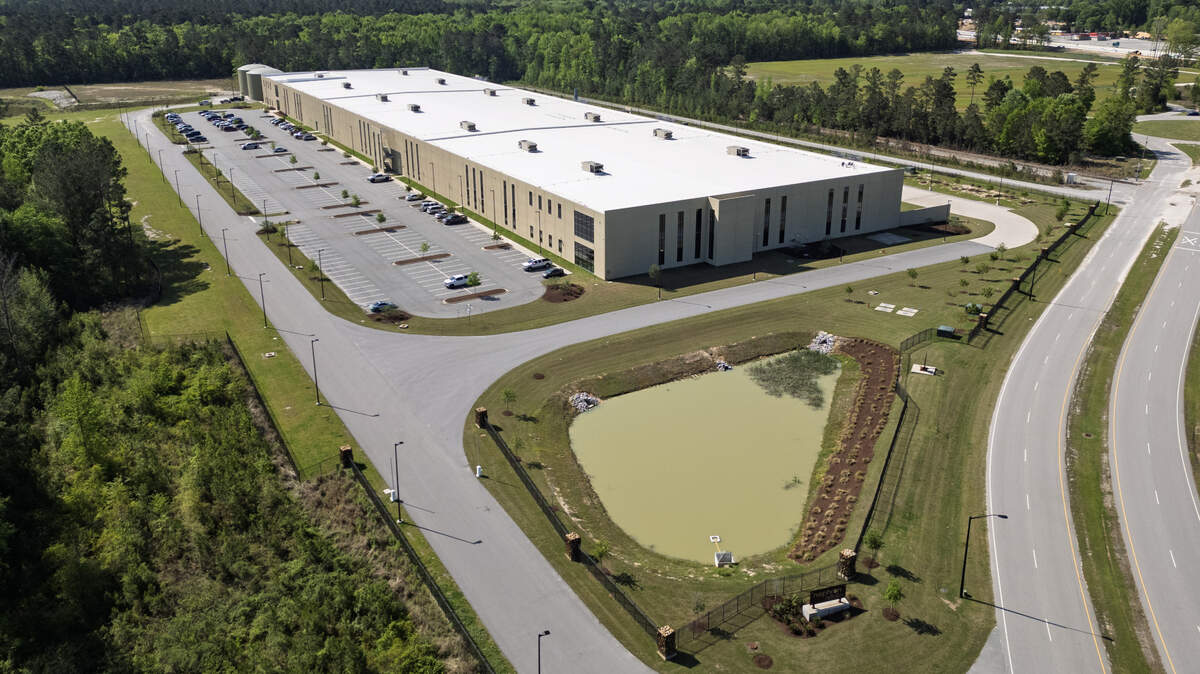
The medical-grade glove manufacturing plant that was an expansion of Nephron, one of the largest companies in the Midlands, owes Lexington County nearly $1 million in overdue property taxes despite already receiving a number of incentives that reduce the amount of taxes that the company pays to the county.
The property tax bills, totaling more than $950,000, sit unpaid as the company’s headquarters was listed for sale-leaseback in late August and as Nephron and its affiliate companies owe, or have owed, various contracting companies millions of dollars for unpaid labor. It also comes after what appeared to be a tumultuous audit for Nephron by the state’s revenue department, based on emails obtained through a public records request.
If they continue to go unpaid, both bills, for property taxes related to Nephron Nitrile and the building that houses it, would send the offshoot company’s properties to a tax sale. But county officials seemed to think that’s unlikely and alluded to the fact the company could be paying the late penalties while holding on to its existing capital, potentially building more interest than the late fees are worth.
Typically due in mid-January, the county begins tacking on late fees on Jan. 16 and continues to add on as the bill sits unpaid. By April, the county sends execution notices, or a notification that the property will be seized if the taxes go unpaid. Delinquent properties start being posted in late October and tax sales begin in early December, according to the county’s website.
Multiple county officials who talked with The State did not seem to be worried about Nephron’s late payments or that the property would go to tax sale, though they did confirm that the company was aware of the late payments.
“Nephron Nitrile has always paid every penny of tax due and always will,” Dan Adams, the owner of Nephron Nitrile, said in a statement. Adams, the president and CEO of a Greenville-based investment banking firm focusing on mergers and acquisitions, had not previously been publicly identified as an owner by the company. In a corporate letter from October 2024, he signed as a managing member.
At the grand opening of the new company, Nephron Nitrile, in December 2022, Nephron Pharmaceuticals CEO and co-owner Lou Kennedy, not Adams, was one of the keynote speakers, alongside top state leaders. When asked if Kennedy and her husband, Bill, were still the majority owners of the Nephron off-shoot, the company declined to comment.
The conglomerate of Nephron companies, which employed more than 1,000 people in December of last year, is one of the largest employers in Lexington and has been lauded by the state’s commerce department in recent years for its ongoing expansion in the area. When asked for more recent jobs numbers, company officials declined to provide them.
Late bills despite tax incentives
Nephron was an impressive economic development score by the county when the company opened its West Columbia facility in 2014. And the new company it created to manufacture nitrile gloves was praised by the state for the company’s promised investment of $100 million and 250 jobs.
The affiliate company was added to Nephron’s tax incentives agreement with the county in 2021. After the initial contract was signed in 2012, reducing the amount of taxes Nephron would have to pay to the county provided the company held true on the number of jobs and investment it agreed to deliver, it was reinstated in 2020 and later amended to include Nitrile.
Despite saving money on tax payments to the county, and Nephron receiving a quarterly tax credit from the S.C. Department of Commerce, Nephron Nitrile has not paid $950,108 it owes to the county, about $125,000 of which is in penalties.
When the company announced plans to expand its operation from Orlando, Florida to Lexington in 2011, the county agreed to lower its property tax assessment ratio from 10.5% to 4%, a move counties typically reserve for large economic development investments, and give the company a fixed millage rate for decades. On top of that, the state’s commerce department approved Nephron for a $4.5 million grant and recurring tax credits.
Nephron isn’t the only company in the county to receive tax abatements. Lexington, like other counties across South Carolina, reduces taxes and offers credits for a number of manufacturing companies. Last fiscal year, the county lost out on more than $12 million in tax revenue as a result of abatements for companies, and the area’s five school districts missed more than $34 million, according to an annual county financial report.
A section of the tax incentives deal laid out a stipulation that Nephron would be in default if it failed to make its payment and continued to fail after 30 days of receiving a written notice of default from the county, at which point the county could decide to terminate the incentives package or take legal action to collect payments.
But the county has discretion with how harsh to be on companies and typically tries to work with businesses to keep them open, Lexington County Economic Development Director Garrett Dragano told The State.
“We have to consider that these are people’s lives you’re talking about. It depends on what’s going on. If [a company] is short 50% on everything, we need to have a discussion. But when it comes to ‘Hey, we’re short 10 jobs and we’re struggling to find these last 10 people’ … you have to consider, a company is struggling, do we put another burden on them?” Dragano said.
Dragano said he was not able to provide specifics on the company’s unpaid taxes at the time. A county spokesperson later declined to answer when asked whether the county had sent the company a written notice of default and whether Nephron or any of its affiliates were in default.
Turnover, frustration surrounding audit
On top of the savings it receives from county tax incentives, Nephron also gets something known as a Job Development Credit from the state. It’s a type of tax rebate administered by the commerce department that Nephron receives after filing its quarterly withholding tax return.
Every three years, the state’s revenue department, which is in charge of, among other things, verifying that companies are receiving the correct amount in rebates, audits the companies that receive the credit. For Nephron, a 2023 audit dragged on for over a year and eventually led the county’s economic development office to get involved, as shown in internal emails obtained through a Freedom of Information Act request.
Executives for Nephron and the state Department of Revenue appeared to be at odds over whether the company had received the correct amount through the tax credit after the company struggled to reproduce accurate numbers to the revenue department.
“The audit has been open for approximately a year and we have worked with [Nephron] over and over with time extensions due to them not being able to find the original [Job Development Credit] spreadsheet,” an auditor told his supervisor in a July 2024 email.
The audit — which officials with the revenue department said on average takes 217 days to complete based on audits conducted between July 2024 and May 2025 — started in June 2023 and the revenue department sent out its final determination in July 2024, informing the company it would have 90 days to submit any changes for review, pay the assessment in full or file an appeal.
It’s unclear how big or what exactly the discrepancy between the company and the revenue department is about. The company declined to answer questions about the audit and the revenue department declined to provide additional details. County officials indicated the company had submitted inaccurate numbers for the tax rebate, revealed in the audit, and was made to pay that money back.
“As any business in our industry we follow routine audits and compliance updates with multiple government agencies. If any of those reveal that we owe money, we pay it. Period,” a company official said in a statement.
In early October of last year, Nephron Pharmaceuticals’ accounting director asked a revenue department auditor if a payment plan was available and “what the next steps are,” in an email regarding the audit. The county’s economic development office reached out to the revenue department in November to try to “get a better understanding of everything” with the audit.
“I know [Job Development Credits] can get tricky at times, and they have had some turnover in their CFO position,” Dragano wrote in an email to an auditor. From the time the audit began in June 2023 to August 2025, the company cycled through at least four top executives, often accounting or financial officers, who served as the point people for the department during the audit. Auditors working to communicate with the company were, on numerous occasions, met with emails informing them that their contact was no longer with the company.
By late November, a commerce department manager confirmed to the county and Nephron, in an email, that the company would “need to make tomorrow’s payment as scheduled.”
In July of this year, the S.C. Department of Revenue took out a lien, or a claim against property that the department takes out for failure to pay a tax bill, against Nephron Sterile Compounding Center for $30,162. It’s unclear if the lien, which the company satisfied in early August, was related at all to the audit’s findings. Company officials and the revenue department declined to provide further detail.
Repeating patterns
That lien wasn’t the first time the state’s revenue department has taken out a lien against Nephron and its affiliate companies. It’s the seventh. Between July and November 2023, the revenue department took out $4,500 in liens against the company. And the company’s overdue property tax bills with the county aren’t the first time it’s been late there either — in 2018, Nephron SC Inc. paid its property taxes in June, with $175,000 in penalties attached, and in 2017, it paid them in May, with $206,000 in penalties.
After Nephron Nitrile opened in the Kennedy Innovation Complex, a new facility on land sold to the company by the county, in December 2022, it was hit with a slew of complaints from contracting companies that allegedly hadn’t been paid by the company. Between March 2023 and January 2024, six companies took out 10 liens against Nephron, most of which were for work on the Nephron Nitrile plant. In total, the liens taken out represented more than $7.9 million in unpaid work.
The company has paid some of that back, legal documents show. Two of those liens were eventually released, meaning Nephron likely paid them or came to an agreement with the companies, and at least three companies took Nephron to court over the unpaid bills. One company, D & J Machinery and Rigging, a South Carolina-based contractor, brought a suit against Nephron in September 2023 and alleged that the pharmaceutical company had stopped paying D & J the money it was owed for completing various construction projects to the tune of $2.68 million.
The case has dragged on since 2023, with Nephron consistently asking the court for extensions. A damages hearing in early August was rescheduled for a later date. The company declined to comment on the suit.
The company received a $350 million credit line from a private financing company called WhiteHawk Capital earlier this year, putting up its properties as collateral which Nephron posited marked “a pivotal step in our commitment to setting new standards for excellence in the industry.” Nephron also listed its headquarters for sale in late August. The 700,000+ square foot building is listed for $340 million, with the company’s intention being to rent back the building from a new owner, a common refinancing move to get cash out of the property.
When asked if the moves were indicative of any problems at the company, spokesperson Zach Pippin said they were typical of a business making hundreds of millions of dollars in investments.
“Those large numbers aren’t all done by one person. It’s usually done by a team of investors and institutions and that’s what we’re doing,” Pippin said.
He pointed to adjusting to life after COVID as a pharmaceutical company as a complicating factor, adding that Nephron is reassessing with how the Food and Drug Administration is handling things and figuring out “where the business goes in 10 years.”
The company has faced regulatory trouble in recent years with the FDA over failing to safely produce its drugs.
This story was originally published September 3, 2025 at 5:00 AM.