Lexington paramedic penned tale of EMS life. It’s made it to the big screen
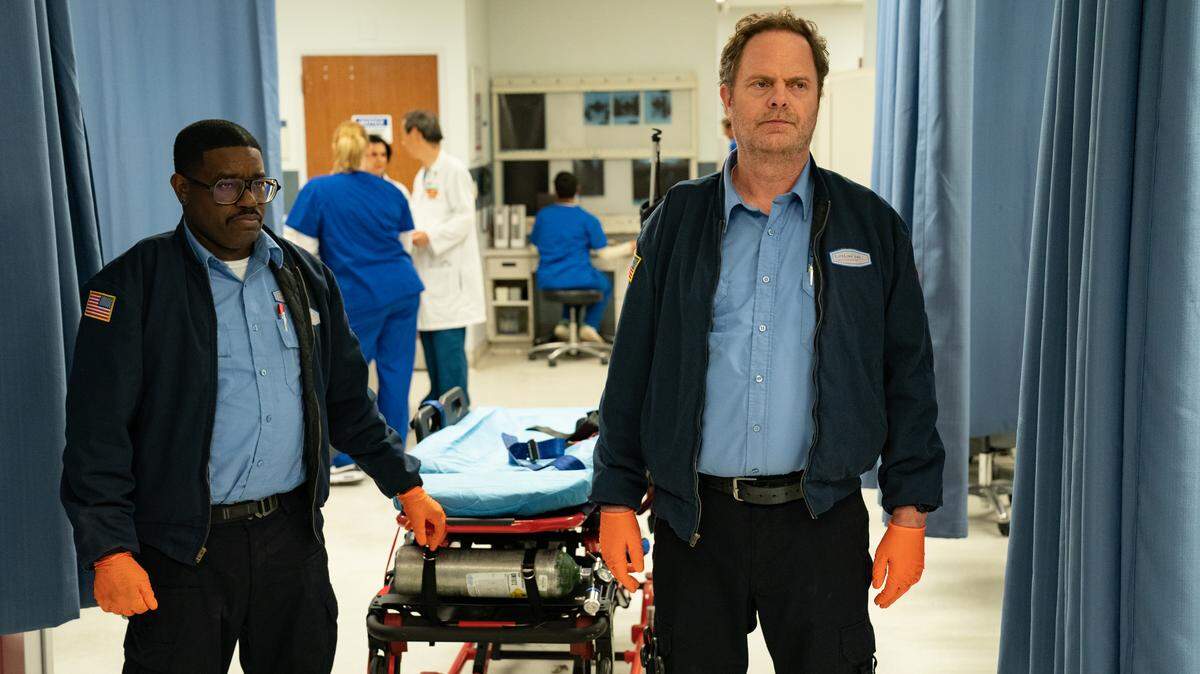
What began as the chaotic scrawlings of a tired paramedic and University of South Carolina student has become a comedy for the big screen showing in the same area Patrick Pianezza once worked and lived.
Pianezza, an Illinois native, worked as a Lexington County paramedic for about seven years in the early 2000s while attending USC. In “Code 3,” the recently released movie he wrote based on the experience, Rainn Wilson (known for his role as Dwight Schrute in workplace mocumentary “The Office”) plays Randy, a burnt-out paramedic on his final 24-hour shift.
“All the [expletive] you’re about to see, happened to a real actual paramedic,” Wilson posits in a voiceover in the movie’s trailer, which then features a chaotic montage of emergency situations.
“Heart attack. Car accident. Fork in the toaster. Or peanut allergy,” Wilson continued.
The idea for the R-rated 105-minute feature film about the life of a paramedic — which stars Hollywood names like Lil Rel Howery (TSA agent Rod Williams in “Get Out”) and Aimee Carrero (”The Menu”) alongside Rob Riggle (”The Hangover,” “21 Jump Street”) and Yvette Nicole Brown (”Community”) — began when Pianezza was asked to write “what he knew” for a creative writing class in college. He cranked out a short story about his experience working in Lexington.
While county officials confirmed Pianezza’s time working as a paramedic, they declined to be interviewed about the movie.
Over a decade after he penned the story about his experiences, the movie had its theatrical release Sept. 12, including limited showings at Regal Sandhill theaters through Sept. 18. The movie is directed by Christopher Leone (TV series “Parallels”), who helped co-write it alongside Pianezza after Pianezza’s brother encouraged him to reach out to Leone. The pair worked on the script for a decade before Wilson, who is also a producer, signed on to work on the movie.
Pianezza, who helped write the movie’s script, called it a poignant and emotional ride through the industry that shaped his young life.
“When I was [in Lexington], I worked at every substation that Lexington had, from Batesburg-Leesville to downtown Cayce and all the other ones in between, so very rural areas of the county to what I would call the urban centers,” Pianezza told The State. He said the movie was his love letter to the emergency services industry.
On top of seeing the impact he had as a first responder, Pianezza said he also saw how disparities in the healthcare system impacted the people he helped.
“You see that firsthand as EMS providers. Things that more wealthy individuals would get checked on as soon as symptoms show up, people that are lower down the spectrum will wait until it’s truly a crisis and, at that point sometimes there’s irreparable damage done to the body and we see that day in and day out,” he recalled.