Columbia stops unsanctioned work on 60-year-old apartments near USC. What now?
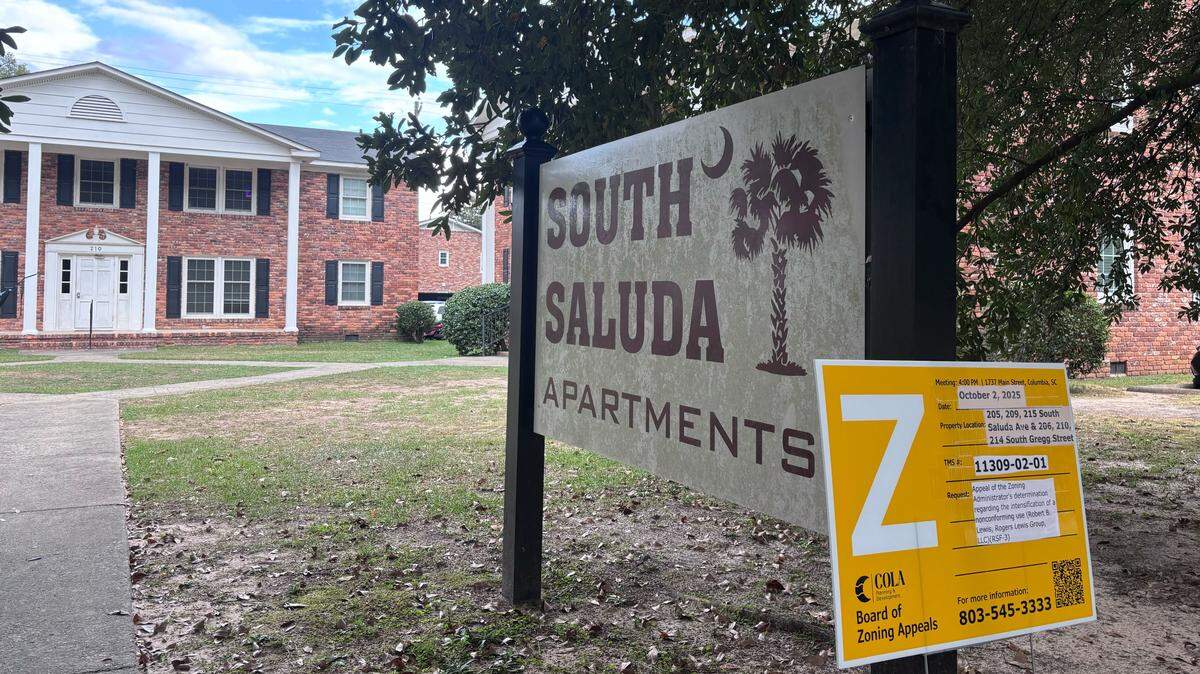
New owners of long-standing apartments in a residential neighborhood near Columbia’s Five Points were modifying the building without permission and have now been ordered to stop, the city confirmed to The State. Neighbors believe the work is being done to accommodate more student renters.
A city zoning board will determine if the work can continue, or — nearby residents hope — put an end to the renovations.
The South Saluda Apartments located in the Hollywood-Rose Hill neighborhood between Five Points and Rosewood Drive have long been popular among students, postgrads and young professionals, said neighborhood president Guy Jones. Jones lived in the apartments himself for nearly two decades, beginning in 1977 as a graduate student at the University of South Carolina. The apartments were previously called Plantation Court and were built in 1967.
A Columbia spokesperson confirmed that a stop work order was issued for the property, located between South Saluda Avenue and South Gregg Street, because the owners did not have building permits, nor had they submitted any plans for the project.
The city also denied the property owners’ retroactive request for building permits after the stop work order was issued, on the grounds that the building renovations counted as an “intensification” of the property’s use.
The owners of the property are local real estate broker Kathy Taylor and her family. They purchased the apartments in February for more than $3.5 million under an LLC created this year, according to state and county records. The purchase price was nearly $1 million more than the property’s assessed taxable value.
Taylor, who lives in the Wales Garden neighborhood right next to Hollywood-Rose Hill, said the intention of the work has been misunderstood. The renovations to the apartments are necessary because “they’ve been in bad repair for years,” she told The State. “We had plans to make this property a show place. It has been neglected, we had raccoons in the attic, we’ve had to put new roofs on it.”
What’s been done to the apartments?
Before the stop work order was issued, contractors had converted eight of the apartment’s 24 units from two bedrooms and one bathroom, to three bedrooms and two bathrooms. The plan had been to convert 12 of the 24 units.
Jones said he opposes the work on the property for several reasons, including a concern that the renovations are being made to increase the number of renters in each unit, but also because the work was being done without proper permissions. The Hollywood-Rose Hill neighborhood association is sending a letter urging the zoning board to stand firm on disallowing the work to continue.
“The fact that the owners have done this undercover, without applying for a building permit, I think is a very serious matter,” Jones said.
The neighborhood association’s letter to the city adds, “We believe that the building permit system is a critical element for the city to exercise appropriate review of proposed projects, and to help maintain safety and quality in construction projects.”
Taylor said she hoped the renovations would increase the apartment’s value and prevent the property from degrading the surrounding neighborhood. She also said the work is not meant to increase the number of people living in the apartments. Building codes limit the number of unrelated people living in a given housing unit to no more than three, regardless of the number of bedrooms.
Why no permits?
As to why the work was being done without building permits? Attorney Robert Lewis, who is representing the Taylor family before the Board of Zoning Appeals on Oct. 2, said, “I can’t really justify that in any way.”
The contractor should have pulled those permits, Lewis said, adding “they went about it the wrong way.”
But the case would have ended up before the Board of Zoning Appeals even if the contractor had applied for the permits at the proper time, Lewis said. The case is coming down to what counts as an “intensification” of the property’s use. Lewis and Taylor argue that because legally 72 tenants would be allowed to live in the apartments whether they have two bedrooms or three, the additional bedrooms don’t really change anything beyond making the units more attractive.
The neighborhood association, and city officials, disagree.
Now, Lewis of the Rogers Lewis Group law firm, will make the case before the city’s Board of Zoning Appeals that the work should be allowed to continue.
Jones said he worries if the city does allow the work on the apartments to move forward, it would set a dangerous precedent that developers can build without permission and simply do the paperwork after the fact.
Jones and the neighborhood association are urging the city to require the apartment’s owners to the return the units to their original condition. Jones said at the least, he hopes the city board will require the property owners to add a new fire suppression system and pay a fine for not following the proper procedures.
Lewis told The State that he hopes the city allows the work to move forward. Taylor said she and her team are working to figure out what they will do if the zoning board rules against them. Part of the renovation plans include new landscaping and repaving of driveways.
“If we’re allowed to do the things we want to do, it’s going to be a better property,” Lewis said. “It’s going to fit better within the neighborhood.”
The Board of Zoning Appeals will hear the case Oct. 2, and more information about the renovation plans should be available on the city of Columbia’s website by Friday afternoon, according to the planning department.
This story was originally published September 26, 2025 at 11:36 AM.