
Winter storm now set to dump mostly ice on Greenville and SC Upstate, cause major power outages
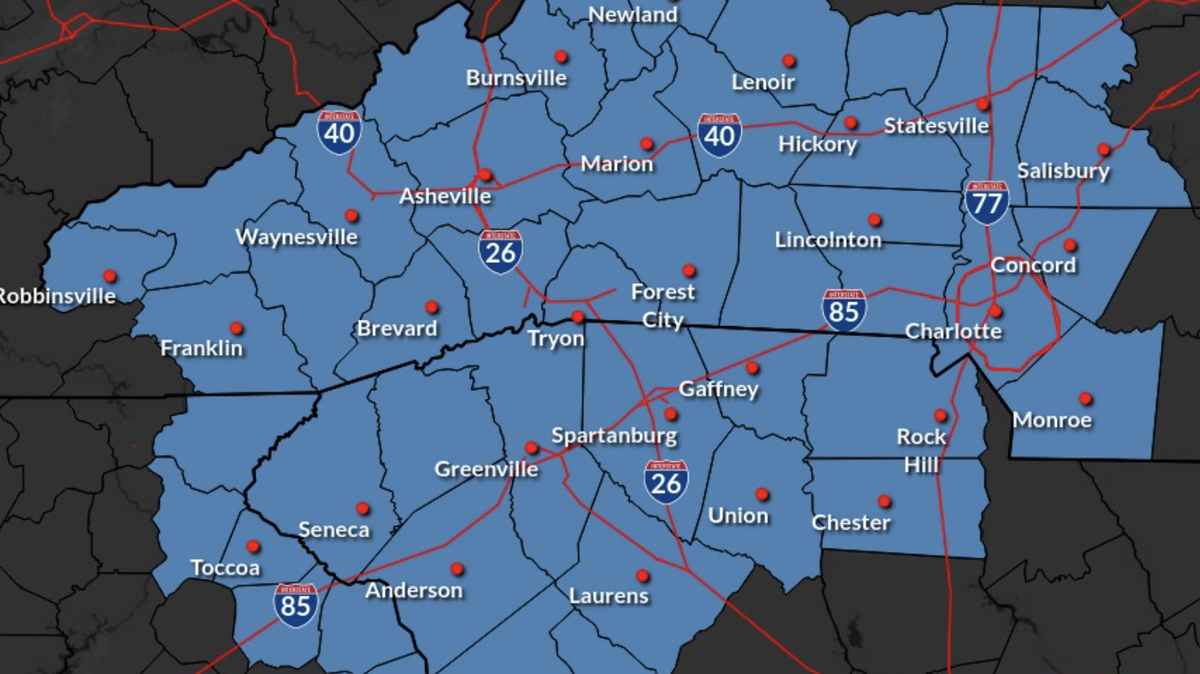
The National Weather Service says the winter storm bearing down on Upstate South Carolina is likely to cause significant ice accumulation on power lines and tree limbs that may cause widespread and long-lasting power outages.
A winter storm watch is in effect beginning Saturday morning and continuing until Monday.
“Ice and snow covered roadways will become treacherous and impassable,” the weather service said Wednesday.
Ryan Mosier, spokesman for Duke Energy, said company meteorologists are monitoring forecasts “to evaluate the potential for power outages and to support outage response preparations.”
He said they expect storm-related power outages this weekend across the Carolinas.
Outages from snow breaking limbs and felling trees typically occur with about 6 inches or more of snow, but about a quarter of an inch of ice will do the same thing, he said.
“Higher accumulations of a half-inch or more on power lines can sometimes cause the power lines to sag or even fall as well,” he said.
Company crews are trimming tree limbs ahead of the storm, he said.
Outages may be reported to: Text OUT to 57801 (standard text and data charges may apply).
Visit duke-energy.com/outages on a desktop computer or mobile device.
Call the automated outage-reporting system at 800.POWERON (800.769.3766).
The NWS said on Wednesday it expects heavy mixed precipitation with total snow and sleet accumulations between 1 and 6 inches and ice accumulations between four tenths and one inch possible.
The South Carolina EMS Association issued a warning about serious medical risks that come with cold weather.
“Hypothermia, a dangerous drop in core body temperature, can develop indoors when homes are inadequately heated, especially for older adults and babies,” SCEMSA said.
Signs are uncontrollable shivering, confusion, extreme fatigue, or slurred speech.
“Cold temperatures also place added strain on the heart. As blood vessels constrict, blood pressure rises and the heart must work harder to circulate blood,” SCEMSA said.
Cold, dry air can worsen asthma, COPD and other lung problems. They offer these tips:
Never use a gas oven, stove top, or charcoal grill for indoor heating.
Stay indoors as much as possible. Dress in multiple layers to trap body heat if you must go out.
Have extra blankets and flashlights ready in case of power failure.
The Weather Service said the highest snow and sleet accumulations are likely north of Interstate 40, across the southern mountains of North Carolina, the mountains of northeast Georgia, and the mountains of South Carolina.
Their final thought: Stay home.
If you can’t, remember to have tire chains, booster cables, flashlight, shovel, blankets, extra clothing, water and a first aid kit.
“And anything else that would help you survive in case you become stranded,” the Weather Service said.