
Former Columbia police chief jailed after search for drug fugitive leads to his home
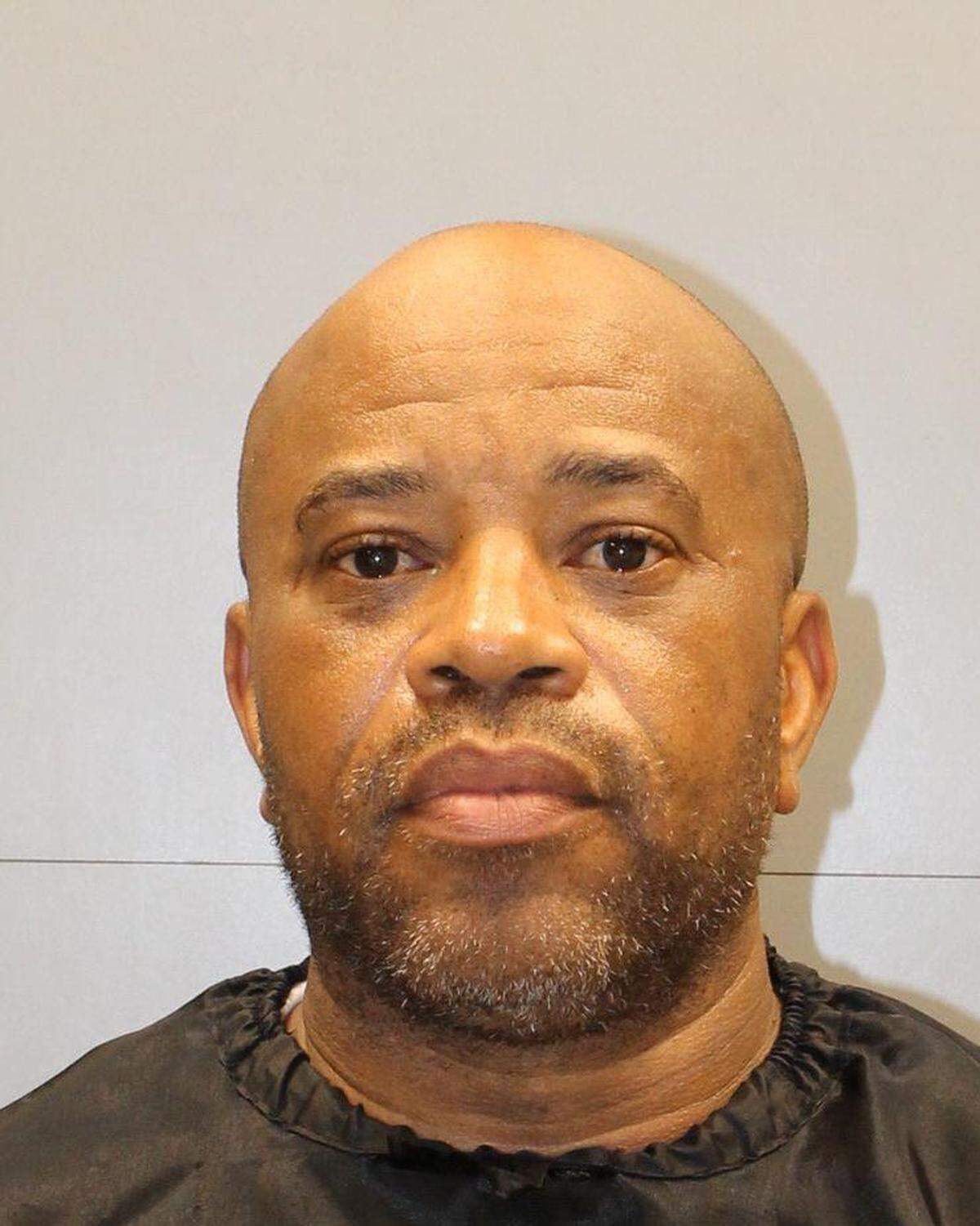
A search for a fugitive led Richland County investigators and federal officers to the home of former Columbia police chief Randy Scott, who was one of three people at the home arrested on drug charges Tuesday night.
Scott, 49, who was Columbia’s interim chief before being given the permanent position in 2011, was charged with possession of less than one gram of methamphetamine or cocaine base, according to online Richland County court records.
The former police chief and former Richland County deputy was arrested after a search for a fugitive brought the U.S. Marshals Task Force to his home off Heyward Higgins Road in the northeast area of Richland County, Sheriff Leon Lott said during a news conference Tuesday. Inside the home, investigators saw drugs in plain view, which prompted a search warrant.
Seven people were in the home along with the drugs and three of them, including Scott, were arrested. Investigators also found weapons in the home, though Lott declined to specify how many weapons or what kind.
At a Wednesday afternoon bond hearing, Judge Benjamin Byrd ordered that Scott be released on his own recognizance.
Investigators on Tuesday were looking for Tyrik Duron Wilson, who was wanted in Lexington County on charges of trafficking cocaine, failure to appear, failure to stop for blue lights and possession with intent to distribute, Lott said.
“This was not a drug investigation where we focused on (Scott),” Lott said. “We were focusing on a fugitive. By tracking that fugitive, we ended up at (Scott’s) home and then we saw drugs in plain view.”
Lott said some in the home were likely distributing the drugs, but Scott was charged with possession after investigators found methamphetamine in his bedroom. More charges may stem from the investigation, which is ongoing.
Any possible connection between Scott and Wilson remained unclear Tuesday, Lott said.
“If I could strangle him, I’d strangle him. But I can’t,” Lott said of the former chief deputy, who resigned from the sheriff’s department in August 2016. “There’s no sense in drug use. There’s no sense in being involved with people who are involved in drug use.”
Lott said he had confidence in his department’s ability to investigate a former co-worker.
“We didn’t hesitate putting handcuffs on him and putting him in jail,” Lott said.
Scott has no prior criminal record in South Carolina, according to State Law Enforcement Division records.
Wilson has convictions for resisting arrest, possession of a controlled substance and possession of marijuana, according to SLED. In addition to the pending warrant from West Columbia police for trafficking cocaine, Wilson was wanted by authorities in Lexington County on charges of driving under suspension, reckless driving, possession of methamphetamine or cocaine base and receiving stolen goods.
After Wednesday afternoon’s bond hearing, attorney Mark Schnee said Scott would likely be out of jail in a few hours.
The former police chief and sheriff’s deputy appeared at the hearing dressed in a prisoner’s orange jumpsuit, with shackles around his ankles.
In a statement to the court, Schnee said his client was “not someone who gets in trouble.”
“He’s someone who understands the law,” Schnee said.
The lawyer added that Scott’s “only wrongdoing is taking in somebody who needed help,” referring to the fugitive investigators tracked to his home.
Schnee added that the fugitive found in Scott’s home was facing legal issues and was low on money, prompting the former police chief’s sympathy.
“Randy’s the type of person that’s trying to help the community,” Schnee said.
Scott also is being represented by Pete Strom and Bakari Sellers.
Possession of less than 1 gram of methamphetamine or cocaine base is a misdemeanor that carries up to three years in prison or a $5,000 fine, under South Carolina law.
Following the bond hearing, Scott’s lawyers spoke about their client. Strom emphasized that Scott’s arrest did not stem from a drug investigation of him. When officers saw what appeared to be drugs in the open, the police “followed their procedures,” obtained a warrant and made arrests, Strom said.
“It’s a question of if the drugs were [Scott’s],” Strom said.
Strom said the amount of alleged drugs found in Scott’s bedroom “is less than a Sweet’n Low pack.” He also said that test results of the substance have yet to determine it was an illegal narcotic.
Scott resigned from the Columbia Police Department in 2013, citing post-traumatic stress disorder. He said he developed the condition, in part, after the death in the line-of-duty of a deputy he hired while at the Richland County Sheriff’s Department.
After his resignation, Scott — at that time the city of Columbia’s sixth police chief in as many years — returned to the sheriff’s department, where he was deputy chief before leading the Columbia force.
Scott was named interim police chief in October 2010 and earned the permanent title in January 2011, which he held for more than two years. He quickly went to work fixing and restructuring what was then seen as a department in trouble, naming a new command staff, hiring new officers and creating new units.
Scott was seen as the answer to years of problems at the department. He became a high-profile figure who showed up at everything from crime scenes to neighborhood meetings to protests to major festivals.
The praise for Scott was cut short in 2012 after a botched search by Columbia police for lobbyist Tom Sponseller, who was missing for 11 days. After four searches of Sponseller’s office tower, Columbia police investigators found nothing.
Investigators were made aware of a suicide note by Sponseller after other people broke into the lobbyist’s office and found the final letter. Investigators found Sponseller’s body with a self-inflicted gunshot wound in a room behind two locked doors in the building’s parking garage.
The incident was seen as a mismanagement blunder by Scott and led to the firing of two high-ranking officers, one of whom sued Scott and the police department.
After an unexplained and extended leave of absence in April 2013, Scott announced his resignation from the police chief position, citing PTSD related to his position.
“On my leave of absence I received counseling and help in realizing that my personal life is as important as my law enforcement career,” Scott wrote in his resignation letter. “I learned that the stress of being the Chief of the Columbia Police Department has brought out severe stress-related issues. This is more commonly known as Post-Traumatic Stress Disorder that I have from incidents that have occurred in my career.”
In a tearful news conference, Scott told the public that his PTSD stemmed, in part, from deputy Keith Cannon’s death during a high-speed chase on Interstate 20 in 2005. He recalled seeing the young officer dead in the cruiser after the crash.
Scott left the top position at the police department in May 2013 and later returned to the sheriff’s department.
Scott was involved with a vehicle collision in July 2016 in which a woman hit him after she ran a stop sign. A 911 call from a third party seemed to indicate that the caller saw Scott throwing away a beer bottle after the accident.
A few days after the wreck, Scott left the sheriff’s department because of medical issues, a sheriff’s spokesperson said at the time.
This is a developing story. Check back for updates.
This story was originally published July 18, 2018 at 9:27 AM.