Charleston killer Dylann Roof’s death penalty upheld by federal appeals court
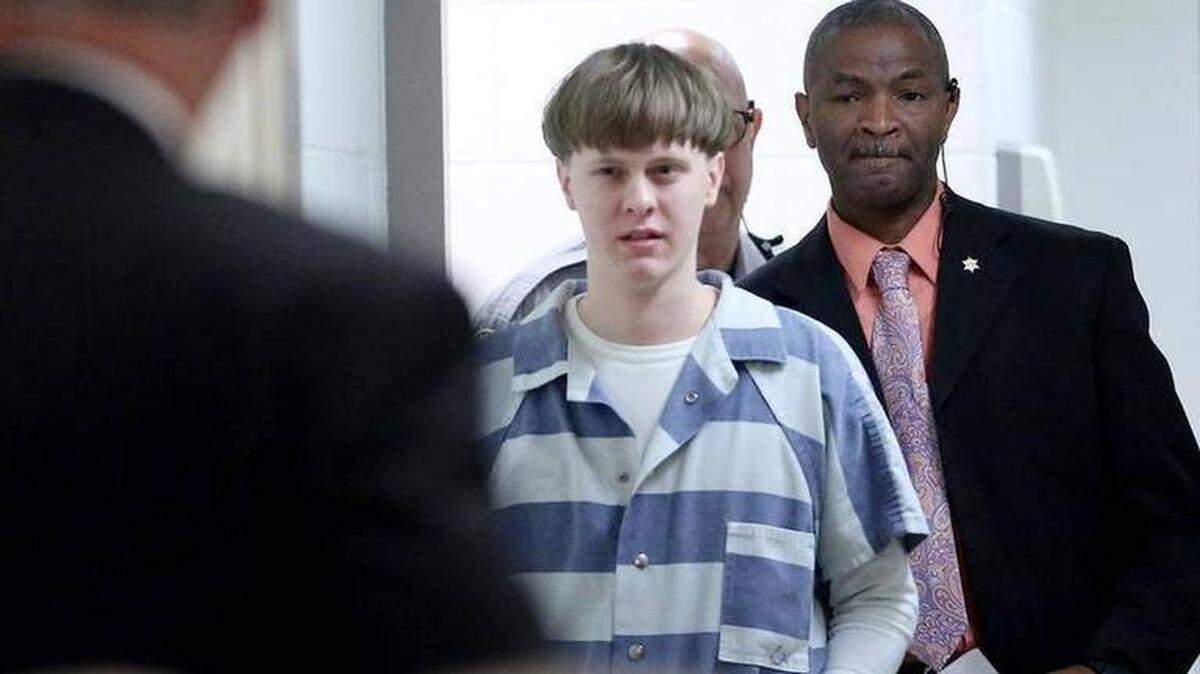
The death penalty for Dylann Roof, a Columbia man who killed nine African-Americans at a Charleston church in 2015, has been unanimously upheld by a three-judge panel of the Fourth Circuit Court of Appeals.
“His crimes qualify him for the harshest penalty that a just society can impose,” the judges wrote.
Roof was sentenced to death in January 2017 by a federal jury in Charleston, becoming the first person in the U.S. sentenced to death for a federal hate crime. It took the jury less than three hours to decide on the death penalty. U.S. District Judge Richard Gergel presided.
Overwhelming evidence at Roof’s trial, including his own writings, showed he is a white supremacist who was radicalized by far-right racist internet sites. He acted alone and had planned the killings at Mother Emanuel AME Church over a span of several months. His goal, he wrote, was to start a race war.
Mental illness was a key issue in Roof’s appeals, but the judges found him competent to stand trial and to represent himself, which he did at times during the trial.
Roof, however, claimed in his appeal that the court did not thoroughly vet if he was mentally ill. Among other legal arguments, Roof claimed that his competency to stand trial relied too heavily on one psychologist’s evaluation. The judges disagreed, writing that Roof failed to demonstrate an error had been made.
One of the most riveting pieces of evidence introduced at Roof’s trial was a more than two-hour videotaped confession that Roof made to FBI agents shortly after he was arrested.
“Well, I had to do it because somebody had to do something, because black people are killing white people every day in the streets,” said Roof on the video. In an emotionless voice, Roof told the FBI agents he’d gotten his information about black people from various internet sites because he distrusted mainstream media.
The judges also brushed aside an effort by Roof’s attorneys to give Roof a new penalty hearing because the jury had been prejudiced against Roof by a witness-survivor, Felicia Sanders, who told the jury that Roof was “evil” and deserved to go to “the pit of hell.”
“Given the aggravated and calculated nature of Roof’s multiple murders—proven by overwhelming evidence—one victim’s characterization of Roof as evil and deserving of hell is unlikely to have had any material effect on the jury’s view of the case,” the judges wrote.
At an Appeals hearing in May, Roof appellate attorney Sapna Mirchandani told the judges that Judge Gergel had made a “clear error” at the trial by not paying attention to psychiatric and psychological evidence by five experts developed by Roof’s trial defense attorneys, evidence showing Roof was “clearly delusional” at the time of the trial.
Just before his trial began in December 2016, Roof “had gotten wind” that his defense attorneys were planning on introducing testimony about his mental illness at trial, Mirchandani told the judges.
But Roof, who wanted to be idolized by white supremacists for his plans to start a race war, believed that being labeled as mentally ill would “thwart his rescue by white nationalists and at that point he started covering up all the delusions he had previously spoken about,” Mirchandani said. “He emphatically believed he would be rescued after the race war.”
At the hearing, one judge asked Mirchandani, “Does that make him (Roof) somebody not competent to stand trial? It certainly indicates he’s a person who is full of hate. And certainly indicates he’s a person who is horribly motivated. Is having despicable opinions and forecasts the same thing as incompetency in the legal sense to stand trial?”
Mirchandani replied, “It is not his opinion. It is a delusion. A delusion by definition is a fixed false belief that cannot be moved by objective contrary evidence.”
Reaction
State Rep. JA Moore, D-Goose Creek, lost his sister Myra Thompson in the Emanuel tragedy. He said the court’s decision showed that justice prevailed. He said he hopes that it will continue.
“Too often in this country for marginalized people, especially Black and brown folks, the criminal justice system has not been favorable to us. Fortunately in this situation with the tragic, barbaric murder of my sister and eight other lives, the justice system has been working,” Moore said.
But it does not take away the pain.
More than six years after the massacre, Moore said he cannot put into words the feelings he has about what happened inside the church basement on the night of June 17, 2015.
“It is still just as shocking, just as egregious, just as hurtful, just as painful as it was six years ago,” Moore said. “For me, for the family members, we live with it every day. It’s our constant reality. This verdict doesn’t change the pain. This ruling doesn’t change anything for us.”
Attorney Andy Savage of Charleston, who represents several victims of the Emanuel AME Church shooting, including three survivors of the massacre, said the ruling was expected by the family members of the victims. However, he said it is “a lingering irritation” that Roof does not accept responsibility for his hateful crimes.
“Every time he gets in the newspaper he’s blaming someone other than himself. While they want to have sympathy for him, it’s pretty hard to have sympathy for someone who doesn’t acknowledge the responsibility,” Savage said. “I don’t think they have any joy that he’s a step closer to carrying out the will of the jury, but hopefully one day they’ll be able to live without this black cloud over them of what he’s doing, what he’s up to.”
The Rev. Sharon Risher, whose mother, Ethel Lance, was killed in the hate crime, said she wrestled with her beliefs about the death penalty when it came to the young man who murdered her mother.
“I still stand by the fact that I don’t believe in the death penalty, but I know his living is his death penalty — to live with the fact that you did this to nine innocent people,” she said.
Dick Harpootlian, a former Richland County solicitor who prosecuted 12 death penalty cases and argued one before the U.S. Supreme Court, said Judge Gergel “made sure the record was protected and that this was not a case that they’ll find some issue to reverse it on.”
Upholding the death penalty on appeal can hinge on minute legal details from the initial trial. While presiding over that trial, Gergel “was very deliberate every step of the way,” Harpootlian said.
That level of detail allowed Roof’s death penalty to be affirmed.
The crime made news around the world and resulted in the removal of the Confederate flag from State House grounds in Columbia after photos of Roof waving the rebel banner surfaced online after the killings. Then-President Barack Obama came to Charleston and participated in a memorial service for the slain Sen. Pinckney, singing “Amazing Grace” without musical accompaniment to the thousands gathered.
‘The harshest penalty’
At the end of the 149-page opinion, the judges summed up the case:
“Dylann Roof murdered African Americans at their church, during their Bible-study and worship. They had welcomed him. He slaughtered them. He did so with the express intent of terrorizing not just his immediate victims at the historically important Mother Emanuel Church, but as many similar people as would hear of the mass murder.
“He used the internet to plan his attack and, using his crimes as a catalyst, intended to foment racial division and strife across America. He wanted the widest possible publicity for his atrocities, and, to that end, he purposefully left one person alive in the church ‘to tell the story.’”
“When apprehended, he frankly confessed, with barely a hint of remorse. No cold record or careful parsing of statutes and precedents can capture the full horror of what Roof did.
“His crimes qualify him for the harshest penalty that a just society can impose. We have reached that conclusion not as a product of emotion but through a thorough analytical process, which we have endeavored to detail here.
In this, we have followed the example of the trial judge, who managed this difficult case with skill and compassion for all concerned, including Roof himself.”
Nathan Williams, one of the government prosecutors who tried the Roof case, also released this statement: “The Mother Emmanuel AME Church massacre committed by the hate-filled murderer Dylan Roof is one of the worst events in not only South Carolina’s history but also our nation’s history.
Williams, assistant U.S. Attorney based in Charleston and the agency’s criminal chief, continued, “Our office is grateful for the decision of the court, a decision that ensures, as the Court stated, that ‘the harshest penalty a just society can impose’ is indeed imposed. Moreover, our office is grateful that justice will be served for the victims, survivors and their families.”
Reached by phone Wednesday afternoon, the Rev. Eric Manning, the pastor of Emanuel AME Church, found himself reflecting on an almost prophetic post the historic church had shared on its Facebook page hours before the court published its decision.
“Because the Lord is watching over us, we don’t have to fear the dangers around us,” the pastor wrote for his congregation’s daily inspiration.
“Undoubtedly, He knew this would come today,” Manning said by phone. “God is always in our midst and He knew this would take place today. So irregardless of how the appellate court came, our trust in God would not waiver, knowing that he is always protecting us.”
State Sen. Gerald Malloy, D-Darlington, a friend and longtime attorney of the Rev. Clementa Pinckney, D-Bamburg, the Mother Emanuel pastor killed in the shooting, said, “I take solace in the court’s decision to confirm the horrifying nature of this terrible act of violence.”
Pinckney was also a state senator, and Malloy and Pinckney were desk mates on the Senate floor.
“The most important thing to remember today is the bravery of the loved ones of those lost at Mother Emanuel and the survivors. They serve as an inspiration to us all, showing the healing power of love, faith and forgiveness. My family’s prayers have been and will remain with all the families impacted by this senseless tragedy.”
All judges on the Fourth Circuit Court of Appeals, which sits in Richmond, VA, recused themselves from the Roof appeal because the lead federal prosecutor on the case, Jay Richardson of Columbia, is now a Fourth Circuit judge. The Fourth Circuit is made up of judges from Maryland, Virginia, West Virginia, South Carolina and North Carolina.
The judges on the Roof panel were 8th Circuit Judge Duane Benton, Sixth Circuit Judge Ronald Lee Gilman and Third Circuit Judge Kent Jordan.
“It’s very unusual for the entire Fourth Circuit to recuse itself,” said Carl Tobias, a law professor at the University of Richmond who is a Fourth Circuit Court of Appeals observer.
The 149-page opinion is “very thorough and comprehensive and is a testament” to trial Judge Richard Gergel and how he handled the case, Tobias said. “He deserves a lot of credit for not being overruled.”
This story was originally published August 25, 2021 at 12:34 PM.