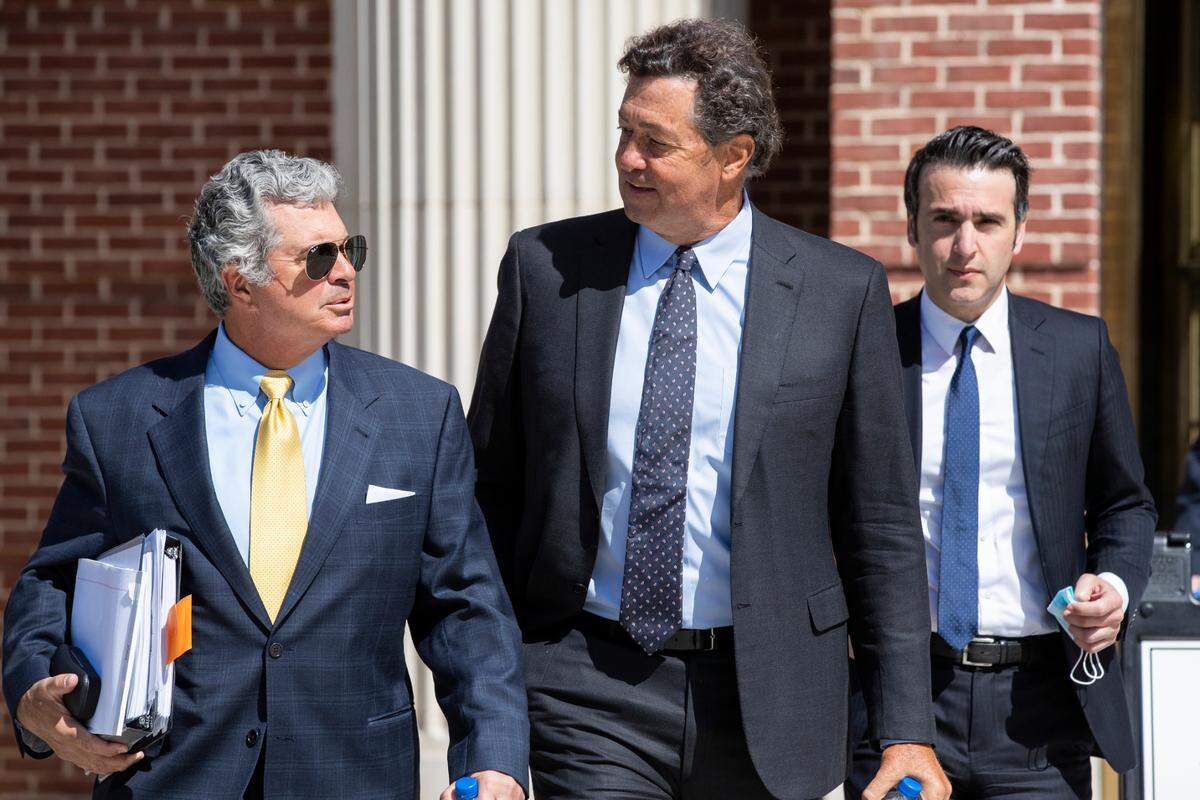
Judge lets ex-Westinghouse official keep lawyer, clearing way for SC’s last SCANA fraud trial
A former senior Westinghouse executive who is the last defendant in the SCANA nuclear plant fraud case can keep his defense lawyer, a federal judge has ruled.
The ruling by U.S. Judge Mary Lewis that former Westinghouse Senior Vice President Jeffrey Benjamin can keep his longtime lawyer, William Sullivan of Washington means the federal trial against Benjamin could begin this fall.
Had Lewis kicked Sullivan off the case, it might have taken a year or two for a new lawyer to get up to snuff in the complicated case.
Benjamin is accused of hiding major problems from 2015 to 2017 at a nuclear plant construction project at the V.C. Summer site in Fairfield County. In his job, Benjamin oversaw Westinghouse’s new plants and major projects.
Federal prosecutors on the case had alleged that Sullivan had a substantial conflict because, at one point, he represented another Westinghouse official, former CEO Daniel Roderick. Like Benjamin, Roderick was a potential defendant in the government’s fraud case against SCANA.
Roderick is no longer a potential defendant, but is cooperating with the government and will likely testify at Benjamin’s trial.
The conflict was so substantial, federal prosecutors said, that earlier this year they brought a motion before Lewis seeking to oust Sullivan from the case.
Sullivan and his firm, Pillsbury Winthrop Shaw Pittman, protested, saying Benjamin and Roderick had waived any conflict and taken care of related issues. Benjamin also said he wanted Sullivan and the Pillsbury firm to represent him.
Lewis held a hearing April 27 and issued her 10-page opinion Monday.
“Sullivan and Pillsbury have represented Benjamin for almost five years. The record shows they have significant experience with matters involving nuclear facility construction,” Lewis wrote, noting Benjamin’s waiver, his right to a lawyer of his own choice and other matters overrode any potential conflict.
Brook Andrews, deputy chief prosecutor over white collar crimes in the U.S. Attorney’s office, said, “We were obligated to raise this matter to the court because we saw a potential ethical problem that needed to be addressed. The court has made its ruling, and we accept that ruling, and we look forward to trial. “
Andrews added that Lewis’s order, “along with the record generated in resolving this issue, will provide added integrity to the case as it moves forward and better ensure that the eventual result survives any challenges made pursuant to this issue.”
Sullivan said, “We were most gratified to read the Court’s well-reasoned, thoughtful and articulate opinion rejecting any purported conflict, affirming Mr. Benjamin’s fundamental right to counsel of choice, and repudiating the Government’s improper effort to deprive Mr. Benjamin of his trusted and experienced lawyer to somehow obtain a strategic advantage at trial.”
The $10 billion project that was supposed to build two new electricity-generating nuclear plants eventually failed after nearly 10 years due to massive cost overruns and construction delays. The former SCANA utility and its junior partner, government utility Santee Cooper, announced they were abandoning the project in July 2017.
SCANA and state-owned utility Santee Cooper had hired Westinghouse to oversee construction.
The sudden jettisoning of the project threw thousands of people out of work and led to the eventual demise of SCANA, whose stock was traded on the New York Stock Exchange and for years had been one of South Carolina’s most successful companies.
SCANA’s collapse is widely viewed as the state’s biggest business failures ever.
Within weeks after the 2017 project collapse, the FBI and the Securities Exchange Commission launched an investigation.
In recent years, former Westinghouse Vice President Carl Churchman, former SCANA CEO Kevin Marsh and former SCANA Executive Vice President Steven Byrne have pleaded guilty to various fraud charges relating to hiding from the public and regulators the massive problems at the nuclear site, problems causing cost overruns and severe delays.
As long as the problems were kept from the public, SCANA stock price stayed up.
Benjamin, who was indicted last August, is the final defendant.
Should he go to trial, Churchman, Marsh and Byrne could all testify against him.