
Why do Alex Murdaugh, others escape the death penalty in SC while Richard Moore doesn’t?
Alex Murdaugh of Hampton County committed two of South Carolina’s worst killings when he murdered his wife and adult son to cover up a life of fraud. State Attorney General Alan Wilson didn’t seek the death penalty.
Serial killer, rapist and kidnapper Todd Kohlhepp of Spartanburg County murdered seven people and buried some of the bodies on his 95-acre property before he was caught. Prosecutor Barry Barnette allowed Kohlhepp to plead guilty in 2017 and get life sentences without parole, largely because relatives of the victims did not want to face the anguish of a death penalty trial and decades of appeals.
Fred Hopkins of Florence murdered two police officers in an ambush and wounded five others. He too worked a deal to get life sentences without parole.
But guess what’s happening with Richard Moore, a penniless cocaine addict who robbed a Spartanburg store without a gun and wound up in a fight with the clerk in which the clerk was shot with his own gun?
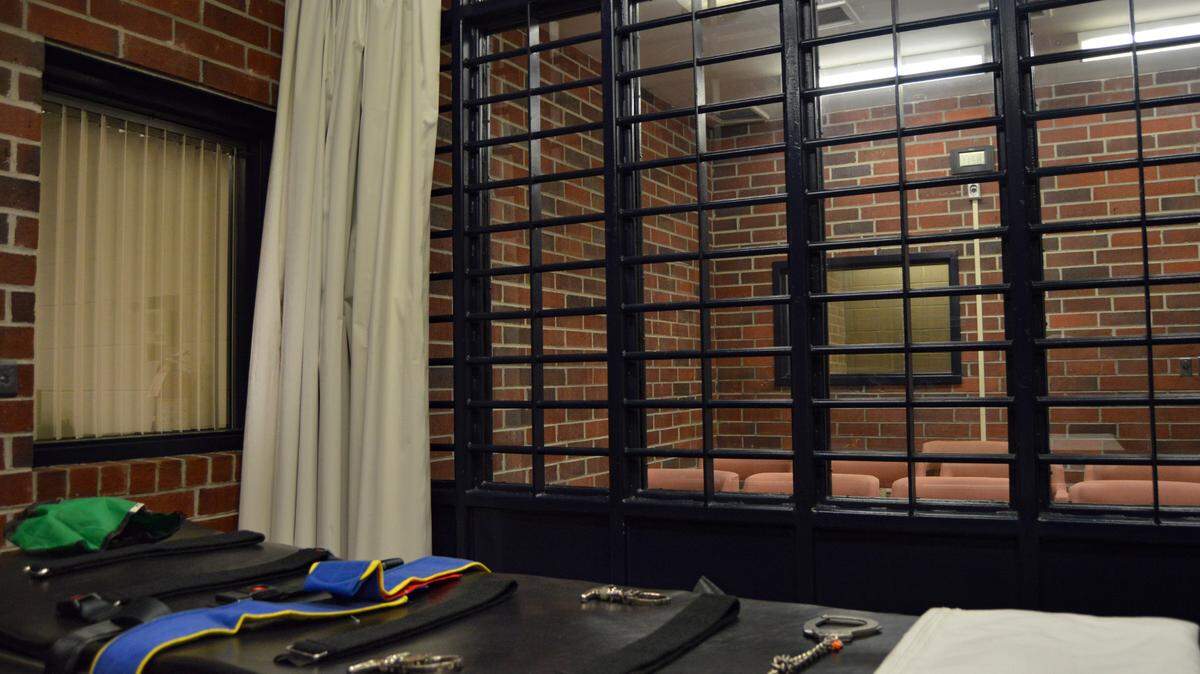
On Friday, Nov. 1, Moore is scheduled to die by lethal injection in the state’s death chamber — even though his unplanned killing was nowhere near as horrendous as Murdaugh’s or Kohlhepp’s or Hopkins’ carefully plotted multiple murders.
Welcome to the world of South Carolina’s death penalty.
It’s a world where the worst killers can escape execution, while the hapless can wind up on death row; a world where luck, social status, race, location, your lawyer, victims’ wishes and other factors all can play a role in deciding who gets executed, and who does not.
“I’ve never seen a rich man on death row,” says Bob McAlister, who has ministered to condemned men on South Carolina’s death row for more than 40 years.
Former U.S. Attorney for South Carolina Bill Nettles says South Carolina’s death penalty is a punishment reserved almost exclusively for the “disenfranchised, the poor and the mentally ill.”
Murdaugh dodges death
The top exhibit about rich people avoiding death row is Murdaugh, a fourth-generation member of a powerful Lowcountry legal dynasty.
A former lawyer, Murdaugh made millions and may have been the richest man in South Carolina to be eligible for the state’s death penalty in years. He killed two people in a pre-meditated execution-style attack,and under the state’s capital punishment law, that made him death penalty eligible.
Attorney General Wilson declined to discuss why he didn’t seek the death penalty for Murdaugh, now serving two consecutive life sentences without parole.
However, a spokesman for Wilson said it would have been too complicated and time-consuming to go for the death penalty in Murdaugh’s case.
“A capital trial would complicate an already complicated jury selection process and would double the time that the case would have taken to try – when we judged that life in the Department of Corrections for someone who had grown up privileged and wealthy would be an appropriate punishment,” spokesman Robert Kittle wrote in an email. Murdaugh’s trial took approximately six weeks.
“Finally, there was a complicated (Murdaugh) family dynamic and generally you want unwavering support from the family to double the ordeal they will have to endure,” Kittle wrote.
One of Murdaugh’s lawyers, Dick Harpootlian, a former prosecutor who sent two men to death row including serial killer Donald “Pee Wee” Gaskins, said Wilson may have realized he didn’t have the kind of steel trap evidence that prosecutors like to have when seeking the ultimate punishment.
“The Murdaugh case was circumstantial — no direct evidence, no eyewitnesses, no DNA — and if you don’t have a lock on guilt or innocence, you certainly aren’t going to seek the death penalty. Juries don’t like giving the death penalty to people they aren’t 100 percent certain committed the crime,” said Harpootlian.
Murdaugh, 56, insists he is innocent and is appealing.
Luck
One of South Carolina’s most notorious killers, Susan Smith, is also serving life sentences for killing her two young sons, Michael, 3, and Alex, 14 months, in 1994. A Union County jury gave Smith a life sentence after hearing an emotional plea from Smith’s lawyer, David Bruck, a nationally known anti-death penalty attorney, to spare her life.
The jury might have spared Smith because, like the jurors, she was from Union County, said veteran Columbia defense attorney Jack Swerling.
“She was a hometown girl,” said Swerling, who has defended a dozen death penalty cases. “Sometimes, it’s where you commit the murder.”
Ironically, in 1994, when Smith was sentenced to life, South Carolina law allowed killers sentenced to life to seek parole after serving 30 years. She will have her first parole hearing Nov. 20. Under current law, a killer sentenced to life stays in prison until he or she dies.
Luck played a role in a brutal 2011 case.
After the kidnapping, rape and murder of a young Kershaw County woman, Hope Melton, former 5th Circuit Solicitor Dan Johnson initially said he would seek the death penalty for Nikolas Miller, who beat the victim to death with a baseball bat.
Although evidence against Miller was overwhelming, “gross misconduct” by former Chesterfield County Sheriff Sam Parker compromised the prosecution’s case, and Johnson had to settle for a plea bargain. Miller is now serving a life sentence without parole instead of being on death row.
In another case, Hopkins — who murdered the two police officers in Florence County — worked a deal for life sentences because of the dynamics of his case.
“Fred accepted responsibility, and because of the futility of putting him on death row led all the parties to agree that it was better to give him life sentences,” said one of Hopkins’ lawyers, Boyd Young.
Young said Hopkins is now in a hospital bed in prison hospice waiting to die. “He is 80 years old and was never going to survive appeals.” A prison spokeswoman confirmed Hopkins is in the prison hospital.
‘Deal with the devil’
Sometimes killers are spared a death penalty trial because they have something to trade.
Freddie Grant, a Richland County man, came to be known as a “boogeyman” after he abducted and murdered 15-year-old Gabbiee Swainson in 2012, then buried her body in a wooded area. Grant cut law enforcement a deal to lead them to where he had hidden Swainson’s body.
Besides leading authorities to the body, Grant also pleaded guilty to kidnapping and murder in exchange for charges against his daughter being dropped. His daughter, who investigators believed wound up with Gabiee’s cell phone, had been charged with being an accomplice to a felony. Charges against his daughter, who denied being an accomplice, were dropped. He received a 30 year sentencefor kidnapping and murder. Now 64, Grant is scheduled to be released in 2043.
“It was a deal with the devil,” Richland County Sheriff Leon Lott said at the time.
Earlier this year, Grant was charged with murder a second time when the body of his girlfriend, Adrianna Laster, was found buried in a sand pit.
In July, one of Richland County’s worst killers, Quincy Allen, was resentenced to life in prison without chance of parole after a federal appeals court overturned his death sentence and sent the case back to 5th Circuit Solicitor Byron Gipson. Allen had murdered two people in Richland County and two more in North Carolina.
Lott objected to the life sentences, writing in a letter to Gipson that Allen “is a cold-blooded killer of four victims ... any other deaths/injuries/crimes committed by him will be the result of your decision.”
Gipson said he had listened to the wishes of the victims’ relatives, who didn’t want go through a trial and more appeals. Allen had been on death row since 2002. Appeals can last decades, and if a case is reversed, there is a new trial or sentencing hearing that can start the whole appeals process anew.
Victim’s relatives also played a role in Gipson’s decision not to seek the death penalty for the murder of Samantha Josephson, a University of South Carolina student who got in a killer’s car in 2019 in Five Points thinking it was an Uber she had called. The killer kidnapped her and killed her, stabbing her more than 100 times.
Evidence was overwhelming against the killer, Nathaniel Rowland, and Gipson easily won a conviction for a life sentence without parole.
Gipson said that had the Josephson family wanted him to seek the death penalty, that would have played a major role in any other decision he would have made. At that point, in 2021, no Richland County jury had given a death penalty in 17 years, he said.
“Many factors go into the equation. It’s not going to be just one factor to seek the death penalty,” Gipson said.
Death sentences slowing?
In recent years, many of South Carolina’s 16 elected solicitors — chief elected prosecutors — have avoided seeking the death penalty in high profile murder cases for a variety of reasons.
Thus, in 2015, when Jarvis Hall used a stolen Glock pistol to kill Forest Acres police officer Greg Alia, then-Solicitor Johnson declined to seek the death penalty. Killing a police officer is a death penalty eligible crime. Hall, who pled guilty in 2017, is now serving life without parole.
Johnson also declined to seek the death penalty in the case of Brett Parker, a Richland County bookie who was convicted after a trial of carrying out an elaborate plot to kill his wife and a gambling associate to collect his wife’s life insurance. Parker is now serving two life sentences without parole for murder.
According to the Department of Corrections, only three new people have come to South Carolina’s death row since 2009.
That slowdown may have been caused in part by South Carolina’s inability to get drugs to carry out the lethal injection option for an execution. There are 31 people currently on death row.
Another possible reason for the slowing might be that any prosecutor who seeks the death penalty in South Carolina will likely go up against defense lawyers with considerable resources, both at trial and during appeal.
One resource: Justice 360, a Columbia-based nonprofit with ties to state and national anti-capital punishment legal experts who will wage an all-out legal fight at every step of a case’s legal journey to save a defendant’s life. Death penalty cases are extraordinarily complex and lawyers versed in that area of the law can strengthen any defendant’s case.
Death penalty trials, which are usually long, can require extra security and can be expensive. That expense is why some death penalty trials aren’t held, Swerling said. “I’ve heard all kinds of stuff.”
Rick Hubbard, president of the S.C. Solicitors Association, said that solicitors usually talk with victims’ families. “There has been general frustration that solicitors face with the very slow process (of appeals proceedings). We hear that from victims’ families,” said Hubbard, solicitor in the judicial district that includes Lexington, Edgefield, McCormick and Saluda counties.
Noting that death penalty appeals can take 20 years or more, Hubbard said, “The longer that process is, the less people believe in that system. It’s not that they don’t believe in capital punishment. They just don’t believe our system is ever going to deliver the justice that we’re holding out.”
Monsters among us
Sometimes the worst killers do get the death penalty.
In 2019, a Lexington County jury recommended the death penalty for Tim Jones, a former engineer for Intel and fanatical Christian who had tortured and murdered his five children, ages 1-8, at the family’s Red Bank mobile home in August 2014.
State Judge Eugene “Bubba” Griffith formally sentenced Jones to death.
Columbia white supremacist Dylann Roof got the death penalty in 2017 for killing nine African Americans execution-style at a Charleston church. Roof was tried in federal court and is now on federal death row.
In 2006, state Judge Clifton Newman sentenced Mikal Mahdi to death. Mahdi had pleaded guilty, and Newman heard evidence of his crime before sentencing him.
Mahdi had killed an off-duty law enforcement officer at the officer’s house, Capt. James Myers, a 31-year veteran fireman and officer with the Orangeburg County public safety department. After killing Myers, Mahdi poured diesel fuel on his body and set it on fire. Mahdi, who showed no remorse, had also killed a store clerk in North Carolina before coming to South Carolina.
In a concurring opinion upholding Mahdi’s death sentence in 2009, then Chief Justice Jean Toal wrote that the case was “particularly heinous” and, “In my time on this Court, I have seen few cases where the extraordinary penalty of death was so deserved.”
Solicitor David Pascoe, who prosecuted Mahdi, said he has no second thoughts about Mahdi’s death sentence, which could be carried out in the next six months.
““I don’t lose any sleep over that guy,” said Pascoe, adding that even in a high-security prison, Mahdi has remained a flight risk and a threat to guards. “He is evil, just like Hannibal Lecter,” Pascoe said.
Child killer Jones, white supremacist Roof and Mahdi are on one side of the death penalty equation.
Death judge asks for mercy
Richard Moore, who bumbled his way into a robbery gone bad and killed a man, is on the other side. He stands to be executed Friday in the state Corrections Department’s death chamber.
Former Supreme Court Associate Justice Kaye Hearn was moved to write about Moore’s death sentence — but from the opposite point of view from Toal in the Mahdi case.
The death sentence in Moore’s case is “so different from the usual brutal premeditated slayings for which South Carolina juries give out the death penalty that condemning Moore to death is disproportional, or so far out of line, as not to be lawful,” Hearn wrote.
“The death penalty should be reserved for those who commit the most heinous crimes in our society, and I do not believe Moore’s crimes rise to that level,” Hearn wrote.
South Carolina’s death penalty system is “broken,” Hearn wrote.
Hearn also noted at the time that in her12-plus years on the court at that time, she had voted to affirm 11 death sentences on direct appeal and had never dissented.
The court ultimately voted 4-1 to uphold Moore’s death sentence.
Former S.C. Judge Gary Clary, who presided over Moore’s trial, is one of 50,000 people who recently signed a petition asking Gov. Henry McMaster for clemency.
“Over the years, I have studied the case of each person who resides on death row in South Carolina. Richard Bernard Moore’s case is unique, and after years of thought and reflection, I humbly ask that you grant executive clemency to Mr. Moore as an act of grace and mercy,” Clary wrote in an Oct. 29 letter.
Clary is apparently the only South Carolina death penalty trial judge in the modern era to seek clemency for a man he originally sentenced to death.
Nettles said, “America has a criminal justice system that is the envy of the world, but every system has its limitations. The limitation of our system is that it can’t fairly decide who should live and who should die.”
Lott said, “I don’t know if our system will ever be fair. It’s not set up for fairness.”
Reporter Ted Clifford contributed
This story was originally published October 31, 2024 at 1:29 PM.