
Drug used in SC’s executions might cause unnecessary pain, suffering, Justice Dept. warns
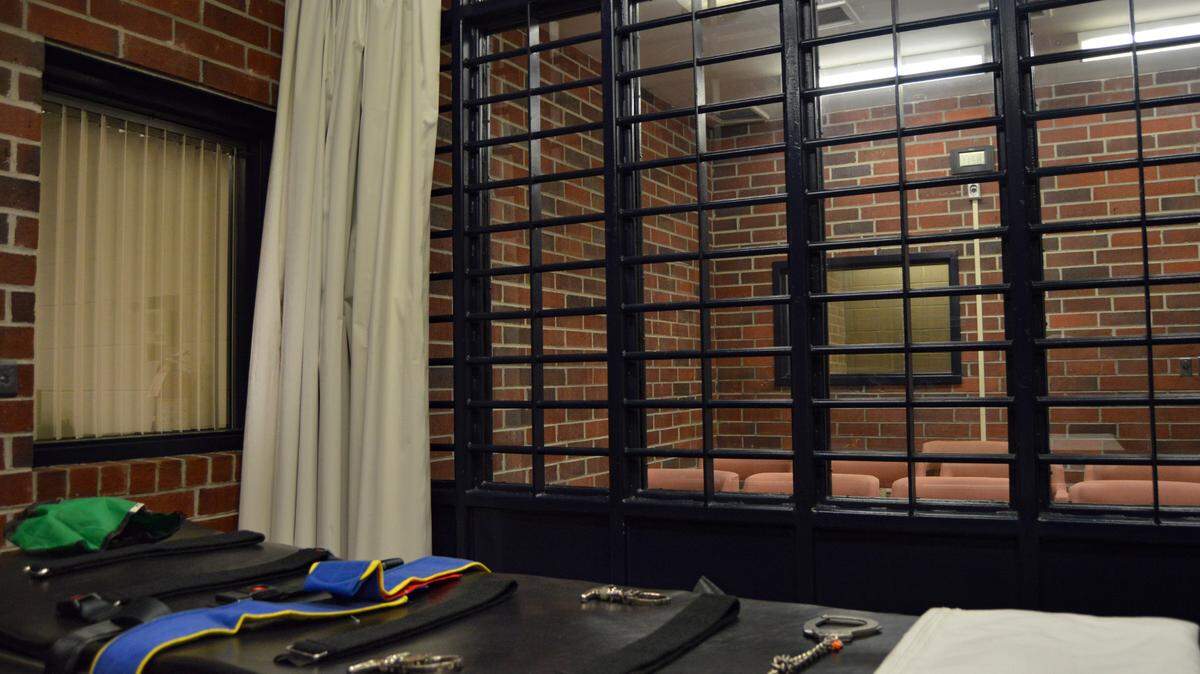
Richard Moore’s took deep, snoring breaths as he lay strapped to the gurney inside of South Carolina’s death chamber on Nov. 1. Through IV lines connected to his arms flowed the drug pentobarbital, a powerful sedative that South Carolina uses to execute inmates.
Moore was the second of three inmates executed since South Carolina resumed the killings last September. Media witnesses have described the three executions as relatively peaceful. After a period of irregular breathing lasting no more than a few minutes, the condemned men have closed their eyes and appeared to simply stop breathing.
But medical experts have warned that these men may have died in agony. The lethal chemical, as caustic as household cleaners, likely burns as it works its way through the body and breaks down thin membranes in the lungs, filling them with fluid, the experts say. Completely immobilized, the prisoners’ last conscious sensation would be the feeling of drowning.
South Carolina is one of 15 states along with the federal government that has switched to only using pentobarbital sodium in executions. Sometimes called “single drug” protocols, this method of execution was devised in response to the inability of state and federal agencies to obtain the chemicals needed for the previous three-drug execution cocktail.
In South Carolina, a nearly impenetrable “shield law” makes it illegal to disclose almost any information about the state’s death penalty process, including the lethal injection protocol. This has a chilling effect on the public’s ability to evaluate the merits of different methods of lethal injection, according to the ACLU, which has filed a lawsuit in federal court challenging the shield law.
“South Carolina has found public scrutiny inconvenient,” the ACLU of South Carolina wrote in its lawsuit. “Rather than entering the marketplace of ideas and persuading the public (or the drug suppliers) that the state’s views were correct, the state opted to shut down the marketplace by enacting a sweeping Secrecy Statute.”
As a result of this law, only a few details about South Carolina’s lethal injection protocol have emerged. But information gleaned from court documents as well as available federal protocols provide insight into the secret execution practice.
S.C. Department of Corrections officials have said in statements and court filings that their protocol mirrors that used at the federal level — a massive, five gram dose of pentobarbital that is divided between two syringes and delivered intravenously.
But in January, the U.S. Justice Department’s Office of Legal Policy under former Attorney General Merrick Garland released a memo stating that there was uncertainty over whether pentobarbital caused “unnecessary pain and suffering.” As a result, the federal government should stop using pentobarbital in executions.
While newly-appointed Attorney General Pam Bondi has announced that the federal government will resume executions, she directed the Justice Department and the Bureau of Prisons to “evaluate” whether using pentobarbital violates the Eighth Amendment’s ban on cruel and unusual punishments.
“If it doesn’t outwardly look cruel, then people are concluding that it is not inwardly cruel either. And that, of course, is false,” said Dr. Joel Zivot, a professor in the Department of Anesthesiology at the Emory University School of Medicine.
Central to the Justice Department’s concern under Garland was the risk of a “flash pulmonary edema,” where lungs rapidly fill with fluid, causing the overwhelming feeling of drowning along with the sensation of burning from the chemical while the individual is still conscious.
A paper, co-authored by Zivot and cited by the Justice Department in its report, found fluid in the lungs of ten of 15 people executed with pentobarbital. In all of these cases, the fluid in the lungs was churned into a bloody froth, the paper noted, indicating that the inmates were still breathing as their lungs filled with fluid.

The Supreme Court has never found a method of execution to violate the Eighth Amendment of the Constitution, which prohibits “cruel and unusual punishment.”
“In the face of such uncertainty, the Department should err on the side of humane treatment and the avoidance of unnecessary pain and suffering, and therefore halt the use of pentobarbital unless and until that uncertainty is resolved,” Zivot said.
The last federal prisoner to be executed was Dustin John Higgs on Jan. 16, 2021. That was during the last days of President Donald Trump’s first term. As one of his last acts in office, President Joe Biden pardoned all but three federal death row inmates. The three include Dylann Roof of Columbia, who massacred nine African American worshipers at Mother Emanuel AME Church in Charleston in 2015.
Three of the men on South Carolina’s death row are set for execution: Brad Sigmon, Mikal Mahdi and Stephen Bixby. Their executions are set to take place over the next three months.
So far, the state Department of Corrections has said that it has no intention of modifying its protocol.
What is the federal execution protocol?
After a nearly two-decade pause in federal executions, then-Attorney General William Barr directed the federal Bureau of Prisons in July 2019 to adopt an addendum to its execution protocol and resume executions. The addendum called for the death sentence to be carried out with a single drug, pentobarbital.
The drug was to be divided between the two syringes that each contain 2.5 grams of pentobarbital sodium mixed with 50 milliliters of an unspecified diluting agent. A third syringe was to contain 60 milliliters of saline.
Three sets of these syringes are prepared, with one for the lethal injection and two as a “backup,” according to the the document.
The federal execution protocol calls for the two syringes of pentobarbital to be administered followed by the “saline flush” at the direction of “supervisory personnel,” according to the document.
The pentobarbital solution is roughly as alkaline as ammonia. Barbituates like pentobarbital have long been known to cause “excruciating pain” and damage to blood vessels if injected too quickly, wrote Dr. Gale Van Normal, a professor of anesthesiology at the University of Washington.
The state “could probably kill you with less” pentobarbital, said Zivot. But, “because they really want to make sure that it kills you... they use so much of it, that’s why the lungs are getting shredded.”
Defending the pentobarbital process, lawyers for the state of South Carolina cited a declaration from Dr. Joseph Antognini, an anesthesiology professor and paid expert witness, that dismissed the risk of edema.
“Intravenous administration of 5 grams of pentobarbital would cause profound brain depression and unconsciousness well before any lung congestion and pulmonary edema forms,” Antognini wrote. Any froth was likely the result of gases being released from the lungs after death or agitation as the body was moved.
Defending the pentobarbital injection, Atognini wrote, “before becoming unconscious, the individual would not feel the sensations of pain, suffocation or air hunger.”
But that confidence is not shared by all.
It is uncertain whether individuals who have been injected with that amount of pentobarbital are truly unconscious, and therefore incapable of feeling pain, or simply unresponsive, according to the Justice Department.
“The question is unanswered by scientific study in the context of capital punishment, and it remains debated even within clinical settings involving anesthesia,” the Justice Department wrote in its memo.
The last thing the inmate might feel is their chest, lungs and brain on fire as they struggled to breath, Zivot said. “How long would that last? It’s only a matter of a few moments or minutes. But how long should something be the worst pain you can imagine before you think it’s an acceptably short period of time?”
“Starting second injection”
As Sigmon, the next person set to be executed in South Carolina, attempts to stop his execution, his attorneys have focused on whether the state Department of Corrections has administered two doses of pentobarbital in previous executions.
Affidavits submitted by Corrections Department Director Bryan Stirling describe the state as having tested “two vials” of pentobarbital and describes the method of execution as a “single dose” of the drug.
An autopsy report completed after Moore’s execution indicates that he received two sets of the lethal injection dose, for a total of 10 grams of pentobarbital, twice what the federal protocol calls for. At 6:01 p.m., Moore was injected with two doses of 2.5 grams each of pentobarbital. Eleven minutes later at 6:12 p.m., he received a second round of two doses of 2.5 grams each of pentobarbital. Moore was declared dead ten minutes after the second round of pentobarbital was injected. In total, he received 10 grams of pentobarbital, twice what the federal protocol calls for, according to court filings.
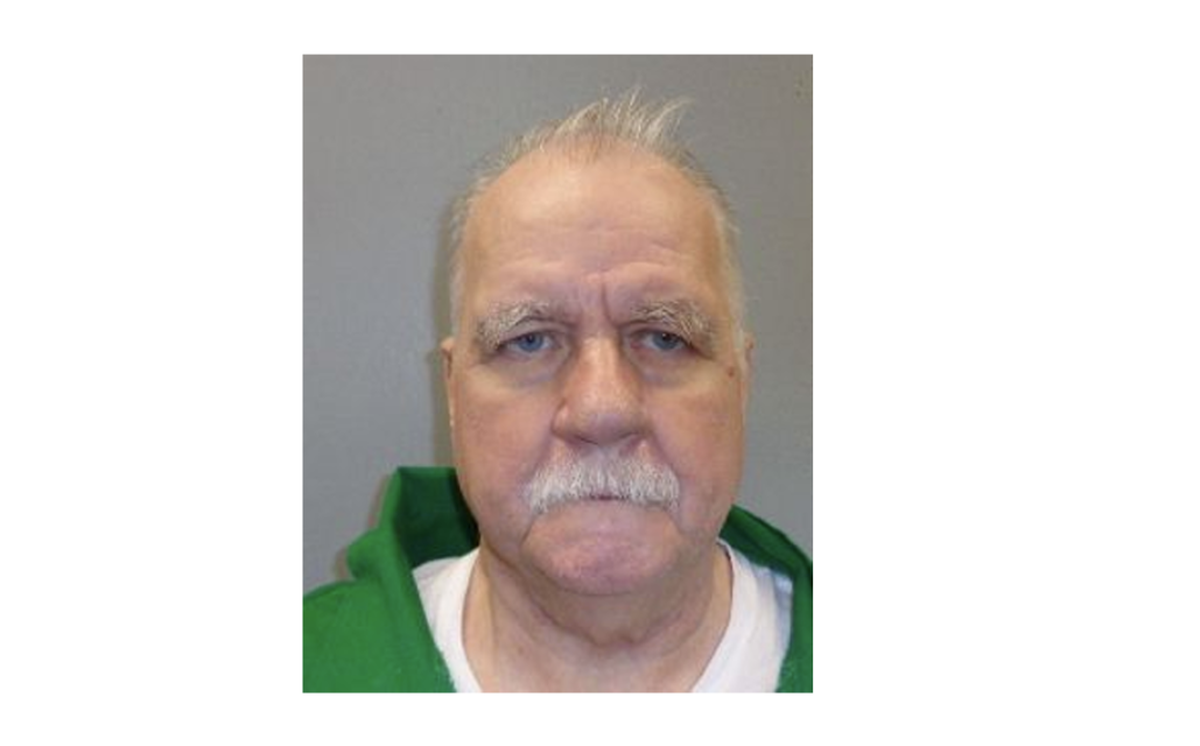
Attorneys for Sigmon have said that Moore’s second dose raises concerns that the drugs used in the execution process were not properly administered or were not effective, leading to a prolonged and painful death.
Sigmon’s attorneys have argued that the lack of information about how the drugs are procured, how they are stored and for how long means that they cannot evaluate the risk of an unnecessarily painful death or whether weakened drugs will require multiple doses.
“Without the expiration or beyond-use dates, we can’t know if the drugs will have degraded by Mr. Sigmon’s scheduled execution on March 7, which means they won’t work as they should,” said Gerald “Bo” King, a federal public defender and one of Sigmon’s attorneys. “Spoiled drugs would cause an excruciating death.”
But the South Carolina Supreme Court has said that the Department of Corrections has provided all of the information that it is legally required to. The department has also stated that all executions have been consistent with its protocol and the requirements of South Carolina’s death penalty laws, which state “both the circulatory and respiratory systems must completely stop before the inmate is declared dead in a lethal injection execution.”
In reviewing Moore’s autopsy, Antognini dismissed concerns. While witness reports suggest that Moore would have been “profoundly unconscious” just three minutes after the injection of the first dose, Antognini wrote, “It would not be unexpected that some electrical activity of the heart persisted after 10 minutes, so a second 5-gram injection was probably used for that reason.”
Sigmon’s attorneys have asked for a stay of execution until they are able to obtain the autopsy report for Marion Bowman Jr., who was executed on Jan. 31. Sigmon is scheduled to be executed on March 7 for the 2001 murders of his ex-girlfriend’s parents, who were killed with a baseball bat.
Boyd Young, an attorney and friend of Bowman who attended his execution, stated he heard someone say “starting second injection” from behind the bulletproof glass that separated the witnesses from the death chamber.
Prior to the execution of Freddie Owens, the first person killed since the death penalty resumed last year, South Carolina’s Supreme Court ruled that defendants are not entitled to more information about the lethal injection process.
The published federal protocol for execution by lethal injection does not specify when a second dose can be administered. But Bowman’s attorneys possessed the state Department of Corrections’ protocol, according to a court filing.
When asked whether two doses were administered to Bowman, a spokesperson for the Corrections Department said “we followed our protocol and that is not disclosed.”
This story was originally published February 20, 2025 at 5:00 AM.