Police dog deaths are on the rise in South Carolina. How do departments use K9s?
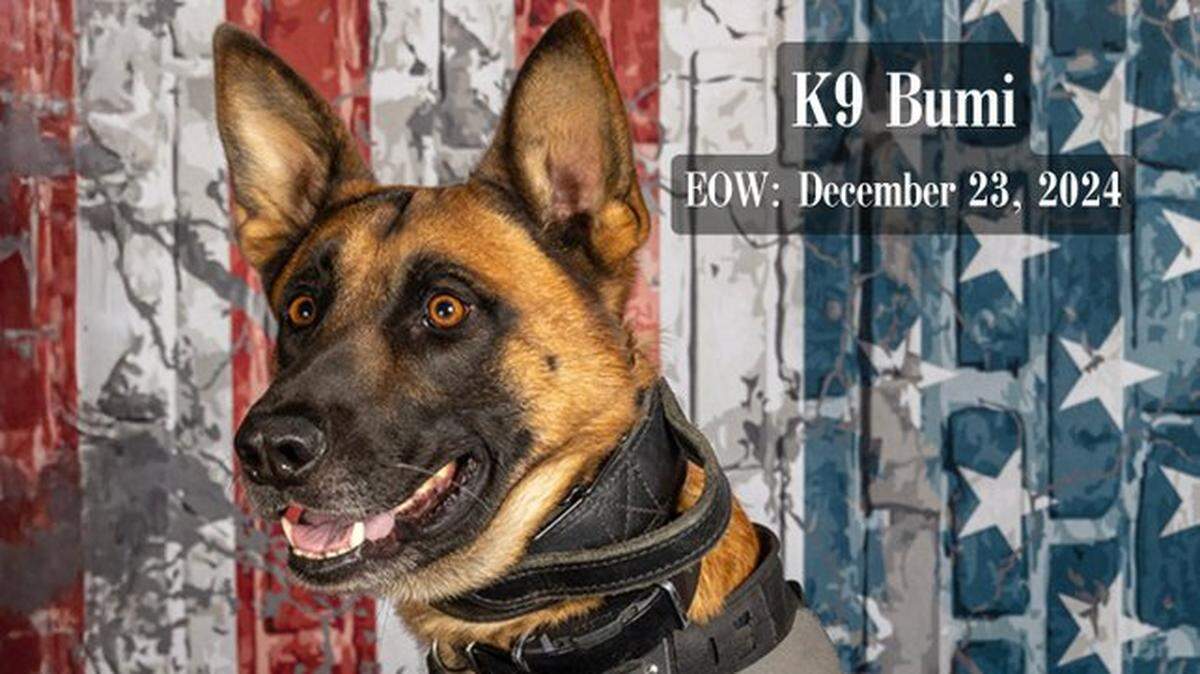
Two days before Christmas last year, Alan Ware prepared to start his patrol shift.
The Richland County Sheriff’s Department K9 handler geared up both himself and his partner, K9 Bumi, a 4-year-old Belgian Malinois. As was custom, Ware’s wife told Bumi to take care of her husband before the team walked out of their home.
Unbeknownst to any of them, however, Dec. 23, 2024, would be the last day Bumi stood by Ware’s side.
Bumi was one of three Richland County K9s killed in the line of duty last year — the most in the department’s history.
Police say K9s are valuable tools that save lives, apprehend suspects and detect narcotics and dangerous explosives. They also, one agency says, help to deescalate situations.
But following a string of unfortunate events in recent years, some question the handling and deployment of K9s, arguing the use of these animals have resulted in problems, including unreliable drug detection, the maiming of an innocent homeowner, severe injury to a surrendering suspect and even injuries and deaths of the K9 themselves.
Record number of K9 deaths in 2024
Last year, South Carolina had the largest number of K9 deaths — five — in history, according to the Officer Down Memorial Page. All but one occurred in the Midlands; the other was in the Pee Dee.
Bumi’s death stemmed from an incident that began near the 7400 block of Parklane Road a little before 2:30 a.m. on Dec. 23, when a deputy spotted a car that had been reported stolen in Columbia, according to Richland County Sheriff Leon Lott. A chase ensued and ended in the Greenview community after a deputy used a stop stick to deflate the stolen vehicle’s tires, Lott said.
Ware and Bumi were among the deputies on the scene following the pursuit of the stolen car. Bumi saw the suspect flee from the car and was deployed without a leash in accord with the department’s policy, according to Sgt. Josh Newsom, who oversees the Richland County Sheriff’s Department’s K9 unit.
The dog ran out of sight before deputies heard nearby gunshots.
Ware eventually found that his partner was shot at least three times near the 100 block of Alida Street. Bumi was shot in the chest and died from his injuries.
A 13-year-old pleaded guilty in Bumi’s shooting death. Days later, Sheriff Lott charged the juvenile’s mother, Shameka Williams, 34, with accessory after the fact of a felony for “acting as a getaway driver” for her son following the shooting.
Other S.C. K9s killed in the line of duty include:
- K9 Coba, a South Carolina Law Enforcement Division service dog, who was fatally shot on June 11, 2024, in Newberry County by a man wanted for burglary, police said. The suspect, James Robert Peterson, 37, was charged with cruelty to a police dog, breach of peace, possession of a weapon by a person convicted of certain crimes, resisting arrest with a deadly weapon and four counts of pointing and presenting a firearm at a person. He pled guilty and was sentenced to 33 years in prison in March.
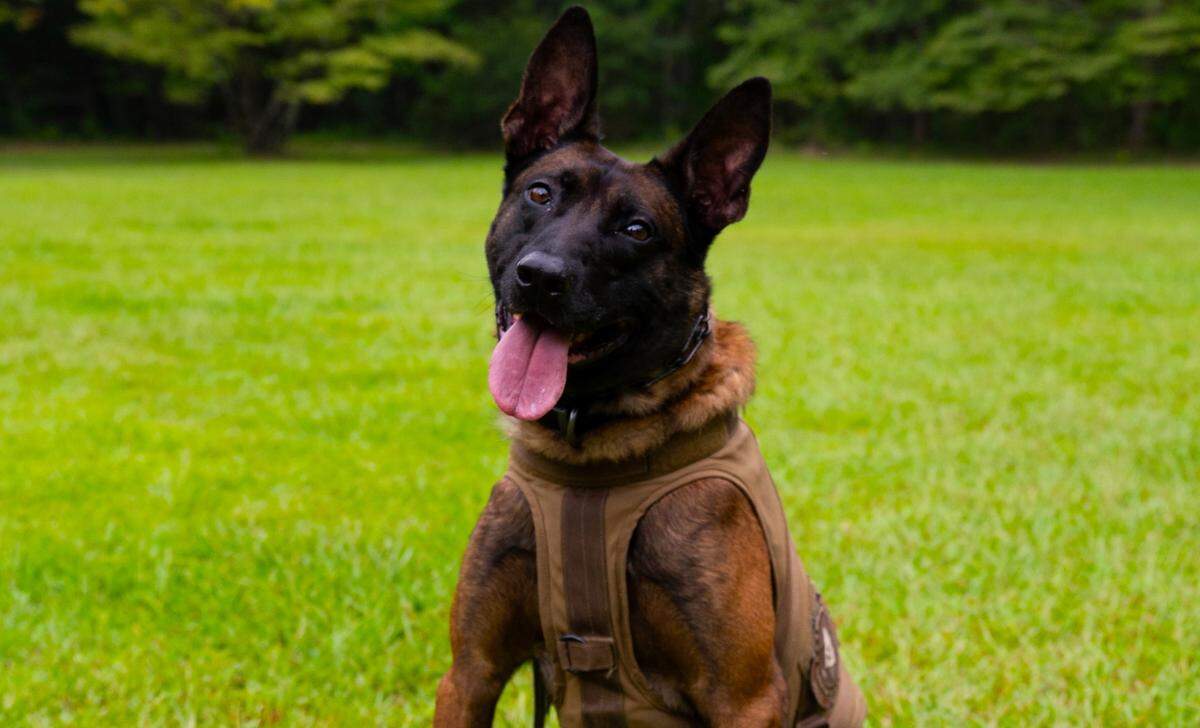
- K9 Wick with the Richland County Sheriff’s Department was struck by a car while pursuing the suspect of a stolen vehicle across I-77 on June 20, 2024. Although Wick was initially leashed while pursuing the suspect, the leash ultimately broke away from his handler, K9 Specialist Zaid Abdullah. The suspect, Thomas Taylor, 44, was charged with first degree burglary, grand larceny and failure to stop for blue lights.
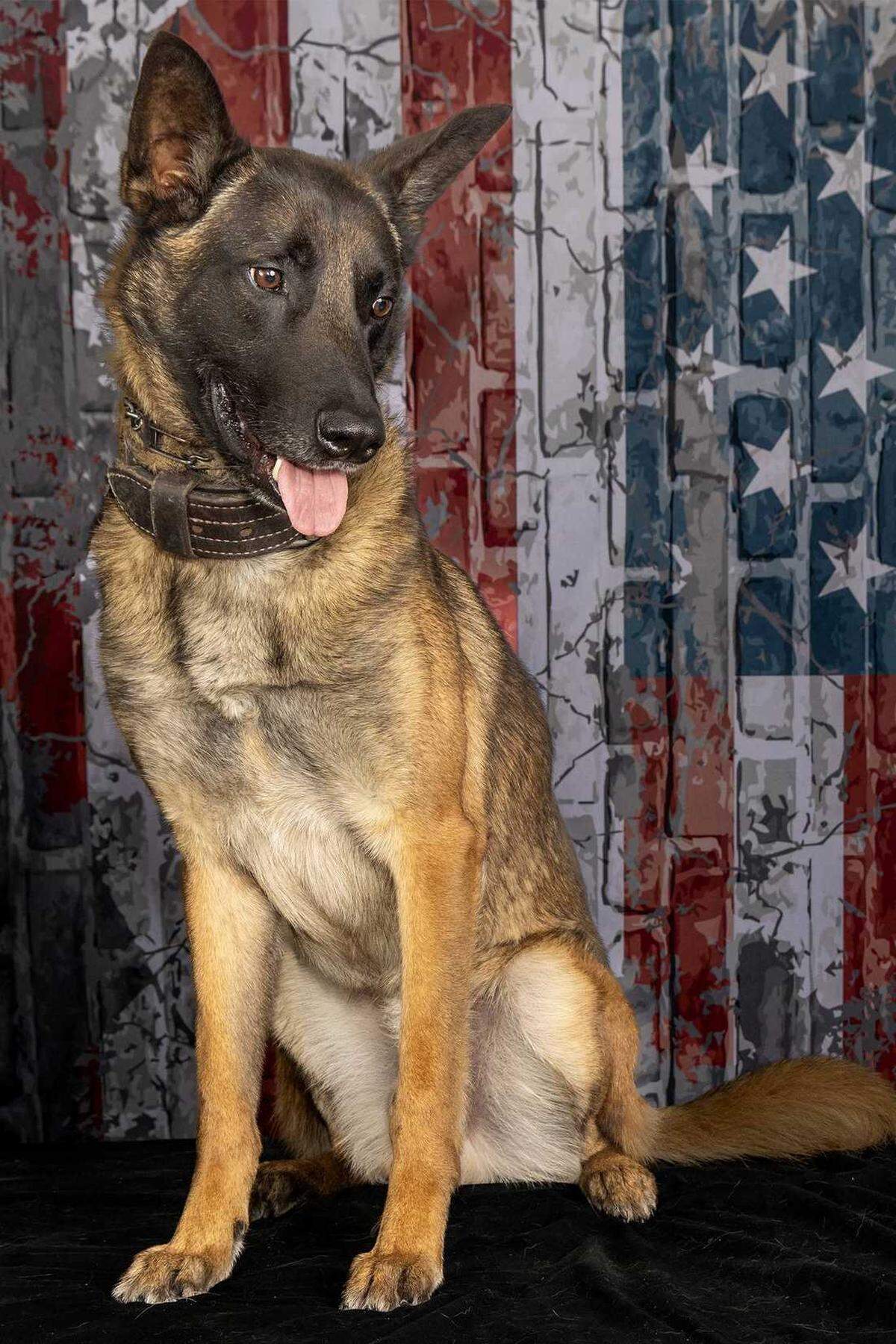
- On Sept. 20, 2024, K9 Mikka, of the Lee County Sheriff’s Office, was burned to death inside a patrol vehicle after a fugitive fired nearly 60 rounds into the cruiser the dog was housed in, causing the vehicle to set on fire. Mikka’s handler, because of the barrage of gunfire, was unable to free her from the vehicle. The suspect, 27-year-old Alston Molidin, killed himself in the standoff.
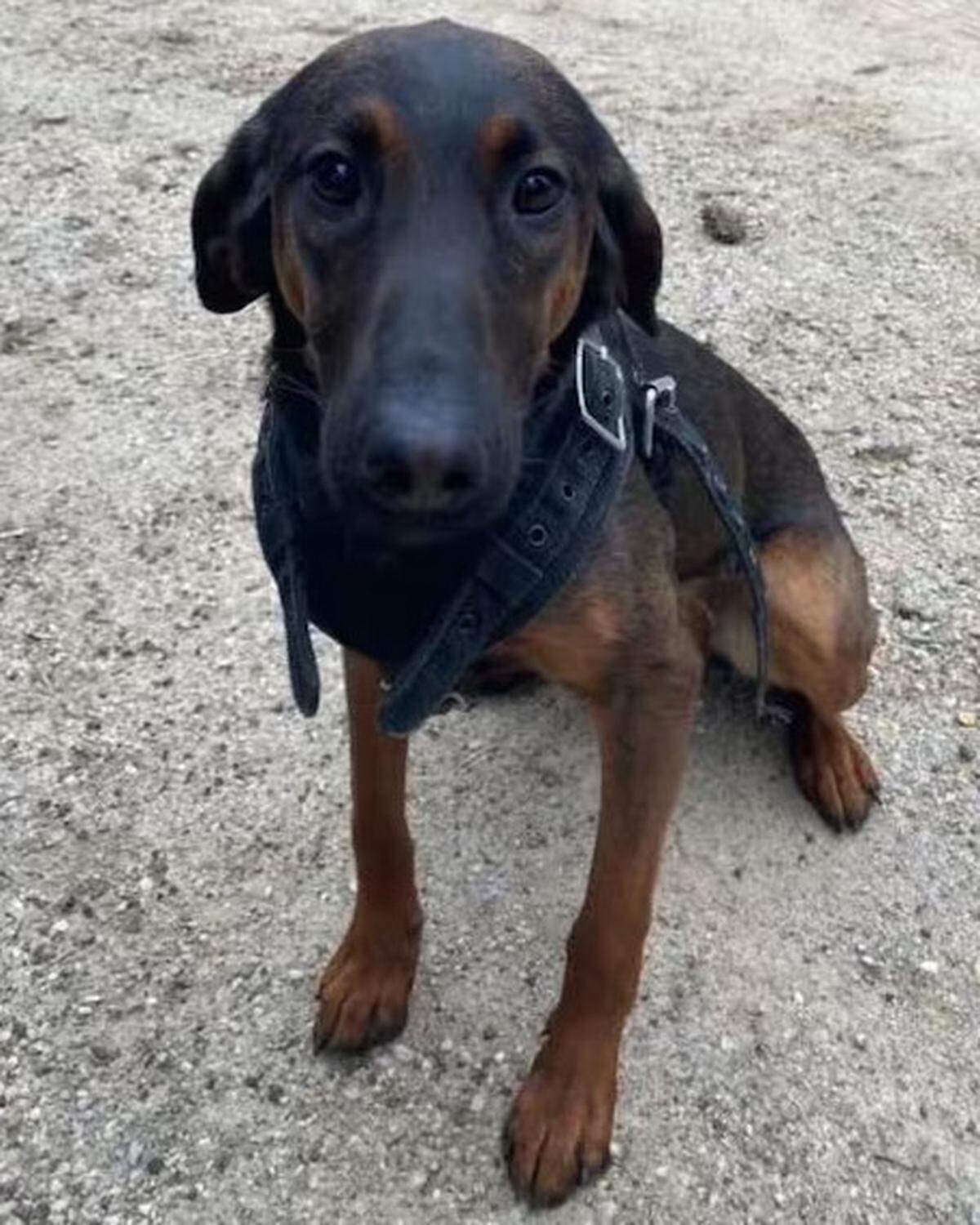
- On Oct. 10, 2024, the Richland County Sheriff’s Department lost its second K9 — Kodak — when the dog became entangled in a razor wire fence while tracking a suspect who fled from a stolen vehicle. The dog sustained injuries to his abdomen and leg and later died after receiving veterinary care. The suspect the dog was pursuing was never apprehended.
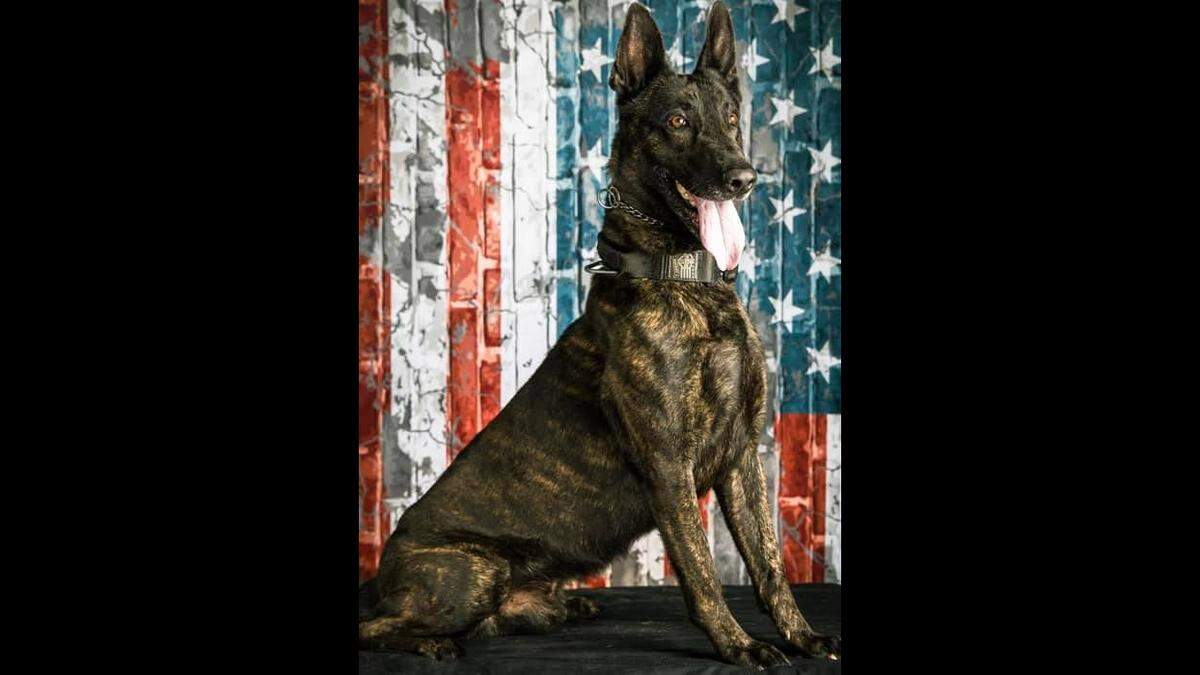
The Richland County Sheriff’s Department suffered the greatest loss of K9s in 2024. It’s something Newsom regards as an anomaly.
“I’ve been on the K9 team of Richland since we lost K9 Fargo (in 2011), and to be honest with you, I’m surprised we have not lost one in that time period in between,” Newsom told The State. “Considering the number of people we end up interacting with or having to take into custody, who’ve recently committed felonies ... and are armed with guns, I think we’ve been extremely lucky that we’ve had such a long gap in dogs being assaulted.
“But still, I would say that it’s a statistical blip for us to have an average of zero or one (K9 deaths) across the state for most years and then to jump that high all of a sudden.”
To deter the loss of future K9s, advocates are pushing legislators to stiffen penalties against anyone who harms or injures police dogs.
Under a proposed bill, dubbed “Fargo’s, Hyco’s, Rico’s, Coba’s, Wick’s, and Mikka’s Law,” any person who taunts, torments, teases, beats, strikes or injects a poisonous substance into a police dog or horse could be subject to a fine between $2,000 and $5,000, and/or imprisonment from 30 days up to five years.
In the event a person tortures, mutilates, injures or kills a police dog, that individual could be charged with a felony and punished with a fine between $5,000 and $20,000, and imprisoned between two and 10 years. In addition, they’d be responsible for paying the law enforcement agency restitution for the loss or injury of the animal.
The cost of a Richland County K9 ranges from $8,500 and $30,000, according to Newsom.
How Midlands police use K9s
K9 policies for the Columbia Police Department, Florence County Sheriff’s Office, Lexington County Sheriff’s Department and the Richland County Sheriff’s Department show agencies generally use police dogs in the same way.
Across agencies, police dogs are typically deployed to search buildings for suspects in hiding, area searches or tracking for suspects, to locate missing or lost persons and to detect hidden narcotics or explosives.
In rare situations, K9s are also used for crowd control to protect life or property during a riot or other major unauthorized gatherings that cannot otherwise be controlled. In such situations, some agencies, such as the Florence County Sheriff’s Office, require authorization from the sheriff or their designee before a K9 is used. In addition, K9 handlers are required to keep their dogs on a short leash.
In no situation, policies say, should a police dog be deployed in response to a minor offense such as a traffic offense. Nor should they be used on children, pregnant women or the elderly, regardless of the severity of the offense.
K9 policies relating to the dog’s and handler’s training show that handlers and K9s at the Richland County Sheriff’s Department are required to undergo extensive training — 14 weeks — before deployment and must re-certify every year.
Handlers, who all take their dogs home after work, must engage in some form of training every day, according to Newsom.
When tracking suspects, K9s should be kept on a leash of sufficient length, according to policies. The length of the leash varies depending on the nature of the crime, according to Newsom of the Richland County Sheriff’s Department.
“We’re not going to give a patrol dog a 50-foot tracking line if we are looking for an endangered person,” Newsom said. “If we are tracking someone, like who recently shot at one of my K9 handlers in a car chase at night in a rural area, we’re going to give that dog that whole 50 feet of the line, but we’re never going to allow the dog to be off (leash).”
In instances where the K9 sees a suspect fleeing — known as a “line of sight apprehension” — the dog is released without a leash, Newsom said. That’s what happened when Bumi was killed.
Why one study says police should not use K9s
Citing examples of K9 mishandling nationally, the National Police Accountability Project conducted a case study last year on why police should cease using service dogs, arguing, in part, that the use of police K9s presents a danger to the dogs themselves.
The project says its mission is to end law enforcement overreach and abuse of power, and provides support to a network of civil rights attorneys who sue law enforcement agencies for misconduct, according to its website.
The study contends that in some cases, once an attack begins, dogs refuse to release suspects and don’t listen to commands to stop biting, prompting officers to pull the dog off of the victim, hit the dog, or use a shock collar to end the attack.
“Dogs that carry out violent attacks can become increasingly aggressive to the point where not even their own handlers can maintain control,” the study read, citing a case where an officer shot and killed his K9 after the dog attacked him.
“Many dogs die on the job due to the stress, while others, even in retirement, are too aggressive, destructive, or dangerous to be rehabilitated or adopted by their handlers, leading agencies to euthanize them,” according to the study.
The study further argues that law enforcement agencies should stop using dogs for drug enforcement, arrest and apprehension and bomb detection as K9s “bite thousands of people in the United States every year, causing more visits to the hospital than any other type of police force,” citing The Marshall Project.
The Marshall Project is a nonpartisan, nonprofit news organization that reports on the U.S. criminal justice system, according to its website.
“Victims of police dog attacks have sustained serious and even fatal injuries, including punctured tracheas, torn arteries, detached testicles and eye sockets, broken bones, bites to the face and scalp requiring reconstructive surgery, and infections,” the study read.
For example, in 2022, a Gainesville, Florida, man’s eye was torn out by a K9 after the man fled from a traffic stop and was apprehended by the dog as he hid behind bushes, according to multiple news outlets, including The Gainesville Sun and Vice News.
In another instance, in 2020, three officers in Lafayette, Indiana, were investigated for excessive force after they deployed a K9 that attacked a man for 30 seconds, puncturing his trachea, cutting his carotid artery, and damaging the tissue in his neck, the study said, referencing a news article by the Journal and Courier, a local newspaper in Lafayette.
Newsom said Richland County K9s are not trained to seriously injure a suspect by thrashing or shaking him. His department uses physical force by K9s fewer than 20% of the time dogs are deployed.
“Unfortunately, sometimes we’re going to have to use the dog to apprehend somebody, but over 80% of people that we have to use a dog for comply without getting bit once we give warnings and the dog gets close,” Newsom said.
For that, Newsom said dogs are a deescalation tool.
Police dogs also help bridge gaps in the community.
“Not everybody likes cops,” Newsom said. “We understand that and we can’t take offense to that, but most people like dogs.
“I noticed whenever I was a patrol deputy, I did not have a lot of people come up and initiate conversations with me when I was at work,” Newsom said. “As a K9 handler, it’s an everyday occurrence. So, the dogs really help us make the inroads with the community when they’ve got something that they can talk about when they first come up and approach.”
The study further contends that police dogs, despite their superior sense of smell, are unreliable in drug detection because the dog may be trained to give their handlers false alerts, based on a 2011 study that found K9s alerted for drugs when no drugs were present 85% of the time.
“The consequences of a false alert can be significant for individuals subjected to a search on the basis of the dog’s alert,” the study said. “Searches are not only an invasion of privacy, time consuming, and inconvenient but can be traumatic, humiliating, and escalate into police violence.”
Police dogs accused in brutal attacks
Since, at least, 2018, there have been several incidents involving police K9s maiming innocent people or surrendering suspects because of the dogs’ mishandling in South Carolina.
The most notable event stems from an incident in Florence County in May 2024, where a deputy improperly handled his K9 while pursuing a suspect for reckless driving, according to Florence County Sheriff TJ Joye.
On May 26, 2024, now-former Florence County Sheriff’s Deputy Treyvon Sellers was engaged in a high speed pursuit. The driver he was chasing, identified as William Rankin, 42, ran into the home of an innocent bystander after Rankin crashed his car, according to previous reporting by The State.
Sellers, a K9 handler, began pursuing Rankin on foot while remotely deploying his service dog from his patrol vehicle. Rankin randomly entered the home of an innocent citizen.
Without alerting the suspect that the dog had been deployed, Sellers opened the homeowner’s door and allowed the K9, unleashed, to enter. The dog began mauling the innocent homeowner, Johnny Cooper, 72, while Rankin shot and killed Rankin, who was attempting to hide in a dark room on a couch, according to The State.
Sellers was ultimately charged by the South Carolina Law Enforcement Division with manslaughter in Rankin’s shooting death, and assault and battery of a high and aggravated nature in the mauling of Cooper.
After being denied bond on multiple occasions, Sellers was eventually granted a $200,000 bond, which he posted on Jan. 10.
In a separate incident, dating back to 2018, a Greenville man sued the Easley Police Department after he was attacked by a K9 while trying to surrender.
On Oct. 18, 2023, Jacob Holdbrooks fled from officers when they attempted to pull him over because the expiration date on his vehicle’s tag was not visible, according to a lawsuit.
Officers pursued Holdbrooks on foot with two separate K9 units, the lawsuit said.
Holdbrooks was found lying on the ground with both of his hands above his head in broad daylight, according to the lawsuit.
Still, officers deployed a K9 on Holdbrooks, who suffered injuries to his thigh and arm, the lawsuit said.
In 2022, the Easley Police Department settled the suit by agreeing to pay Holdbrooks $40,000, according to court records.
In Greenville, in 2019, a K9 latched onto a man’s head after he fled from deputies on a moped. The man, 47-year-old Kevin Leroy Scott White, was wanted for a probation violation in Florida, according to Charleston news station WCBD.
A K9 team found White hiding in a dishwasher under the porch of a mobile home. The K9 latched onto White’s head as deputies were arresting him and could be heard on body camera video screaming throughout the arrest.
The K9’s handler, Kenneth Sandefur, struggled to remove the dog from White, and was ultimately suspended for a week for using excessive force, according to news reports.
Additionally, the study by the National Police Accountability Project refers to several cases where officers deployed dogs to “attack individuals who were on the ground, had their hands raised in surrender, and were not resisting arrest or attempting to flee,” including a legally blind man who said he had no verbal warning when a K9 rushed into his kitchen in a church hostel in Memphis, Tennessee, and mauled him, according to a report by The Hill.
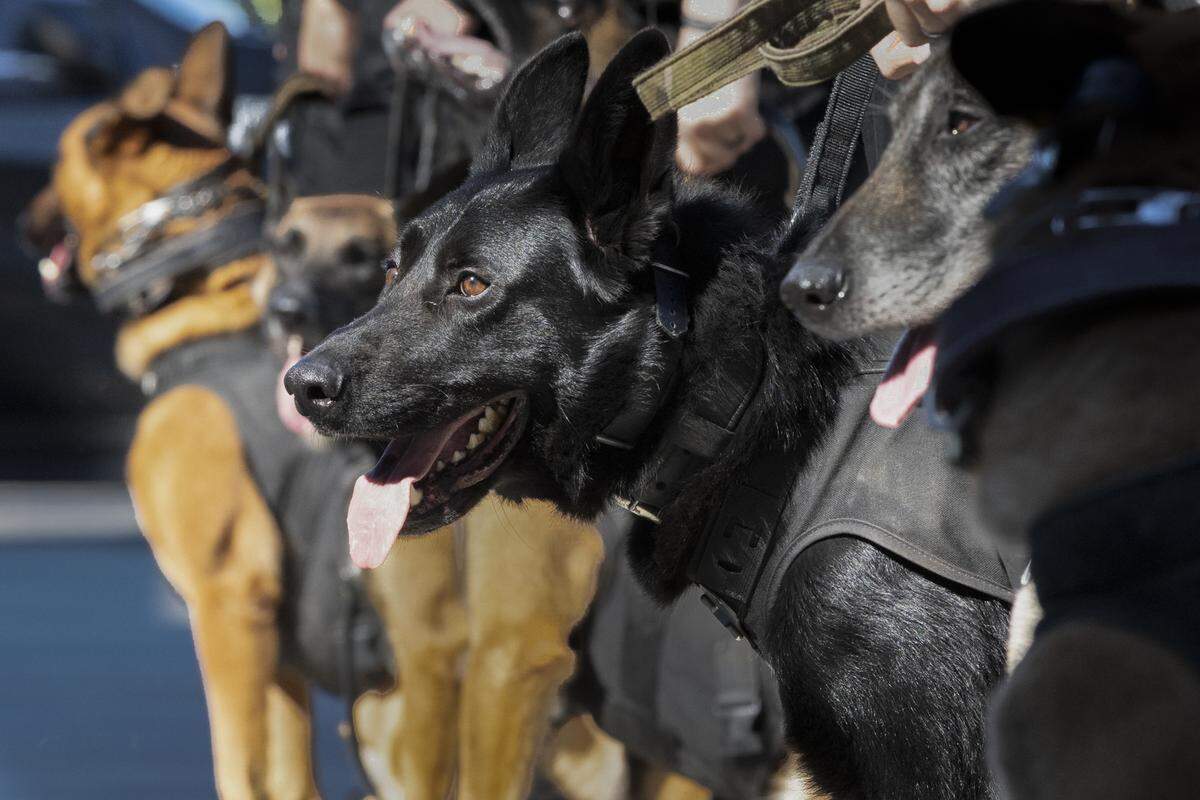
Newsom of the Richland County Sheriff’s Department said the mishandling of K9s isn’t the dog’s fault, but that of its handler.
Regarding the case in Florence, where Sellers was charged for improperly deploying his K9, Newsom said that would’ve never happened if the handler followed training standards.
“Had the dog been used in that circumstance along current K9 doctrine, we wouldn’t have seen that homeowner get injured,” Newsom said. “I don’t think that’s a dog issue. I would say that’s more of a training and usage issue of that handler.”
It’s a contention that a K9 training expert agrees with.
Concerns about training of police dogs
Law enforcement service dog expert Kyle Heyen says he’s concerned about the degree and scope some agencies classify as training, relating to K9s and handlers.
Heyen, who started as a K9 handler with the Laramie Police Department in Wyoming in 1981, said he’s discovered multiple law enforcement agencies around the U.S. that lack proper training in dog handling and, therefore, blindly use excessive force.
“If an officer pulls his baton and begins smacking a suspect who’s not an obvious threat, that’s excessive force,” Heyen said. “But it’s okay, we don’t have to follow that standard with dogs,” Heyen said of some agencies.
The U.S. Supreme Court in Graham v. Connor ruled that excessive force must be analyzed under the Fourth Amendment’s objective reasonableness test, which factors: the severity of the crime at issue, whether the suspect poses an immediate threat to the safety of law enforcement officers or others and whether the suspect is actively resisting arrest or attempting to evade arrest by flight.
After leaving the Laramie Police Department in 1987, Heyen said he began training K9s and handlers atthe Alabama Canine Law Enforcement Officers Training Center — formerly the largest K9 training facility in the U.S. — before opening up his own training center in 1989, which he ran until 2003.
“Every law enforcement officer that’s certified in this country knows they can only use the amount of force that is reasonable and necessary to effect an arrest,” Heyen said.
For example, Sandefur’s inability to timely remove his K9 from White by trying to pull the dog off of White demonstrates a fundamental lack of understanding of how dogs behave, according to Heyen.
“Every person that’s owned a dog and played tug-a-war knows when you grab and start pulling away from the dog, or pulling the dog away from the toy, the dog starts biting harder,” Heyen said.
Newsom disagrees, saying because of a dog’s “opposition reflex” — an instinctive reaction where dogs push or pull against any applied force — a handler can effectively remove a K9 latched onto a suspect by pulling back on its collar or leash.
“Generally injuries (to a suspect) correspond greatly with how the suspect treated the dog after the apprehension,” Newsom said, adding that all K9s with the Richland County Sheriff’s Department must demonstrate the ability to be verbally called off the suspect before being placed on duty.
However, there are some situations where it may be improper or unsafe to verbally call of a K9, Newsom said.
“If you’re at the end of a car chase where there are multiple sirens and multiple people yelling, the dog may not hear you, resulting in the handler having to physically remove the K9,” Newsom said. “So, just like there’s not one answer to every question, there’s not one method to take a dog off from every single bite.”
Even when K9s are properly deployed in accord with their training, unfortunate events still happen, Newsom said.
At Bumi’s memorial service, Ware said his late partner, in the two years they served together, was not only instrumental while on patrol, but was also a key member of his family at home.
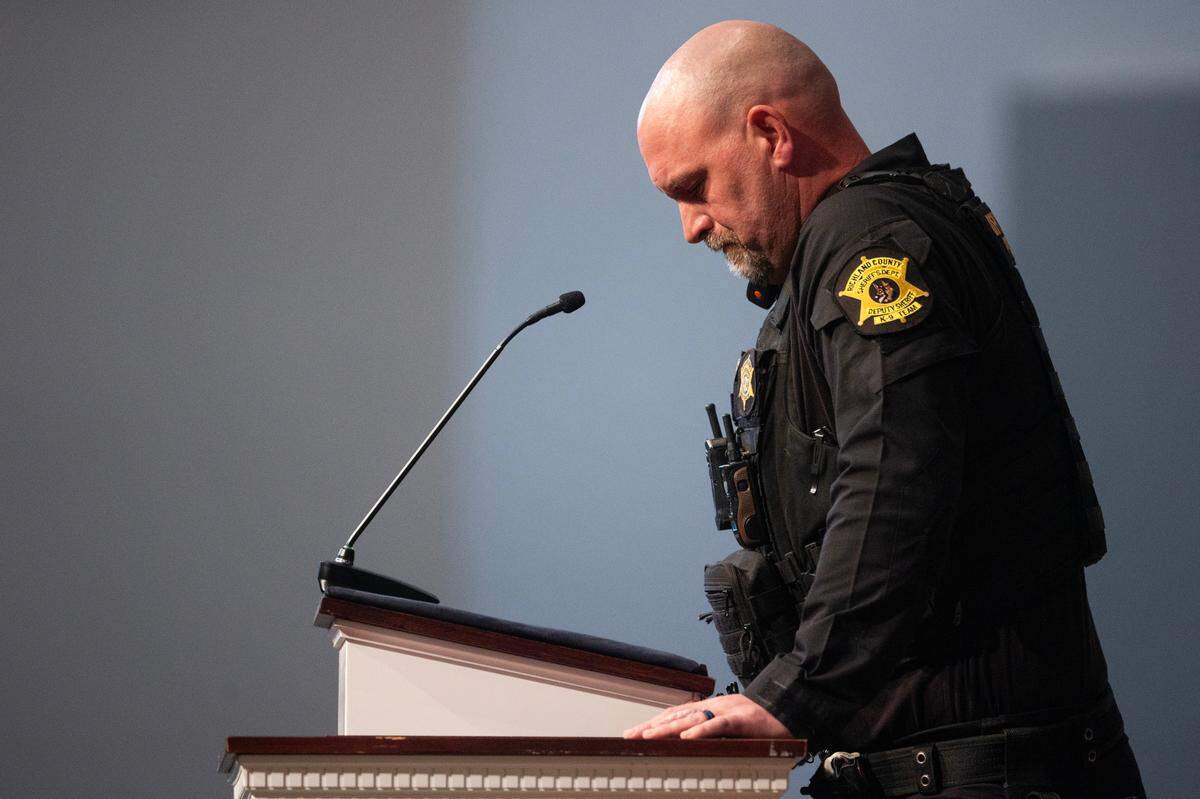
“At the end of day when we get home, I could take that vest off of him and it was like flipping a light switch,” Ware said. “He would come in the house and see my wife and kids, and I didn’t have to worry about them being hurt.
“Bumi, I know one day we’ll see each other again in heaven.”
This story was originally published April 14, 2025 at 5:30 AM.