
Lead Murdaugh investigator didn’t disclose evidence in SC jeweler’s murder trial
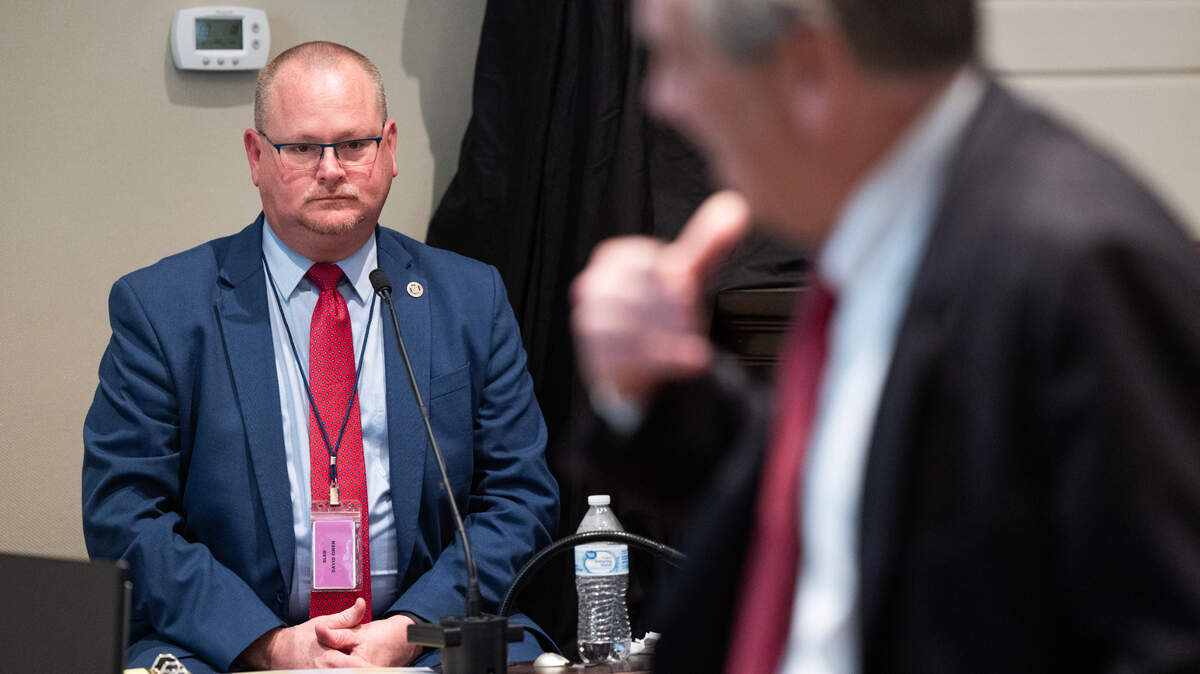
On Tuesday, the trial of a Lowcountry jeweler accused of killing his wife halted suddenly when the judge dismissed the murder case. Now many are left wondering why a veteran South Carolina Law Enforcement Division agent never disclosed vital evidence supporting the claim that the woman died by suicide.
Michael Colucci was facing a second trial in the death of his wife, Sara Lynn Moore-Colucci, who was found hanging by the neck from a garden hose behind one of the Colucci family’s jewelry stores in Summerville, South Carolina on May 20, 2015. Prosecutors alleged that the hanging was a cunning cover-up to disguise a cold blooded murder.
But what prosecutors and the grand jury who issued the indictment apparently never knew was that Moore-Colucci’s mother had told the lead investigator, SLED Special Agent David Owen, that her daughter had threatened to hang herself shortly before she died.
The fact that Owens had never disclosed the mother’s comments was revealed in a memo from prosecutors just five days before the trial was scheduled to start. This revelation prompted Circuit Court Judge Roger Young to take the unusual step of dismissing the indictment without prejudice, meaning it can be refiled by the state Attorney General’s Office.
“This court believes our courts should demand better from the state,” Young said in a ruling issued from the bench. “To simply allow this trial to go forward with so many witnesses, such as pathologists, having been denied opportunity to have this critical knowledge available to them when that material is fresh, amounts to a harm with a foul.”
In a statement, a spokesperson for the Attorney General’s Office said, “We respect the decision of the court and note that Judge Young did not find intentional misconduct by prosecutors from the Attorney General’s office.”
It’s not the first time that Owen, who was a special agent for the Lowcountry region, has had to admit on the stand that there were issues with information that he gathered or provided.
During the internationally-televised trial of former lawyer Alex Murdaugh, Owen admitted that he gave incorrect information to a Colleton County grand jury. Owen testified before the grand jury that the T-shirt Murdaugh was wearing the night his wife, Maggie, and son Paul were killed was stained with human blood. It was one of the few pieces of physical evidence potentially linking Murdaugh to the crimes, for which he was ultimately convicted.
Prosecutors later conceded there was no human blood on the shirt.
“Its a bad look for SLED and the Attorney General’s Office,” said one of Murdaugh’s attorneys, Dick Harpootlian, who is working to win Murdaugh a new trial in the killings. “There should be consequences.”
“We are ecstatic that the judge gave us the opportunity to have a hearing and flesh out the information regarding the memorandums and the misconduct in a way the ensure that Michael’s constitutional rights, and the constitutional rights of all defendants, were protected,” said Scott Bischoff, one of Colucci’s attorneys, with law firm Adams & Bischoff.
A SLED spokesperson said that the agency did not have any additional information to provide. Owen is now retired from SLED and is employed as a special investigator by Atlantic Casualty Insurance, according to his Linkedin. The State was unable to reach him for comment Wednesday afternoon.
Calling for a “fresh start,” Judge Young urged the attorney general to “present a fuller case to the grand jury than is usually done in state court in S
Jeweler’s wife dead in the Lowcountry
On May 20, 2015, Michael Colucci called 911 to report that he had found his wife, Sara Lynn Moore-Colucci, hanging by the neck from a hose attached to a fence.
Owen was brought in to investigate. As the statewide law enforcement agency, SLED often investigates crimes that require superior expertise or resources, or where local authorities have a conflict of interest.
Suspicions soon fell on Colucci. At the scene, the jeweler was found to have a cut and swollen lip, bruises and scratches on his arms and abrasions on the knuckle of one hand. His wife’s body was cold and blue, and investigators say that she had evidence of defensive wounds, according to media reports.
But Colucci maintained that his wife, was suicidal and one of her hairs was found at the top of the fence. She was also found to have had cocaine and xanax in her system along with a blood alcohol content of 0.23, nearly three times South Carolina’s legal driving limit of 0.08. Her death came on the anniversary of her first husband’s suicide. He had stabbed himself after taking psychedelics, a tragedy that continued to traumatize her.
Colucci was indicted in his wife’s death in 2016. He was tried by the South Carolina Attorney General’s Office in 2018, but the case ended in mistrial.
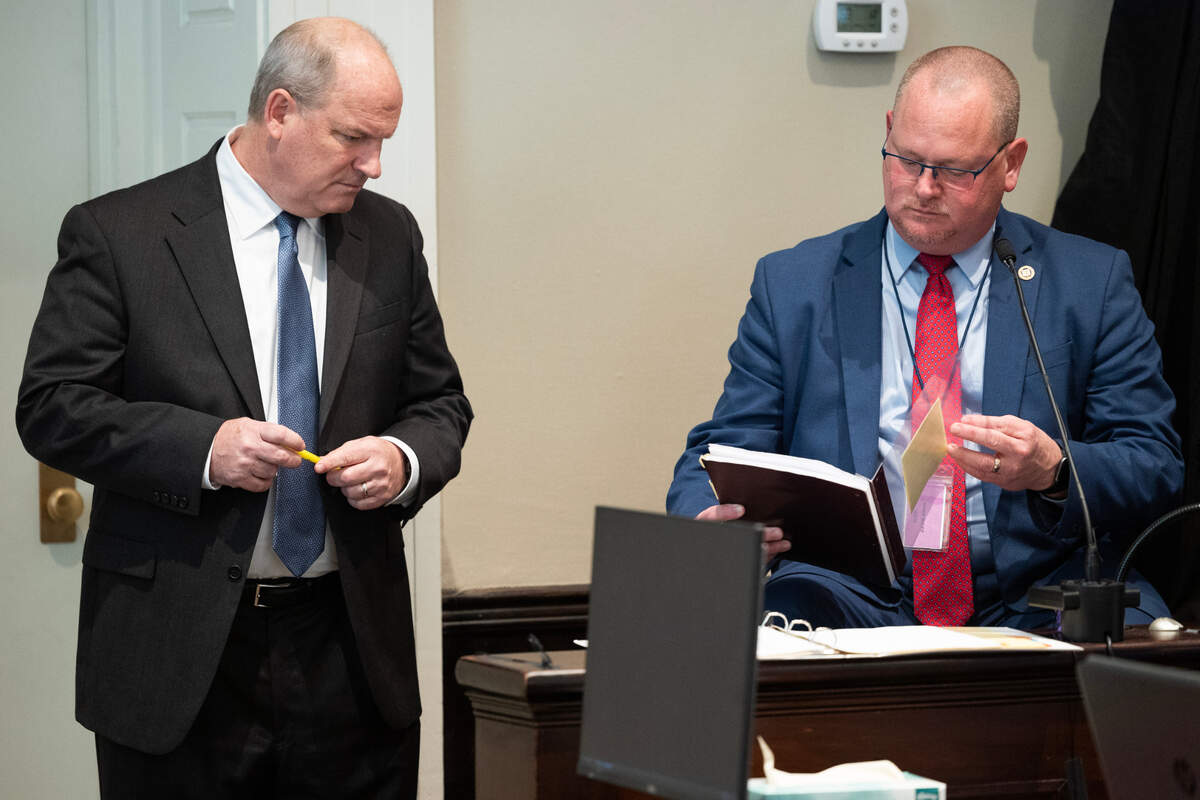
The jeweler’s second trial was set to start this week in Berkeley County. But five days before it began, prosecutors admitted Owen had interviewed Sara’s mother, Barbara Moore, who told him that her daughter said she wanted to kill herself by hanging shortly before her death.
Moore told Owen that in early May, days before her daughter’s death, she went to her her house and found Sara surrounded by beer cans, uncontrollably sobbing to the point that her face was swollen. She told her mother than she wanted to hang herself and the only reason she didn’t was because of her children. Moore was so concerned that she wanted to have her daughter hospitalized for a psychiatric evaluation.
Owen never recorded this interview in any of his investigative notes and did not disclose it to prosecutors. When asked about it on the stand, he offered “little meaningful defense beyond a vague reference to a busy caseload spanning eight counties,” according to CourtTV.
The failure to disclose this information to the defense violated the “Brady rule.” Named for the Supreme Court case Brady v. Maryland, the rule is a cornerstone of American criminal legal procedure, requiring prosecutors to turn over all evidence that might be favorable to the defense.
“There’s really no way to talk around the fact that they are in clear violation of Brady because of David Owen’s conduct,” Bischoff said.
It was also noted that in Colucci’s first trial, the prosecutor, Assistant Attorney General Megan Burleson, repeatedly interrupted Moore when she began to describe her conversation with her daughter in May, 2015.
On the stand Tuesday, Burleson denied knowing about Owen’s interview with Moore and said that she was simply trying to prevent the introduction of hearsay evidence that could have caused a mistrial.
Following the judge’s ruling, Assistant Attorney General Kinli Abee noted that prosecutors had disclosed that Moore-Colucci texted her husband on May 12, saying she she was planning to go into the woods and shoot herself.
But Bischoff maintains that disclosing the texts was simply not equivalent to keeping information of Sara’s threat to commit suicide by hanging.
“There was a domino effect,” Bischoff said. “Every single day that he held that information from so many people, investigators, pathologists... that’s a violation of criminal defendant’s rights.”
Blood evidence questioned in Murdaugh murder trial
Owen, who retired last year, was also at the center of an inquiry about evidence in Alex Murdaugh’s high profile trial.
Owen was the lead investigator into the killings of Paul and Maggie Murdaugh, who were gunned down at the family’s dog kennels on their sprawling property in Colleton County in June 2021. Murdaugh was convicted of their murders.
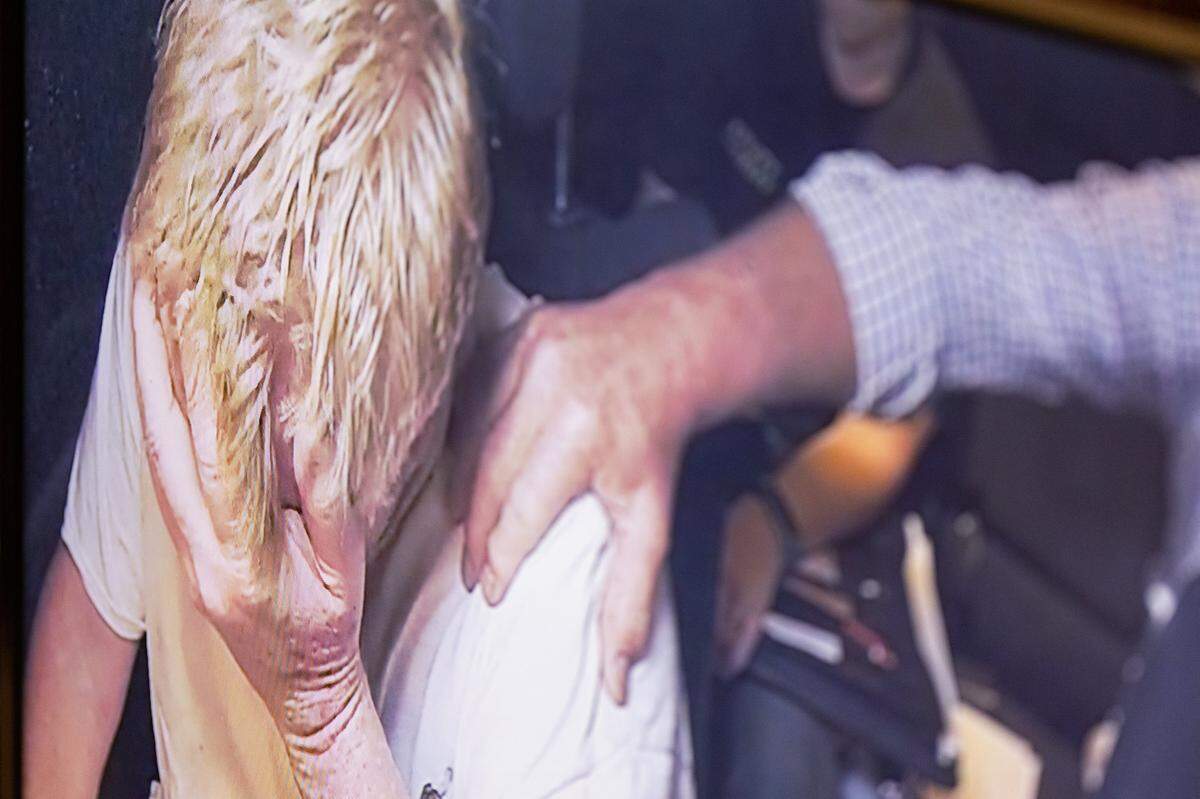
But during Murdaugh’s trial in 2023, Owen admitted on the stand that he incorrectly told a Colleton County grand jury that the T-shirt Murdaugh was wearing the night of the murders contained human blood spatter consistent with the mist of blood ejected from a gunshot wound. The grand jury later indicted Murdaugh for the murders.
In the lead-up to the trial, the blood on Murdaugh’s T-shirt was held up as one of the only smoking guns in a case where remarkably little forensic evidence connected Murdaugh to the murders. But at trial, the prosecution conceded that there was, in fact, no evidence of blood spatter on the shirt.
On the stand, Owen said that he didn’t find out until four months after the indictment was issued that there was no evidence of human blood on the shirt and that he never meant to mislead the grand jury.
“You didn’t know then, but you know now that what you told the Colleton County Grand Jury was not correct?” asked Murdaugh defense attorney Jim Griffin.
“In reference to the shirt, yes,” Owen testified.
Were Murdaugh to win a second trial, Harpootlian said that he expects Owen will have to testify to his inconsistent statements.
“We believe that would be relevant to his credibility,” Harpootlian said.