
Jam cellphones to stop drug trafficking, sex abuse in SC prisons, says AG
Two imprisoned brothers who coordinated a methamphetamine ring with a Mexican cartel. An inmate who allegedly amassed $1 million through money laundering and trafficking marijuana. A woman who sent pornographic pictures of her underage daughter to a South Carolina prisoner.
The common element between these crimes? Illegal cellphones trafficked into South Carolina prisons. A rare report issued by the South Carolina state grand jury has asked Congress to allow state prisons to jam cellphone signals.
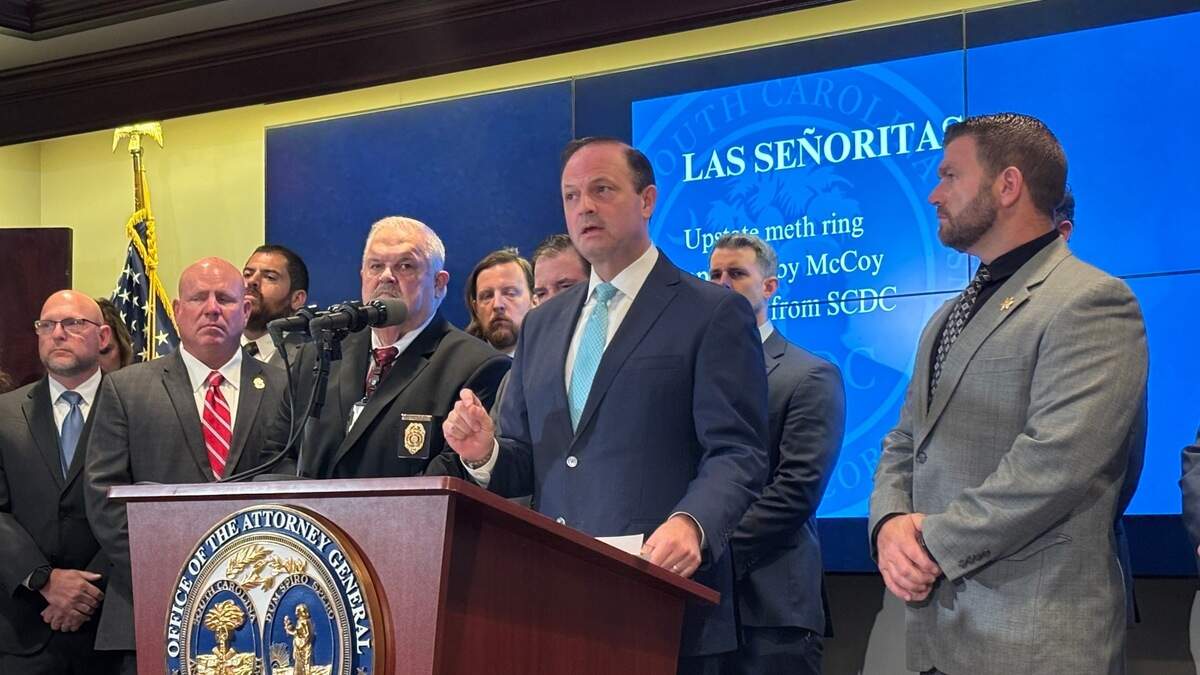
At a press conference Wednesday morning announcing the release of the report, state Attorney General Alan Wilson warned that prisoners would continue to commit crimes both inside and outside of prison unless the law was changed.
“Prison walls alone are not a barrier when prisoners have cellphones,” Wilson said. The current method, a much-touted program called “managed access” begun in 2018 following a riot at Lee Correctional Institution, allows prison officials to detect and deactivate contraband cellphones inside of prisons. But this system is little more than playing “whack-a-mole,” Wilson said.
Federal prisons, including those in South Carolina, are allowed to completely block cellphone signals. But because the law does not include a provision for state prisons, the FCC will not allow local facilities — sometimes just minutes away from their federal counterparts —to deploy a similar technology.
The jamming technology is so targeted that a test by former corrections Director Bryan Stirling demonstrated how a phone can be jammed in one room while not jammed in an adjoining room. Stirling, now the U.S. attorney for South Carolina, campaigned extensively for changes to the law.
But despite “bipartisan” support, the bill has continued to stall in Congress, said Wilson, who recently announced that he is running for the Republican nomination for governor.
In the meantime, officials from the state Department of Corrections have deployed a range of low- and high-tech solutions to try to stop the flow of contraband cellphones. In addition to the sophisticated “managed access” program at six prisons in South Carolina, the department employs random searches of staff, advanced scanners and even netting to prevent drones from dropping phones over prison walls.
But, as the grand jury report notes, the prison trade in phones, which can be sold for thousands of dollars and used to run million-dollar enterprises, is simply too profitable to be entirely stamped out.
“The profits accrued from these gang related criminal enterprises are substantial. Inmates use those profits to corrupt, intimidate, and extort otherwise lawful employees of the South Carolina prison system who become involved in the introduction of contraband into the prison system,” according to the report.
“Jamming is the answer,” said Joel Anderson, interim director for the Department of Corrections.
The state grand jury indicts cases, typically after long-term investigations, which are brought by the state Attorney General’s Office. The decision to issue the report came after two 18-member grand jury panels expressed concern over the prevalence of contraband cellphones in the cases they had reviewed, said Creighton Waters, chief attorney of the state grand jury.
While the report was drafted by the attorney general’s office, it was voted on unanimously by members of the grand jury, who serve two-year terms.
The last time the state grand jury issued a report was in 2012, following the indictment of then-Lt. Gov. Ken Ard for violations of the state ethics act.
How do prisoners use cellphones?
Behind the walls, barbed wires and locked doors of South Carolina’s prisons, resourceful inmates with access to cellphones have run criminal enterprises from drug trafficking to sophisticated scams and benefit fraud, according to the attorney general’s office.
- On July 1, Abbygale El-Dier pleaded guilty to sending an inmate child sex abuse material of her own underage daughter. She faces a sentence of 31 years to life. Her alleged co-conspirator, Jacob Lane, is accused of receiving the material on a contraband cellphone. He is facing life in prison and is expected to go on trial in the fall.
- Brothers Darrell “DJ” McCoy and Matthew McCoy were first sentenced to prison following a drug operation code-named “Family Tradition,” which they later had tattooed on their arms. On June 27, the two were convicted following a week-long trial of trafficking methamphetamine from inside of prison. The two communicated with traffickers, including Mexican cartel members, using contraband cellphones. They were sentenced to life in prison.
- In 2023, three prisoners from Lieber Correctional Institution were charged with running a “sextortion” scam that netted over $100,000. It was similar to a long-running scheme run out of South Carolina prisons in the 2010s, where inmates targeted soldiers, communicating with them on dating apps and then blackmailing them for thousands of dollars.
- Department of Corrections inmate Wayne Hollingsworth was charged by the state grand jury with running a drug trafficking operation from behind bars. Hollingsworth is alleged to have trafficked more than 100 pounds of marijuana and earning him over $1 million, investigators say.