SC man punished for trafficking sperm whale parts, prosecutor says
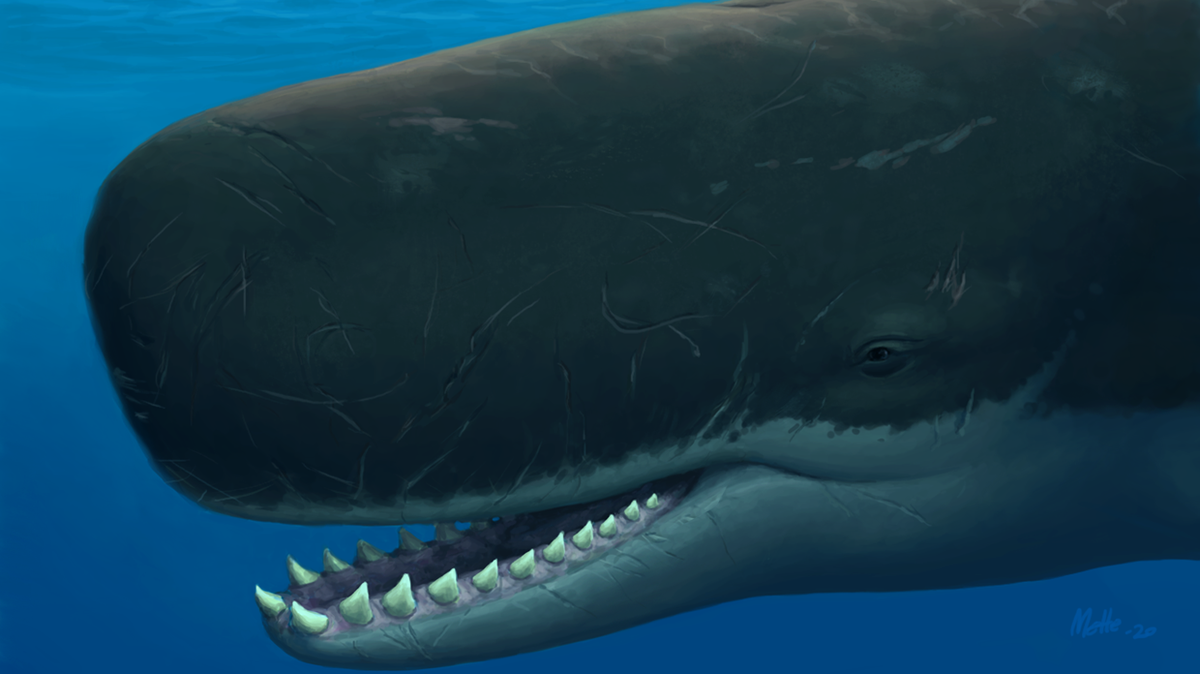
A South Carolina man was punished for trafficking sperm whale parts, the U.S. Attorney’s Office said Tuesday in a news release.
From September 2021 to September 2024, 69-year-old St. Helena resident Lauren DeLoach violated the Marine Mammal Protection Act and the Lacey Act, according to the release.
DeLoach illegally imported, sold and possessed sperm whale teeth and bones despite knowing it was a crime, the U.S. Attorney’s Office said. He would falsely label shipments with these products to avoid detection from law enforcement, according to the release.
U.S. District Judge David Norton sentenced DeLoach to 30 days of home confinement and a $15,000 fine to be paid to the Cooperative Endangered Species Conservation Fund, the U.S. Attorney’s Office said. DeLoach was also sentenced to 2 years probation.
Officials hope that the fine will serve as a deterrent and assist future wildlife trafficking investigations, according to the release.
It’s a crime
Sperm whales have been listed as an endangered species since 1970 and are protected under the Lacey Act, the nation’s oldest wildlife protection law. They are mammals, have lungs and breathe air.
DeLoach pleaded guilty to a felony violation of the Lacey Act, admitting to the illegal trafficking of sperm whale teeth and bones, according to a plea agreement in the case.
Prosecutors provided the court with two sperm whale teeth and one whale ear bone, which were among the approximately 47 whale teeth and two whale ear bones that Deloach had previously surrendered to law enforcement prior to his guilty plea, the U.S. Attorney’s Office said.
DeLoach faced a maximum punishment of 5 years in prison and a maximum $250,000 fine for trafficking in sperm whale teeth and bones. He also could have served a year behind bars for admitting to a violation of the Marine Mammal Protection Act, court records said.
“He made some mistakes and went a little too far with a hobby,” said Nathaniel Williams, DeLoach’s attorney. “As soon as he realized it was a federal violation, he was cooperative and remorseful — and still is.”
Collector’s items
The charging document noted that sperm whale teeth and bones have been prized as collectors’ items.
“Sperm whales (Physeler macrocephalus) were the largest species of toothed whales, with deep water habitat in all the world’s oceans. Sperm whales reached up to 78 feet in length and 45 tons. Individuals prized sperm whale teeth and bones as decorations or as a scrimshaw or painting medium,” according to the information in the case.
A sperm whale’s tooth may weigh more than two pounds, according to the National Wildlife Federation. The teeth of a sperm whale can sell for hundreds of dollars, the Los Angeles Times reported in 2007.
Sperm whales
Sperm whales once numbered about 1.1 million, but their population today is estimated at about 300,000, according to the National Wildlife Federation. They were once widely hunted for body parts, which were used in lubrication and fuel oil.
Sperm whales are the largest marine mammals with teeth and are best known for their large, bulbous heads. The classic novel “Moby Dick” centered around a sea captain’s obsession with killing a sperm whale that had injured him.
Found in the deep water of most of the world’s oceans, sperm whales can live up to 60 years, according to NOAA. Studies have shown that these highly socialized animals communicate over great distances and associate in clans defined by the dialect pattern of their sonar clicks, according to the U.S. Attorney’s Office.
The sperm whale population was decimated by the commercial whaling industry from 1800 to 1987, the U.S. Attorney’s Office said.
Today, sperm whales are listed as federally protected animals under the U.S. Endangered Species Act and they are listed as depleted under the Marine Mammal Protection Act.
This case was investigated by the U.S. Fish and Wildlife Service and NOAA.
Elle Klein and Winston Holliday led the prosecution for the U.S. Attorney’s Office, and were assisted by Ryan Connors of the Department of Justice’s Environmental Crimes Section. Williams, a defense attorney in Charleston, represented DeLoach.
Staff reporters John Monk and Sammy Fretwell contributed to this story.
BEHIND THE STORY
MOREThis is a breaking news story
In a breaking news situation, facts can be unclear and the situation may still be developing. The State is trying to get important information to the public as quickly and accurately as possible. This story will be updated as more information becomes available, and some information in this story may change as the facts become clearer. Refresh this page later for more updated information.
This story was originally published September 16, 2025 at 1:22 PM.