
Court: Columbia SC police officer has no immunity in the killing of fleeing teen
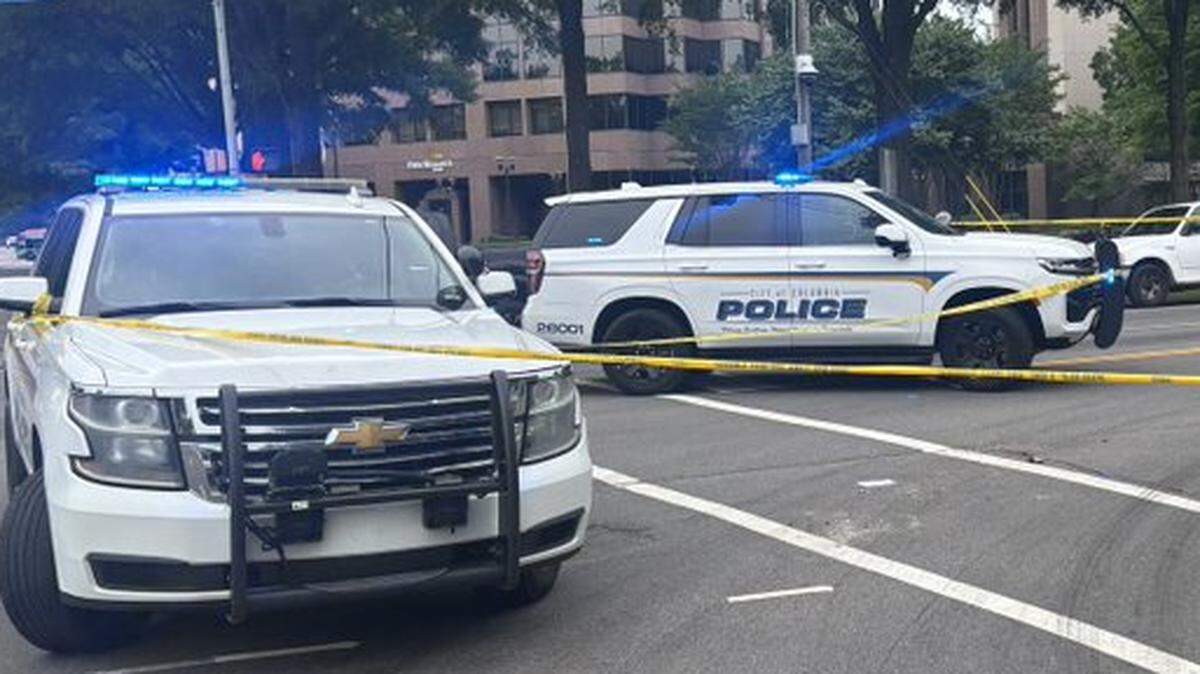
A Columbia police officer does not have qualified immunity in an incident where he shot and killed a teenager who had run from him, a three-judge panel with the U.S. Fourth Circuit Court of Appeals ruled unanimously Wednesday.
The ruling clears the way for the case to now go to trial in civil court or be settled, said attorney Justin Bamberg, who represents the family of the dead teen and who has a track record of successful representations in high profile legal cases.
“It’s going to be interesting to see what happens,” said Bamberg, Democratic state representative from Bamberg. “We are free to go try this in federal court and in state court.”
The City of Columbia, which generally does not reply to media questions about pending lawsuits, had no comment Wednesday.
The ruling, which could be appealed, was the latest legal event in a six-year legal battle that began on April 8, 2020, when Columbia police officer Kevin Davis shot and killed 17-year-old Joshua Ruffin, who had been running away from him in the North Main Street area.
Ruffin was a high school senior and track athlete, and the shooting took place on the edge of the grounds of Eau Claire High School.
Ruffin did have a pistol with him, but he did not make any threatening move toward the officer, the Court of Appeals panel found.
“We conclude that it was clearly established at the time of the shooting that a police officer couldn’t use deadly force against a fleeing suspect, even an armed one, who didn’t make a furtive or threatening movement with his weapon,” wrote the judges.
The key finding in the judges’ Wednesday decision was that Davis did not have qualified immunity in the shooting.
Qualified immunity is a doctrine that shields police officers from being held liable for money damages in lawsuits where they injure or kill someone in the course of their duties. However, it does not apply a police officer who clearly violates the rights of someone.
If the court had ruled that Davis had qualified immunity, lawsuits against him would have be dropped.
After the 2020 shooting, Ruffin’s mother filed lawsuits in federal and state court against the officer and the city.
The case was complicated.
Although Ruffin was running away from the officer during most of the incident, at one point he stopped and bent down. The officer said he saw a pistol in the teen’s hand and, fearing for his life, opened fire.
Two months after the shooting, in June 2020, 5th Circuit Solicitor Byron Gipson announced that his office would not pursue criminal charges against Davis, who is white, for fatally shooting Ruffin, who was Black.
“There is no joy in having this conversation,” Gipson told a press conference in June 2020. “There is nobody in this room celebrating anything that’s been considered and done. ... This is a tragic situation any way you cut it.”
At the press conference at the Richland County courthouse, Gipson presented detailed maps of where the shooting happened and showed police body-camera footage of the shooting from multiple perspectives.
The facts of the shooting were this, according to a December 2024 federal Magistrate Court Judge William Brown’s finding:
Davis worked as a Columbia police officer assigned to the North Region Community Response Team, which included a patrol assignment to the Seminary Ridge neighborhood near Eau Claire High School.
On the day of the fatal shooting, Davis received a text message from Dylan Gunnels, president of the Seminary Ridge neighborhood association, saying he had received reports of teenagers riding bikes and looking in cars. In response, Davis went to patrol the neighborhood. Davis was by himself in uniform, driving his marked patrol vehicle, and carrying his duty firearm.
While patrolling, Davis said he saw Ruffin step behind a house and reappear with a bag. When Davis attempted to approach, the teen walked away from him. Davis exited his patrol car and Ruffin fled.
During an ensuing foot chase, Ruffin ignored multiple commands to stop. Near the end of the chase, Ruffin stopped and crouched down.
“Davis believed this to also be an attempt to gain control of a weapon which Davis believed may have fallen down (Ruffin’s) pants while he ran,” the magistrate judge wrote.
Davis’ body worn camera recorded audio and video of the events. Video surveillance from Eau Claire High School captured portions of the incident without audio.
In statements after the incident, Davis contended Ruffin was a threat because he crouched and pointed a gun at him. Lawyers for Ruffin’s family asserted that Ruffin had slipped and never pointed a gun at Davis. Ruffin carried the weapon for self-defense in a crime-ridden neighborhood, his family said.
The entire incident took less than a minute. In all, Davis fired 10 rounds, with the last one hitting Ruffin in the forehead and killing him. The gun was a Sig Sauer P320. Evidence in the case indicated Ruffin was coming from an after-school job.
In filings defending its position, the city stressed that Ruffin had run and disregarded numerous commands to stop. Moreover, the city stressed, Ruffin was out after a citywide curfew due to the COVID-19 epidemic. Officer Davis’ action were “at all times reasonable,” the city contended.
The Fourth Circuit judges who ruled in this case were Albert Diaz of North Carolina, Stephanie Thacker of West Virginia and Nicole Berner of Maryland.
One of Bamberg’s prior cases involved the nationally-publicized 2015 killing of a Black man, Walter Scott, running from a North Charleston police officer. Although the police officer claimed that Scott was a threat, video taken by a bystander clearly showed he was running away from the officer when he was shot and killed. The officer, Michael Slager, was ultimately sentenced to 20 years in prison.
Bamberg said the city of Columbia needs to resolve the Ruffin case in a timely manner. “A public trial is going to do nothing but open old wounds.”
This story was originally published April 29, 2026 at 3:49 PM.