
Why were MUSC researchers giving rats cocaine? For science, of course
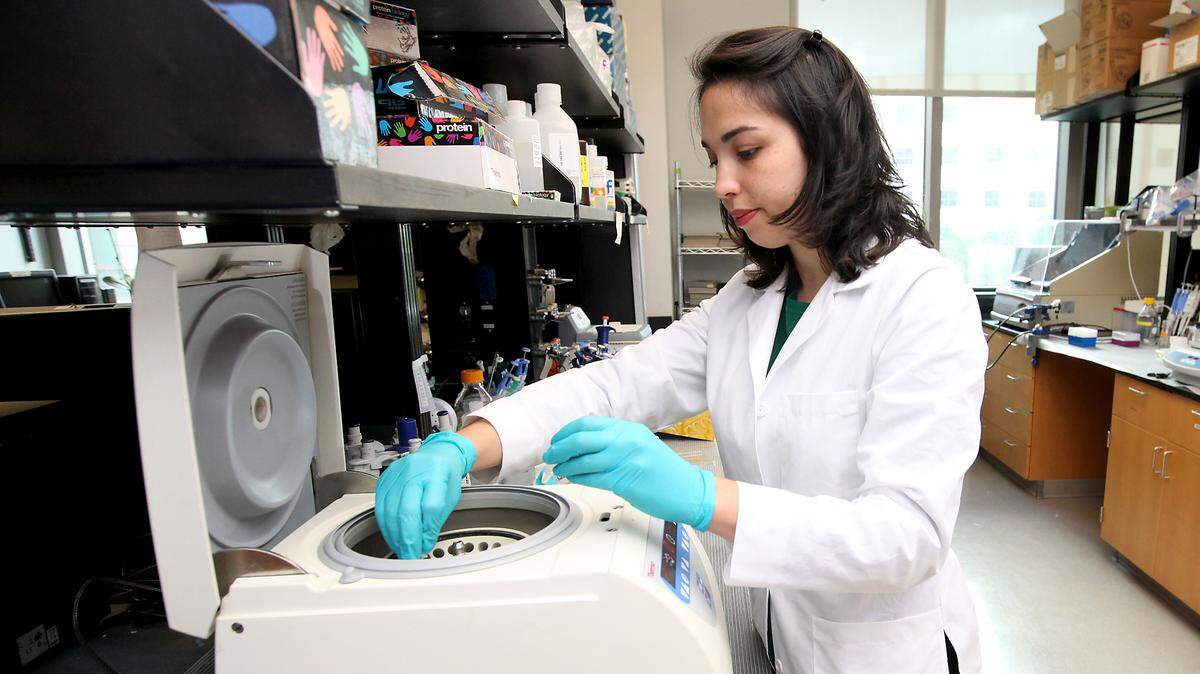
Imagine a treatment that could rewire the human brain. The damage caused by, say, drug addiction or late-stage Parkinson’s disease could be reversed, not just treated.
Researchers at the Medical University of South Carolina have released a study that could help open the doorway to that sort of treatment in the future. The study, published in the academic journal Addiction Biology, found that rats were less likely to relapse on their cocaine addiction when a naturally occurring protein was injected into a specific part of the brain just before relapsing.
“Anything the brain could be rewired to fix ... it seems this could be helpful,” said study co-author and MUSC professor Peter Kalivas. “It’s a whole different way of approaching it.”
The study was done in three phases. In phase one, rats were first trained to press a lever that would both deliver a small amount of cocaine and play a sound. After roughly 10 days, the researchers turned the lever off so it would neither deliver cocaine nor play a sound. In the third phase, the protein was injected directly into the rats’ brains and the rats were exposed to the sound, but received no cocaine. At first, the rats pressed the lever over and over again, but after the protein started to take effect, the rats pressed the lever less and less.
The results were significant when compared to the control group of rats that were given sugar pills instead of cocaine.
“It seems to be specific to cocaine, at least compared to other natural rewards,” said Dr. Ana Clara Bobadilla, a postdoctoral student at MUSC and lead author of the study. “We discovered a new role of this molecule ... on one region of the brain.”
While most addiction treatments — methadone for opioids, nicotine patches or Chantix for nicotine — “just simulate the receptors slightly different or go into the brain slower,” Kalivas said these latest results suggest the brain can be rewired to reverse damage done by drug addiction or other disorders such as Parkinson’s.
What’s more, the rats showed no side effects after being injected with the protein, Bobadilla said.
The protein, brain-derived neurotropic factor (abbreviated BDNF), occurs naturally in the brain and plays a role in learning and memory, according to the National Institutes of Health. Depending on which part of the brain the protein is injected into, the changes to brain and behavior are expected to vary, Bobadilla said.
For MUSC’s study, the protein was injected only into one part of the brain, the nucleus accumbens, a part of the brain studies have found are associated with addiction. More research will be needed to see whether the same methods they used can be used to reduce relapses of nicotine, opioids or other drugs, Bobadilla said.
The research drew praise from activists fighting the opioid epidemic, who see this research as promising.
“We applaud the tireless efforts of Dr. Bobadilla and her MUSC team, especially considering that an estimated 500,000 addicts are projected to die from opioid overdoses in the next decade,” said Martine Helou, executive director of the Palmetto Foundation for Prevention and Recovery.
Researchers caution the results are far from producing a miracle cure to neurological illnesses. They still haven’t overcome the biggest challenge in administering the protein, and that is it doesn’t pass between the blood-brain barrier. That means a pill, IV or needle to the muscle won’t deliver the drug, Kalivas said.
In order to inject the right part of the rats’ brains with the BDNF, researchers drilled a small hole into the skull and inserted a port, not unlike what cancer patients receive for chemotherapy, and injected the protein several times over several days.
“It’s kind of a probe to prove a principle,” Kalivas said of the study. “This experiment is not an immediate gateway into curing these disorders.”
Medical experts have known for decades the role BDNF plays in learning and memory, and pharmaceutical companies have been trying for years to create a drug that mimics the effects of BDNF, but the effectiveness has varied, Kalivas said.
This story was originally published August 9, 2018 at 9:49 AM.