
USC’s new Anne Frank Center ‘unlike anything the university has ever done before’
Columbia, South Carolina, is now only one of four places in the world, and the only one on this continent, where people can physically walk through the story of Holocaust victim Anne Frank.
The University of South Carolina’s Anne Frank Center, announced Tuesday, aims to use the story and famous diary of the late, German/Jewish girl to combat hatred, whether that’s antisemitism, racism or other forms of hate, Doyle Stevick, the center’s executive director, said at a Tuesday ceremony.
“Visitors to the Anne Frank House have a profound experience” they can’t get elsewhere, Stevick said of the original museum in Amsterdam.
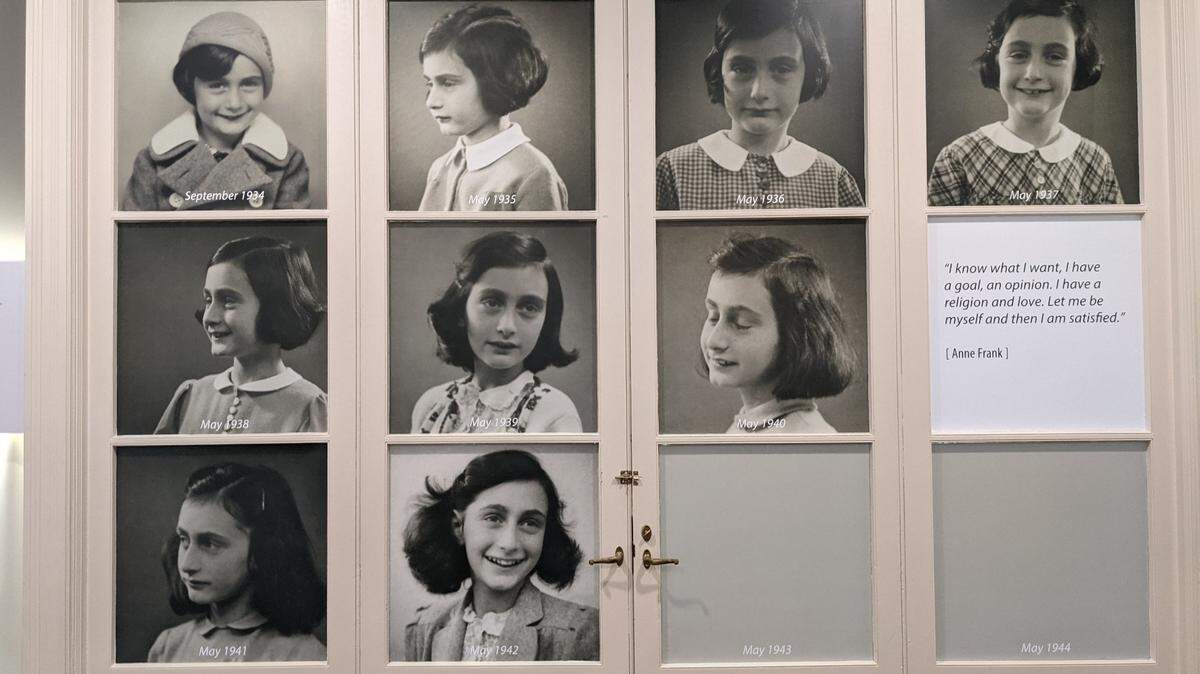
USC’s Anne Frank Center contains a mock-up of the room where the Frank family stayed for two years as they hid from the Nazis, original documents, annual portraits of Anne Frank — two blank spaces stood for the years she was in hiding — a history of the events that led up to the Holocaust and more.
“The Anne Frank Center at USC is unlike anything the university has ever done before,” said interim President Harris Pastides, who started at USC in 1998.
Once USC selects a long-term president, Pastides will personally oversee the Anne Frank Center, and will even have an office in the building, he said.
The Anne Frank House paid for the exhibition and USC paid roughly $100,000 to modify an existing building and install the museum.
The center is located at the Barringer House, the former alumni house, at 1731 College St. The center will be open to the public on Sept. 15 and free for USC students. Others who are not USC students are welcome, but are asked to donate to the center. To set up a tour, email afcuofsc@sc.edu.
The effort to get an Anne Frank Center in Columbia started when Anne Frank’s stepsister visited USC in 2017, followed by Pastides visiting the Anne Frank House in Amsterdam. Stevick, who was a visiting scholar at the Anne Frank House in Amsterdam in 2012, continued working with the group after his term was up. In 2018, the Anne Frank House’s executive director, Ronald Leopold, visited USC. During a dinner with Pastides, the two agreed to make USC the North American partner for the Anne Frank House, USC spokeswoman Carol Ward said.
The story of Anne Frank is an entry point into studying racism, genocide and hatred, especially for children too young to learn about the full horrors of the Holocaust, said Meir Muller, a rabbi and USC professor who teaches early childhood education.
“I think this is a perfect vehicle to teach young children,” Muller said.
S.C. Superintendent of Education Molly Spearman, who also spoke at Tuesday’s announcement, said the Anne Frank Center would be perfect for students in middle school to tour and offered to help promote the center.
“It will be our job to make sure we have yellow buses pulling in with loads of South Carolina students,” Spearman said.
Though the events of the Holocaust happened overseas, the center brings the history of WWII back to Columbia. Inside the mock-up of the room where the Franks hid is a censored book created by German prisoners of war who were held at Fort Jackson. Today, the location where they were held is now Forest Lake Elementary School, Sevick said.
“If history ever feels far away, it’s right here,” Stevick said as he stood next to the book.
The museum goes beyond just Holocaust studies. It also includes information on Jim Crow and racism in the United States.
“The similarities between Anne Frank and Emmett Till continue to be telling,” Williams said.
Till was a 14-year-old Black child who was murdered in 1955 after allegedly whistling at a white woman in Mississippi, according to the Library of Congress.
The Anne Frank Center “represents what happens if we citizens don’t speak up and say...that’s not right,” said Lilly Filler, a daughter of two Holocaust survivors who helped establish the S.C. Holocaust Memorial.
Attacks against Jewish people, culture and places of worship have increased in recent years, according to PBS and the Anti-Defamation League.
Growing up, USC undergraduate Mary McElveen remembers seeing swastikas drawn on desks, kids telling holocaust jokes and giving Heil Hitler salutes. As an adult, she even remembers a coworker saying they had done research online and concluded the Holocaust never happened, McElveen said Tuesday at the center opening.
“At the age of 12 I was told the Jews had it coming and I shouldn’t be here,” said McElveen, who is a member of Hillel, a Jewish campus organization found on campuses throughout the world.
“You may not see it, but anti-semitism is not gone,” McElveen said.
This story was originally published August 10, 2021 at 12:28 PM.