
USC admin never planned to ask SC lawmakers to rename Thurmond building, emails show
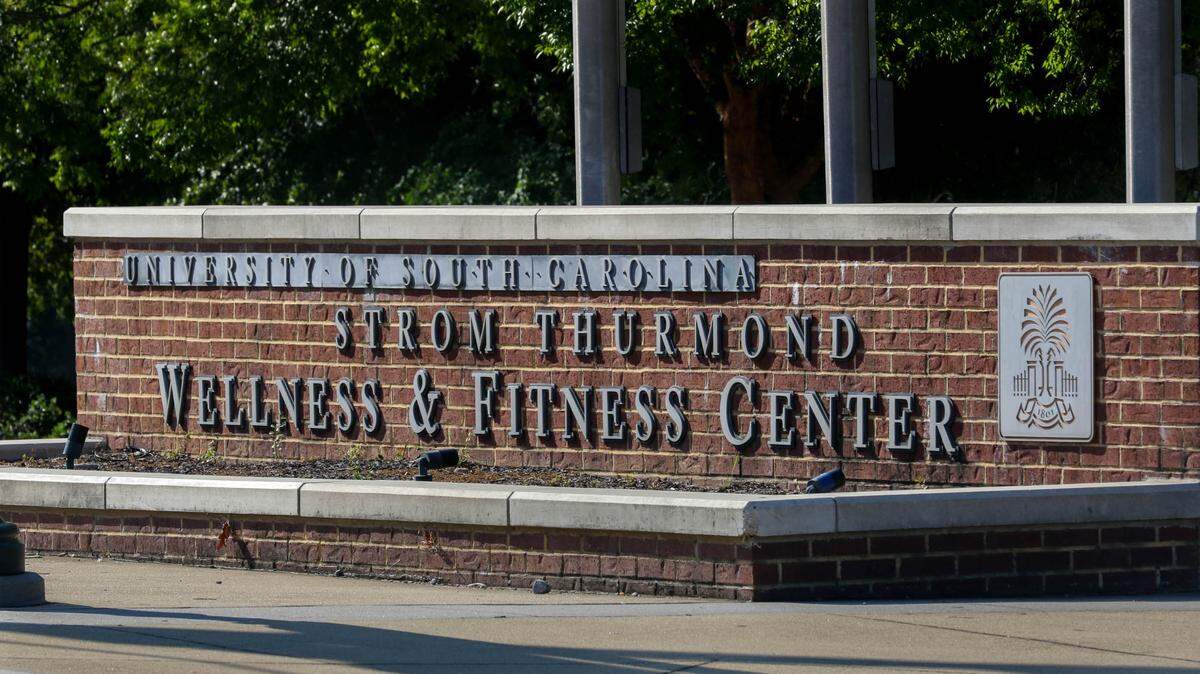
Despite months of effort, the University of South Carolina never really planned to ask the state legislature to rename multiple buildings on campus, documents show.
Several campus buildings, such as those named for the late U.S. Sen. Strom Thurmond, slave owner and former USC President Thomas Cooper and the late lawmaker/segregationist Solomon Blatt, have drawn controversy in recent years because of their connection to slavery, racism or segregation.
Months before the publication of a highly detailed report from a USC committee recommending potential name changes for buildings, the university had already prepared public statements saying both the state’s Heritage Act and lawmakers prevented them from changing the controversial building names.
In one email exchange, a top university official shared with Interim President Harris Pastides a July article from The State Media Co. quoting S.C. General Assembly leaders saying they wouldn’t allow a vote on renaming USC’s buildings. In response, Pastides said in an email, “Don’t they know that we weren’t planning to ask?”
The story was first reported by the Chronicle of Higher Education, which used records obtained through the state Freedom of Information Act. The State later obtained those records from USC.
When the Commission on University History issued a report in July recommending new names for several campus buildings, S.C.’s Heritage Act still required a two-thirds approval from both the state’s House and Senate to change the name of a building named for a historical figure. By September, however, the state’s Supreme Court ruled the two-thirds requirement was unconstitutional, saying only a simple majority of legislators need to agree to change a building name.
Before he became interim president, Pastides chaired the committee, which was formed in 2019.
“The Commission’s work was always broader than building names, and as you know, there is a well-documented state law that prevents institutions from changing the names of buildings,” USC spokesman Jeff Stensland said, referring to the Heritage Act. ”The Commission’s work was intended to include the full scope of how the university has evolved, allowing us to better educate students, faculty, staff, visitors, and local community members about the complex history of the university, to include the contributions of marginalized and underrepresented people whose voices have typically not been heard.”
Despite Pastides’ and USC’s sober outlook on the prospect of changing campus building names, a committee he formerly co-chaired pushed forth with recommendations for potential building name changes.
Though USC can’t change building names on its own, there is precedent for USC asking the General Assembly to change a name. In June 2020, USC’s board of trustees formally asked the state General Assembly to rename a women’s dorm named for J. Marion Sims, who invented modern gynecology by experimenting on enslaved women.
It’s unclear when USC’s administration decided to give up pushing to rename buildings, but USC’s administration had been drafting a response to the commission’s report since May, according to emails. The original, draft response — which was not released under the FOIA — originated while Robert Caslen was president, according to the emails.
It’s not over
While the push to rename buildings named for racists, segregationists or slave owners is dead for now, USC still has a chance to rename several buildings for Gamecocks from underrepresented groups.
For example, the dorm 650 Lincoln is named after the building’s address, not the former president. Because it’s not named for a historical figure, it doesn’t fall under the Heritage Act and USC can change the name, according to the USC records. USC is also building a massive campus dormitory complex called Campus Village, and a new medical campus in the BullStreet District. The Heritage Act does not require legislative approval for initial naming of buildings.
Since the publication of the commission’s July report, USC’s board of trustees has held two meetings to establish criteria for naming new buildings, Stensland said.
“The board’s goals are to recognize and celebrate the lives of important persons in the university’s history, to educate the university community regarding these persons, and to build an infrastructure for continual recognition of the Black lives that, however unsung presently, merit and require praise from future generations of the University of South Carolina family,” Stensland said.