
Midlands district ‘failed to do its job’ by not vetting for obscene books, Spearman says
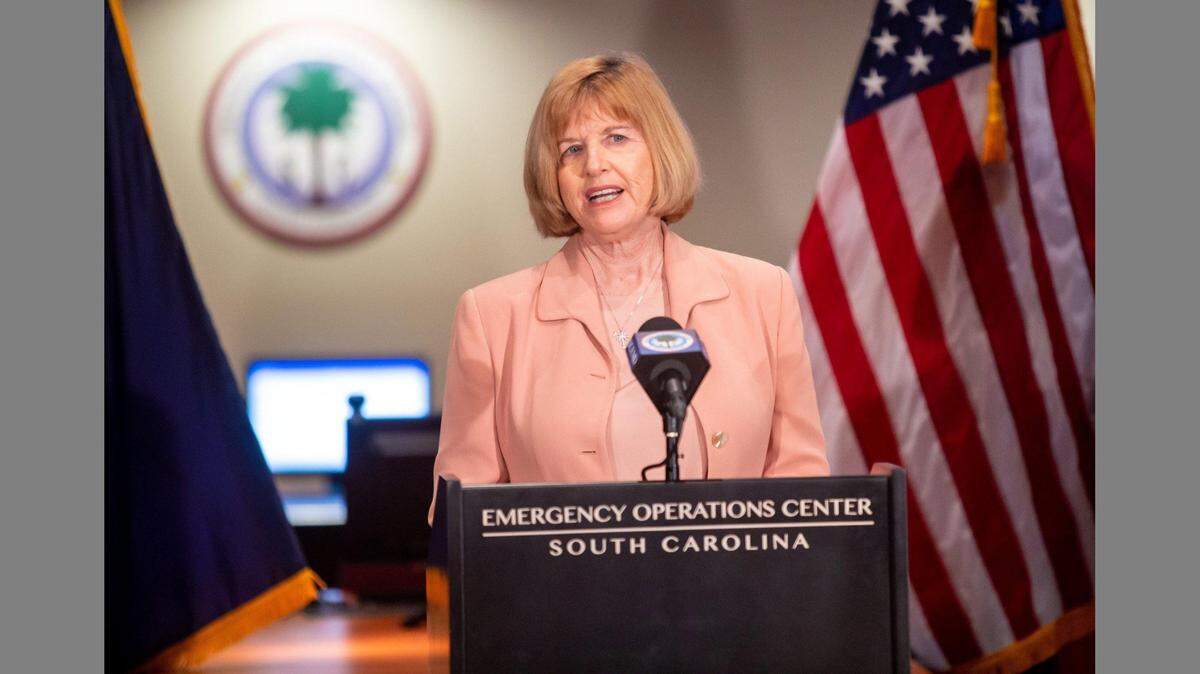
South Carolina’s state education superintendent said a local school district “failed to do its job” after the Department of Education warned schools earlier this school year to check for certain controversial books on library shelves.
Superintendent Molly Spearman gave that assessment in response to a letter from a Lexington-Richland 5 school board member asking for guidance on handling controversial books that include sexually explicit material. The books had drawn complaints from some parents.
Spearman notes in her Feb. 8 letter that her department warned school districts to check their libraries for specific books in November after concerns were raised by Gov. Henry McMaster and others about books the governor called “obscene and pornographic.” McMaster asked Spearman in a public letter to ensure books in public schools were age appropriate and educationally oriented.
The department met with district superintendents Nov. 4 to ask them to review specific library books on their shelves. Some of those same books were brought up by parents at a Jan. 24 meeting of the Lexington-Richland 5 school board who had found them in district libraries.
“Based on the timeline of events and the information provided to districts, it is clear District Five’s Board and administration failed to do its job by properly vetting the obscene materials in question even after the state very publicly encouraged them to do so,” Spearman said in her letter. “I again strongly recommend your district to adopt and follow the model policy, remove the inappropriate texts, and ensure that students in your community are no longer subjected to obscene and pornographic depictions.”
Lexington-Richland 5 said they don’t accept Spearman’s assessment of the situation.
“The School District Five Board of Trustees and Superintendent Akil E. Ross, Sr. disagree with the allegations presented in a letter from State Superintendent Molly Spearman,” the district said in a statement. “We look forward to working with Superintendent Spearman to ensure she is clear that there was no failure on the part of our board or superintendent.”
The books school districts were warned about included “Gender Queer: A Memoir” by Maia Kobabe, and “All Boys Aren’t Blue” by George Johnson. Both books take the form of personal coming-of-age memoirs by LGBTQ+ authors that frankly discuss and depict sexual experiences, and which have been challenged in school districts around the country.
Both of those books were referenced by Lexington-Richland 5 parents in their complaints to the school board, said education department spokesman Ryan Brown.
Spearman’s letter was written in response to a letter from board member Rebecca Blackburn Hines asking for guidance on responding to parents’ complaints. When the parents read the offending portions of the book during a school board meeting, “our Superintendent (Akil Ross) asked the Board of Trustees to redact the audio before publishing the meeting video online,” Hines wrote.
“Understandably, many parents have expressed their frustration over the contradictions between allowing obscene material in school libraries that are not allowed to be presented at school board meetings,” Hines said.
Hines referenced concerns about a federal Supreme Court precedent that limits a school district’s ability to remove books from the library. District Superintendent Akil Ross addressed the issue separately in a column for the New Irmo News.
“The graphic sexual content caused me to ask the book to be pulled, but it was not. It was not supposed to be,” Ross wrote. “The Supreme Court decided in 1982, in the Island Trees School District v. Pico case, that local school boards may not remove books from school libraries simply because they dislike the ideas contained in the book.
“However, books can be removed when two review committees review the book and determine it is not educationally suitable for students,” he wrote.
The state Education Department doesn’t believe that precedent stops schools from dropping obscene or inappropriate material.
“If you had Hillary Clinton’s autobiography in the library, and a school board said ‘this doesn’t align with our conservative values,’ you can’t remove that,” Brown said. “You can’t remove a book for having LGBTQ themes. But a school board can remove obscene material.”
State education officials made the policy clear at its November meeting with district officials. “Other superintendents left that meeting and called their libraries to check for these books,” Brown said.
The department’s recommended policy includes the steps needed to remove a challenged book, including the form it recommends using to complain about library items.
It recommends the superintendent annually appoint a committee to evaluate challenged material. The committee should include a library specialist, teacher, principal and a parent other than the one making the complaint, according to the department’s recommendations. Department guidelines say a book can be removed from circulation pending the committee’s review.
Lexington-Richland 5 said that it follows a similar policy to the department’s recommendation. But despite parents’ public complaints at school board meetings, the district has not received a formal complaint about any of the books available in its libraries, so no books have been removed.
Spearman followed up November’s meeting with another letter on department policies.
“This is a fitting time for each district to review their own purchased texts including those used in classrooms, libraries, and media centers to ensure they are age and content appropriate,” Spearman said in a follow-up Nov. 9 letter to district superintendents. “Schools and districts should not rely solely on publishers’ vetting. We must work alongside students, families, and educators for this process to be successful.”
The controversy around school library books comes as districts across the country are dealing with complaints about what materials are and aren’t appropriate to teach in schools. Perhaps the most national attention has gone to a Tennessee school district’s decision to ban “Maus,” the Pulitzer Prize-winning graphic novel about author Art Spiegelman’s family’s experience during the Holocaust because the book includes profanity and a depiction of nudity.
This story was originally published February 18, 2022 at 11:00 AM.
.jpg)