
SC school board member violated Ethics Act in votes that benefited husband, officials say
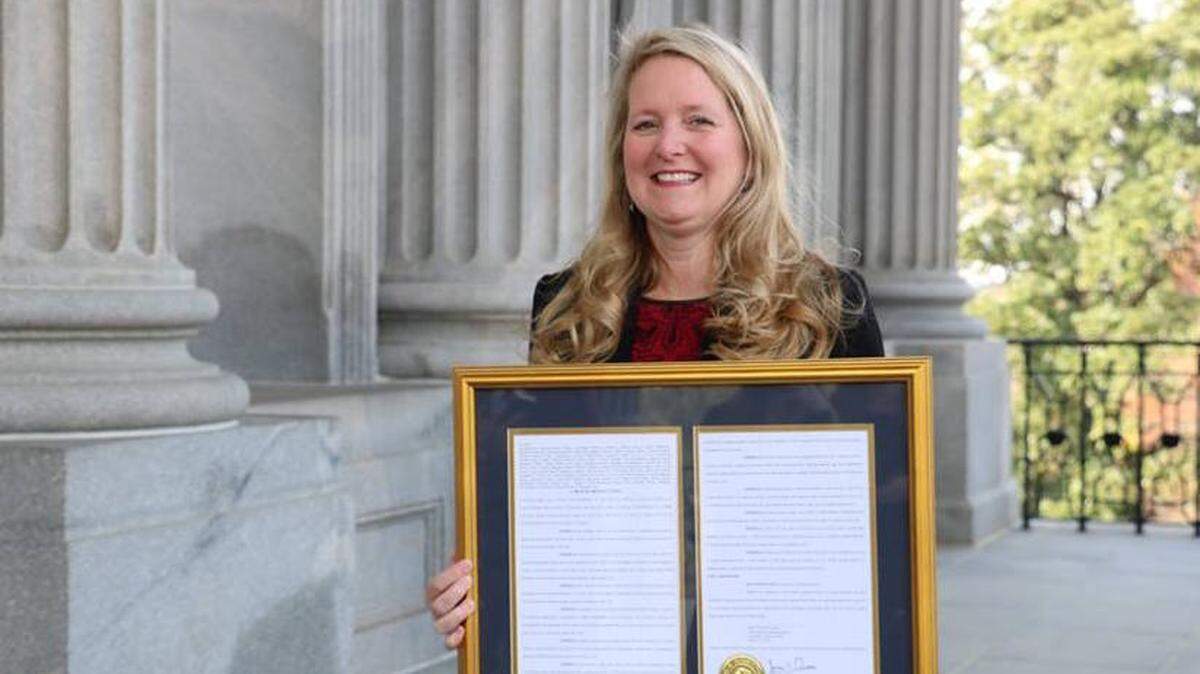
A Lexington 2 school board member has settled an ethics commission case brought after she voted for school construction projects worked by her husband’s firm, public records show.
ElizaBeth Branham, the vice chair of the Lexington 2 school board, had faced 10 allegations of voting for projects on which her husband’s architectural firm, Stevens and Wilkerson Architects, was providing work. The S.C. Ethics Commission found that the violations were unintentional, and assessed only a $250 administrative fee against Branham in an order handed down in November. She had faced a $2,000 fine for each of the 10 counts against her.
“I did everything I knew to do to be in compliance with the Ethics Act,” Branham told The State in a statement, noting that the commission did not impose a fine because of that effort. “Prior to taking any of the votes in question, I consulted district counsel as well as the General Counsel for the Ethics Commission as to whether or not I should recuse. I followed the advice given by the General Counsel for the Ethics Commission and recused where I believed the scope of a project would be increased.”
She points out that the commission’s order acknowledges “there is no evidence to support I personally experienced any economic benefit in the votes I took,” and that her vote was not the decisive factor as the board approved each of the 10 projects unanimously.
Branham was aware of her husband’s connection to the projects approved in a 2014 bond referendum, in which Stevens and Wilkerson worked as part of the team of consultants for Jumper Carter Sease, the firm that actually held the contract with Lexington 2 for the work. An organizational chart submitted to the school district included Branham’s husband, Keith Branham, the commission notes in its final determination.
The S.C. Ethics Act prohibits a public official from taking action that would create a direct economic benefit for an immediate family member.
Branham contacted the S.C. Ethics Commission after the 2014 bond referendum to seek guidance on handling her husband’s involvement. A commission attorney advised her “to recuse herself from votes related to the overall scope and cost of the bond referendum projects and from votes related to fees.” But she said Branham could vote on other aspects of the construction projects that did not affect their scope or cost.
Branham recused herself from the initial votes establishing the contract and fee base with Jumper Carter Sease, but the commission found that on 10 separate occasions from 2017 to 2019, Branham did vote on individual projects. Because the firm’s fee was set as a percentage of the overall cost, those votes on site packages and renderings also generated an economic benefit to Keith Branham, and thus Beth Branham should have also recused herself from those votes, the commission found.
The Ethics Commission’s written conclusion also found that “There is no evidence to support the notion that Respondent personally experienced any economic benefit based upon her participation in the votes at issue.”
In mitigation, Branham told the commission “she mistakenly believed she was voting on items that were subsumed within the overall cost and scope of the bond referendum projects in accordance with the guidance given to her by (Ethics) Commission staff,” the final report says. Branham said she was unaware of the fee structure since she had previously recused herself from discussion of the original contract.
“The Commission acknowledges that Respondent made every effort to follow the Ethics Act and to follow the guidance offered by the Commission’s former General Counsel, as evidenced by Respondent’s subsequent recusals on matters that Respondent believed to be outside of the scope of the original project,” the commission found. “The Commission also recognizes that each of the ten (10) votes passed unanimously, a fact which lends itself to the conclusion that Respondent’s votes were not outcome determinative.”
On four occasions, Branham verbally recused herself from votes, but did not submit a written recusal to the board as required by the state Ethics Act. The Ethics Commission notes it dropped action on those occasions and directed Branham to submit written recusals retroactively.
This story was originally published April 13, 2022 at 11:54 AM.
.jpg)